Treat the dress as one layer
A sleeveless dress may work over a thin long-sleeve tee. Its armholes should not pull at the tee, and the dress fabric should not catch against the layers below. Put the combination on, walk a few steps and sit down. Only then can you see whether the fabrics move together.
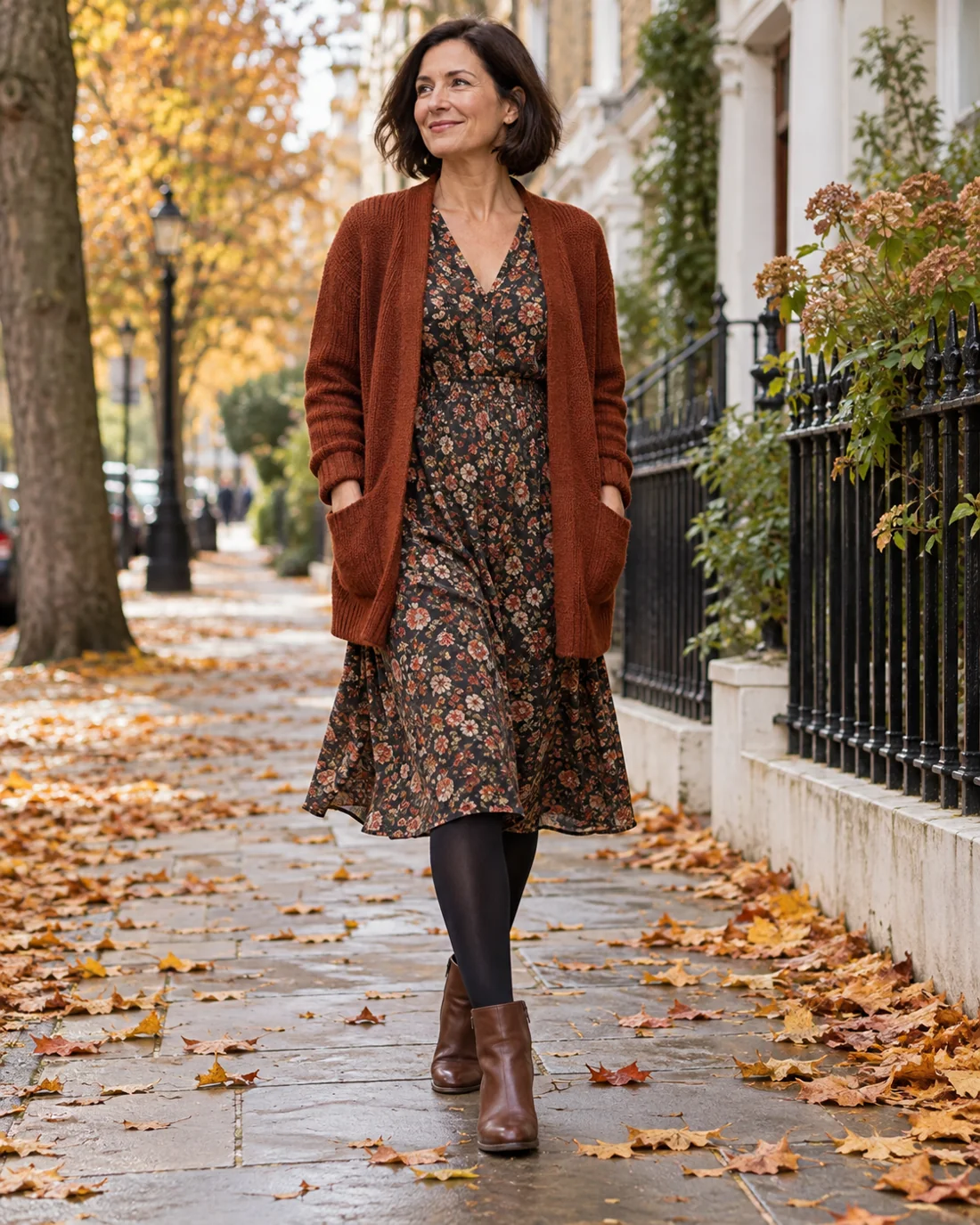
A dress with close sleeves is often easier to extend with a layer over it. Try an open cardigan or jacket with sufficiently roomy sleeves. If everything twists during dressing, more space is needed rather than simply more careful rearrangement.
Two dresses, two different solutions
A light sleeveless shirt dress may work over a smooth long-sleeve tee if the armholes and button placket have enough room. Fasten the buttons as intended and check whether fabric pulls between them. If that appears only after adding the layer, the combination is too close for this dress. Another shape worn above may provide the desired coverage more easily.
A long-sleeved summer dress with a fuller skirt instead needs an outer addition. A short jacket shows more skirt; a longer cardigan overlaps its shape. Check sleeve cuffs especially: two close endings directly on top of one another may interfere while working. Leave one visible or choose an outer layer with a different sleeve finish.
In both examples, lining affects movement. Check whether it hangs with the outer fabric or remains twisted after sitting. The dress need not be abandoned, but it may work better with fewer layers on a warmer day. Extending seasonal use should broaden existing possibilities rather than make every outfit unnecessarily complicated.
Check length with the new shoes
Summer sandals and autumn ankle boots reveal different parts of the leg and create different joins at the hem. Compare the new footwear with the dress while standing and walking. A longer skirt may catch on a boot shaft; a shorter one exposes more tights or socks.
If you add tights, choose them for the coverage, comfort and actual combination you want. A dark pair can create clear contrast with a pale dress. A similar colour connects the areas more closely. You are not obliged to conceal the dress's summer character completely.
Remember the outside jacket
A warm indoor setting may make the combination workable, while the journey outside still calls for a suitable coat. Test it over all the layers. The skirt can remain visible beneath it if you like the lengths and the fabric does not continually catch between the coat edges.
For a first trial, use a simple dress, smooth cardigan, closed shoes and the coat you would normally wear. Leave out extra patterns initially. Once movement and lengths work, you can add colour or jewellery. If the dress continually rides up or needs an elaborate arrangement underneath, another dress is the easier choice for that day.