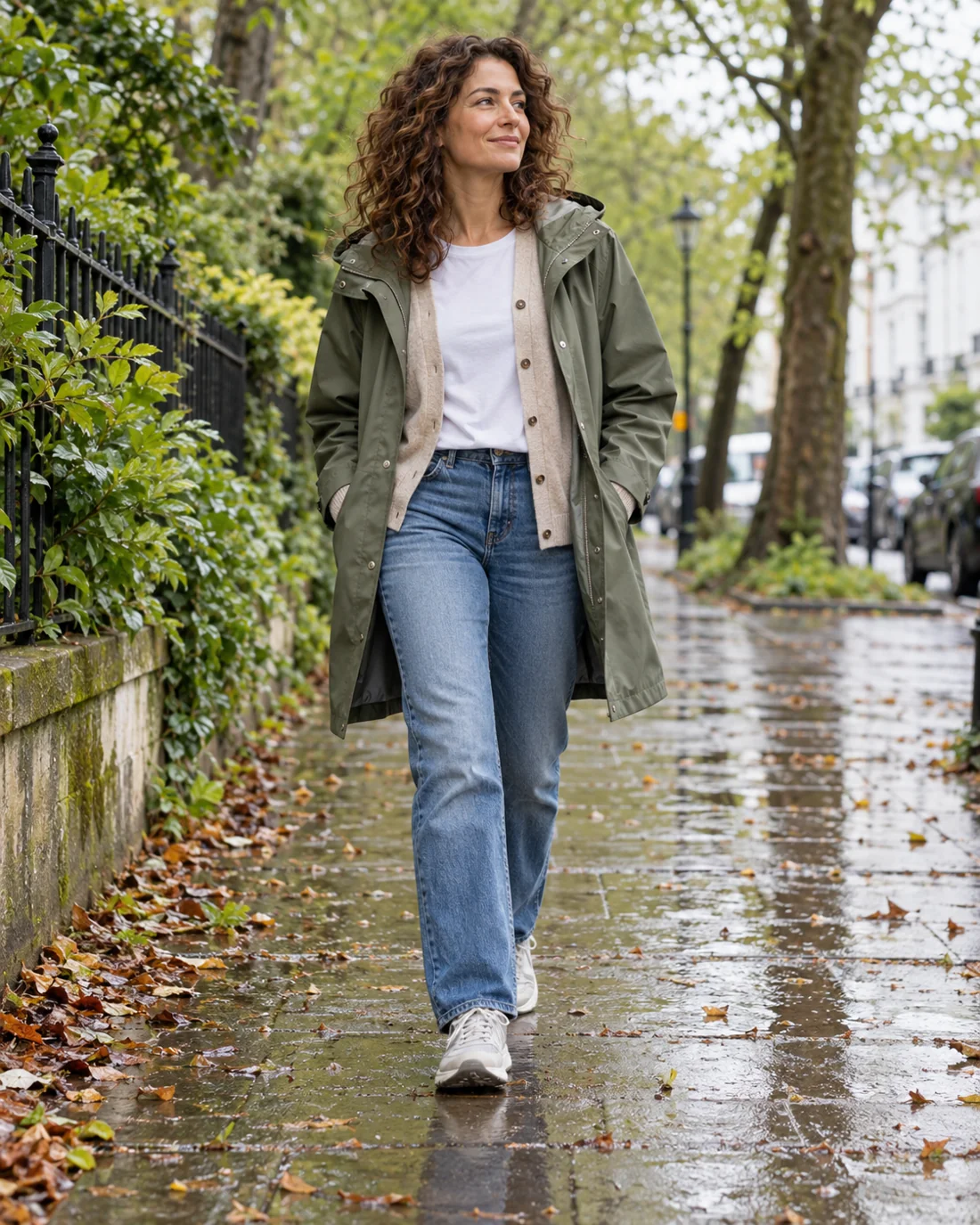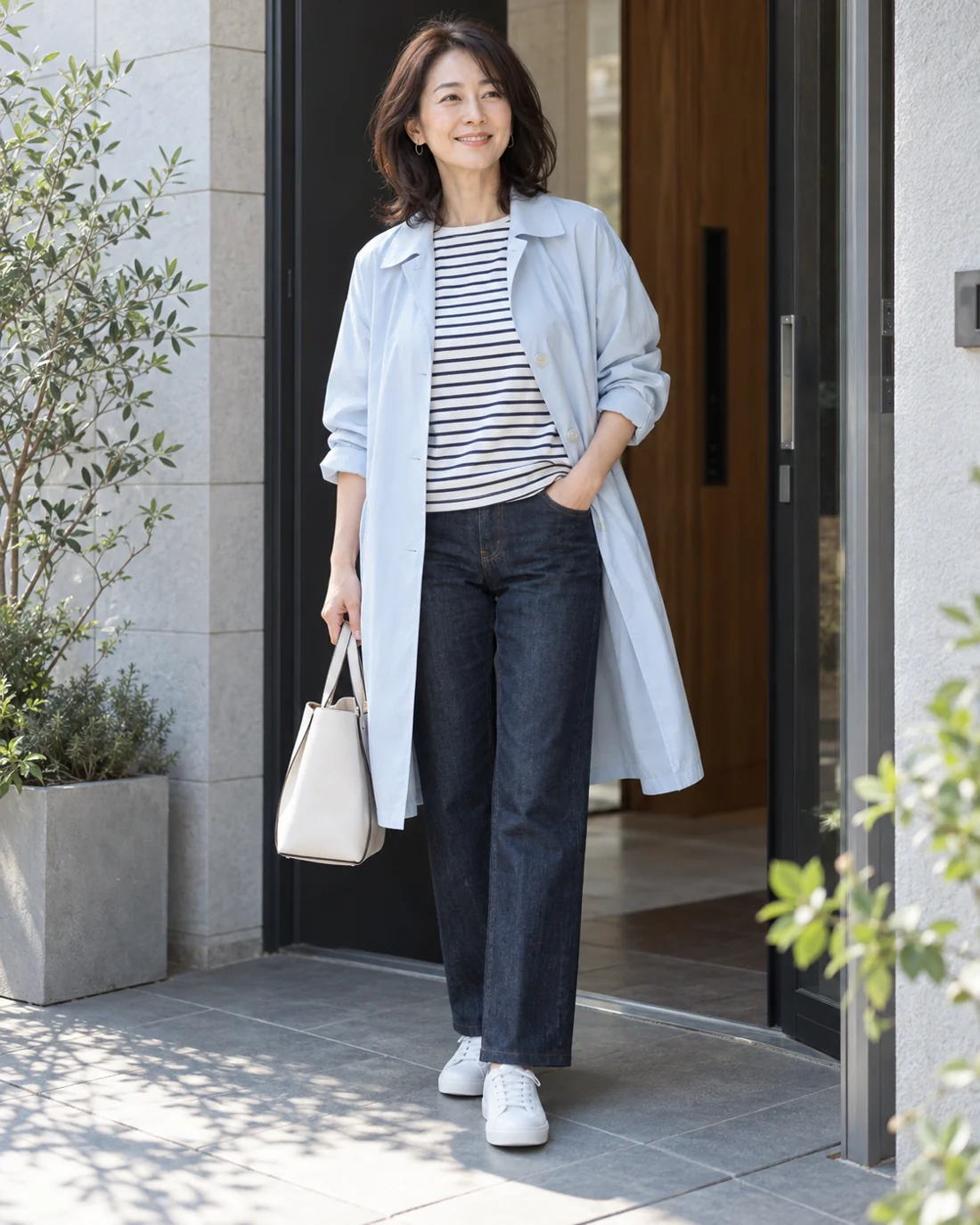
Start with the afternoon outfit
Choose trousers or a skirt, shoes and a top you are happy to wear on its own. Try that base in ordinary light. If a tee was intended only as an undershirt, or a blouse hangs differently without knitwear above it, resolve that before adding outer layers.
Footwear often stays the same all day. Choose it around the longest walk and conditions you cannot change along the way. A jacket can come off; a tall boot shaft that becomes annoying later is harder to replace. This does not prescribe a particular shoe, but makes the order of decisions important.
Break down the morning addition
Sometimes a coat over the finished base is enough. If you stand outside for a long time, another layer may be useful. Check whether a cardigan provides enough adjustment or whether you really need both jumper and coat. The number should follow your timetable rather than the phrase transitional season.
A scarf is quick to remove, but it need not solve every temperature range. If your arms are the area that feels cold, its position around your neck does little for that specific issue. After a day, notice where you wanted another layer and change that part of the combination deliberately.
Rehearse taking things off
Put on the complete morning outfit. Remove the planned pieces and inspect the inner layer. A jumper can turn a shirt collar or pull a tee upwards. Rearrange both once and decide whether that small correction is realistic while you are out.
Fold the removed clothes into the bag you intend to take. Is there room left for its usual contents? A jacket that only fits under pressure can displace documents or other belongings. If you plan to carry it over your arm, consider long ties and whether the journey requires both hands.
A workplace cloakroom can simplify matters. A day with appointments in several locations is different. The same clothing can therefore work on an office day and become awkward on a mobile one without being a fundamentally wrong combination.
Compare three pieces
Take a long-sleeve tee, a fine cardigan and a coat, for example. Test all three together, then tee and cardigan, then the tee alone. Each version should allow movement and remain a complete combination with the trousers or skirt. If the middle version is never used, you can leave it out on the next comparable day.
Record the actual experience briefly: comfortable in the morning, cardigan unnecessary at lunch, coat useful again in the evening. That is more helpful than a rigid temperature threshold for everyone. Your journey, indoor spaces and personal comfort determine the two or three states the outfit needs to provide.