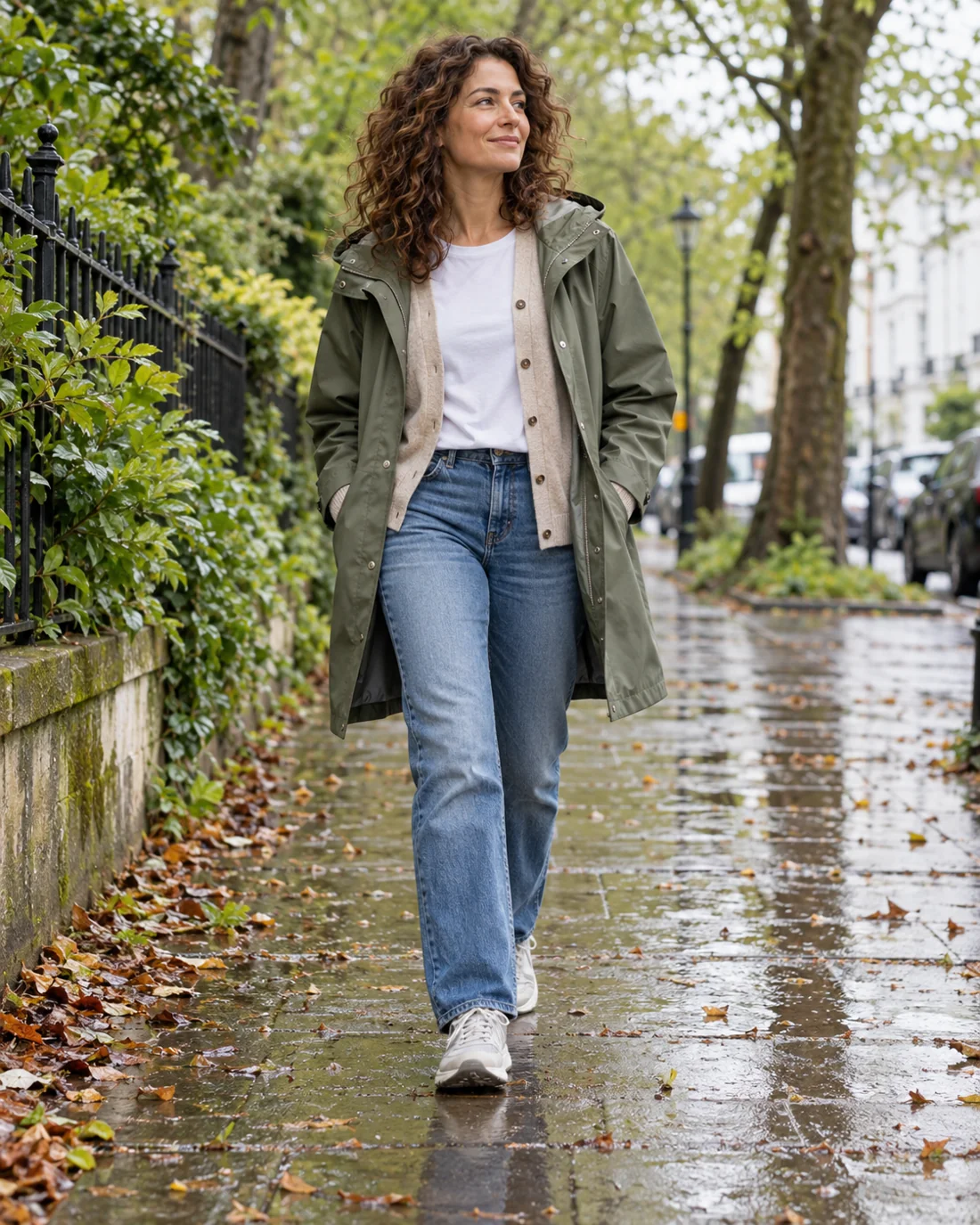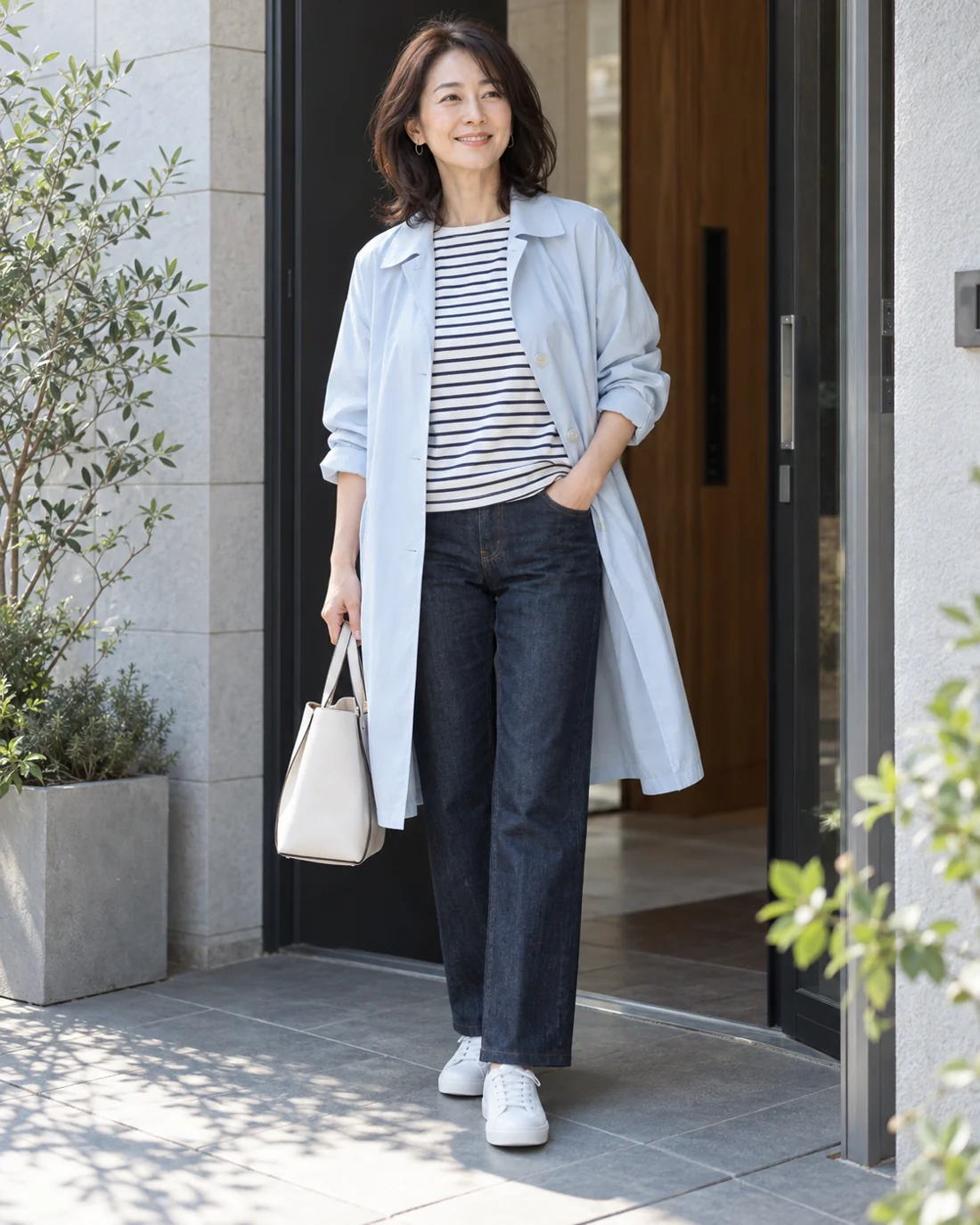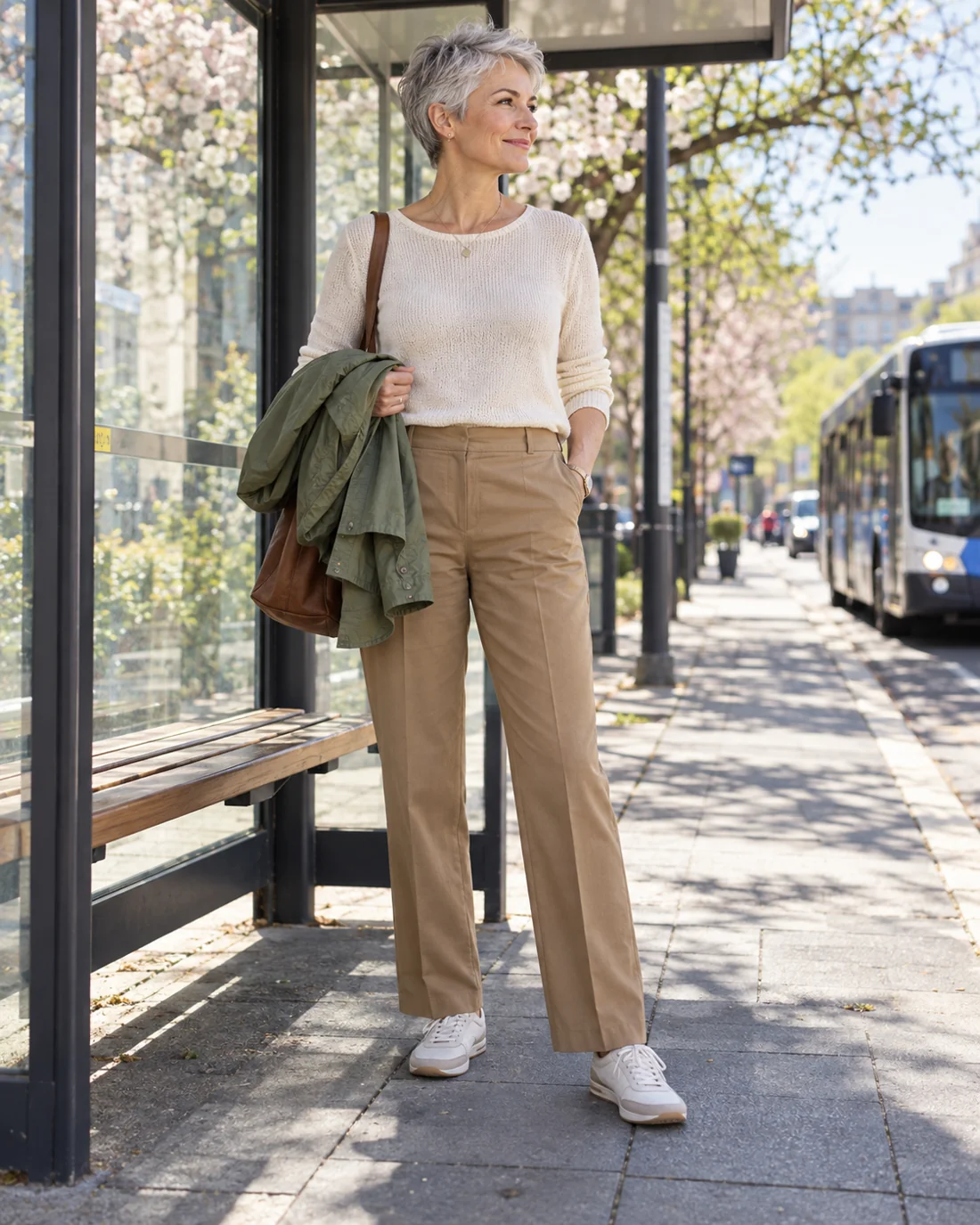
Test it at a real desk
Sit at a table in the proposed jacket or knit. Do the sleeves rest on the work surface, do the shoulders slide backwards, or does a fastening press when you lean forward? These questions matter more than how it looks standing up. A long scarf may interfere with typing, while a shorter cardigan supplies exactly the coverage you want.
If you keep a spare layer at work, it should fit over several of your usual tops. Check armholes and collars in particular. A close cardigan over a wide-sleeved blouse can feel awkward even when the colours coordinate.
A layer kept at work or carried daily
A cardigan stored permanently at work should suit more than your most frequent outfit. Test it over at least one tee and one blouse you genuinely wear there. Check the sleeves as well as colour. If it fits comfortably only over the thinnest top, it is not a reliable addition for every day.
For daily transport, a lighter layer that fits the existing bag may be useful. Pack it with the bottle, papers and other ordinary belongings rather than testing it alone. If it continually lies between hard edges, another compartment or fold may be better. Care instructions still apply when the garment mainly serves as a reserve.
For meetings away from your desk, the combination should work without lengthy preparation. Put the extra layer on and take it off once. A cardigan with easily reached buttons handles differently from a jumper with a narrow neckline. Choose for the timetable rather than whichever model looks most neatly folded in the wardrobe.
Leave the summer base visible
Over a sleeveless dress, a short open cardigan mainly changes the shoulders and arms. A longer blazer creates a different area and may collect more fabric beneath you while seated. Try both lengths with the actual dress rather than relying on general advice for summer dresses.
With a tee and trousers, the additional layer can stay quiet in colour or provide deliberate contrast. If it spends most of the day over a chair, it need not determine every accessory. It belongs to the outfit, but every other decision does not have to serve it.
Transport and storage
A piece that folds easily can travel in a bag if there is enough room. Test this once with the usual contents. Something tightly compressed that then needs lengthy smoothing may not perform the job you wanted.
If the layer stays at work, hang or place it somewhere off the floor and out of the way. Occasionally check that it remains clean and complete. A missing button or stretched sleeve is often only noticed when the garment is needed urgently. With a changing workplace, a portable layer that stores easily can therefore be more dependable than a forgotten spare top.