Choose a typical day
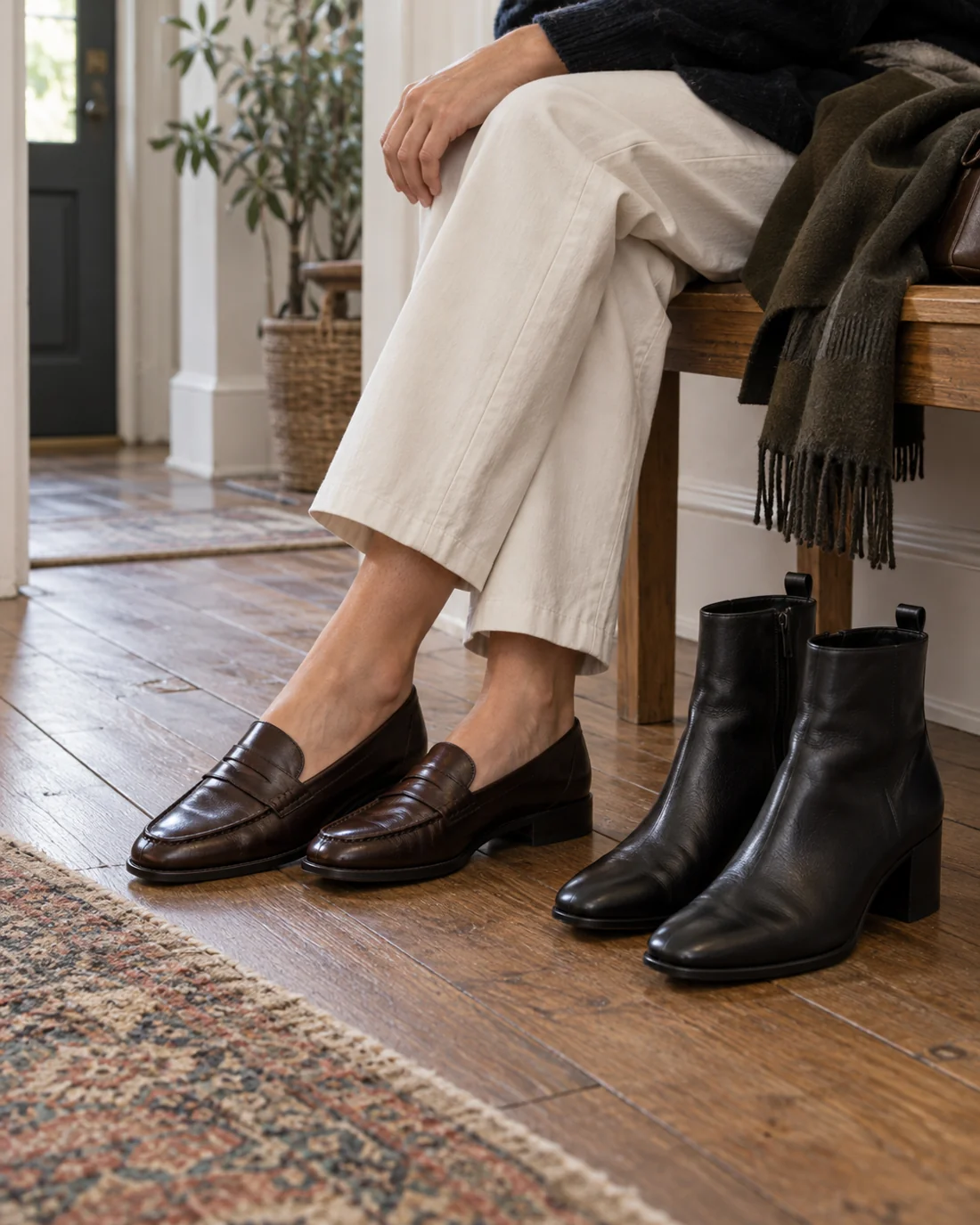
Use a specific day as an example. How long will you walk, what surfaces will you encounter and can you change shoes? Select two existing pairs that are broadly suitable. Check their actual properties and condition. A particular shoe shape guarantees neither rain resistance nor comfort.
Try both with the socks or tights you intend to use. A pair that feels comfortable with thin socks may become tighter with thicker ones. The seasonal transition therefore concerns not only the shoe but also what goes inside it.
Recheck the trouser or skirt edge
Switching from a low shoe to an ankle boot changes the visible area around the ankle. A close trouser hem may rest on the shaft, while a wider one falls over it. Walk several steps and check the back too. Fabric should not unintentionally slip beneath the heel.
With a skirt, the new shaft height can create a smaller or larger gap below the hem. Either arrangement is possible. Keep the other pieces unchanged for comparison rather than replacing coat, tights and bag simultaneously. This makes it easier to see whether the footwear is really the deciding difference.
Record a small transition selection
If two pairs cover different journeys well, every weather variation does not require new shoes. Note which trousers or skirts work with each pair. One pair of trousers may have a length suited only to one of the shoes; that is useful information when dressing.
Before wearing shoes that have been stored for some time, inspect soles, fastenings and general condition. Follow the manufacturer's instructions for care. A seasonal change is an opportunity to review existing combinations, not automatically a reason to replace the entire shoe selection.