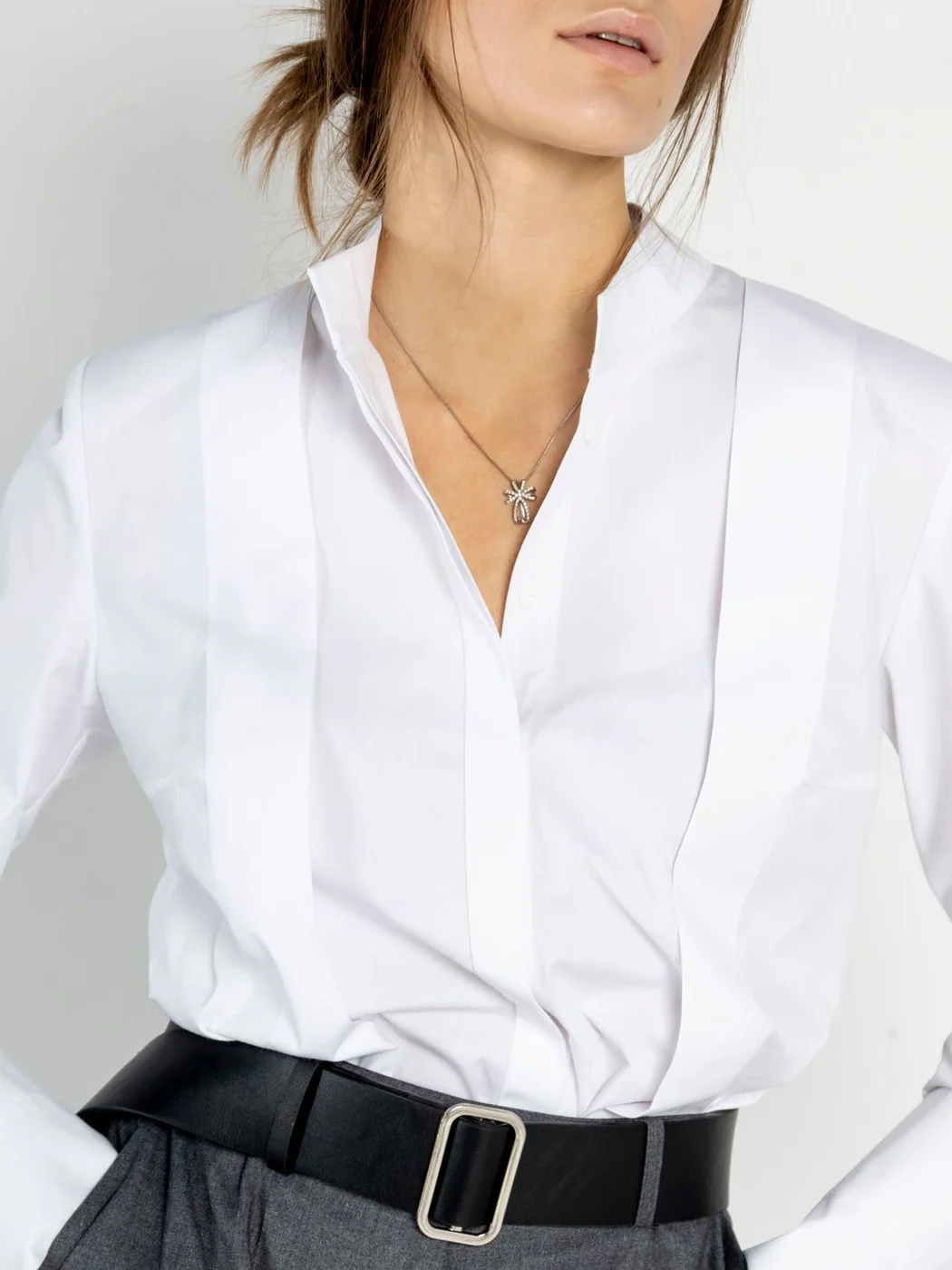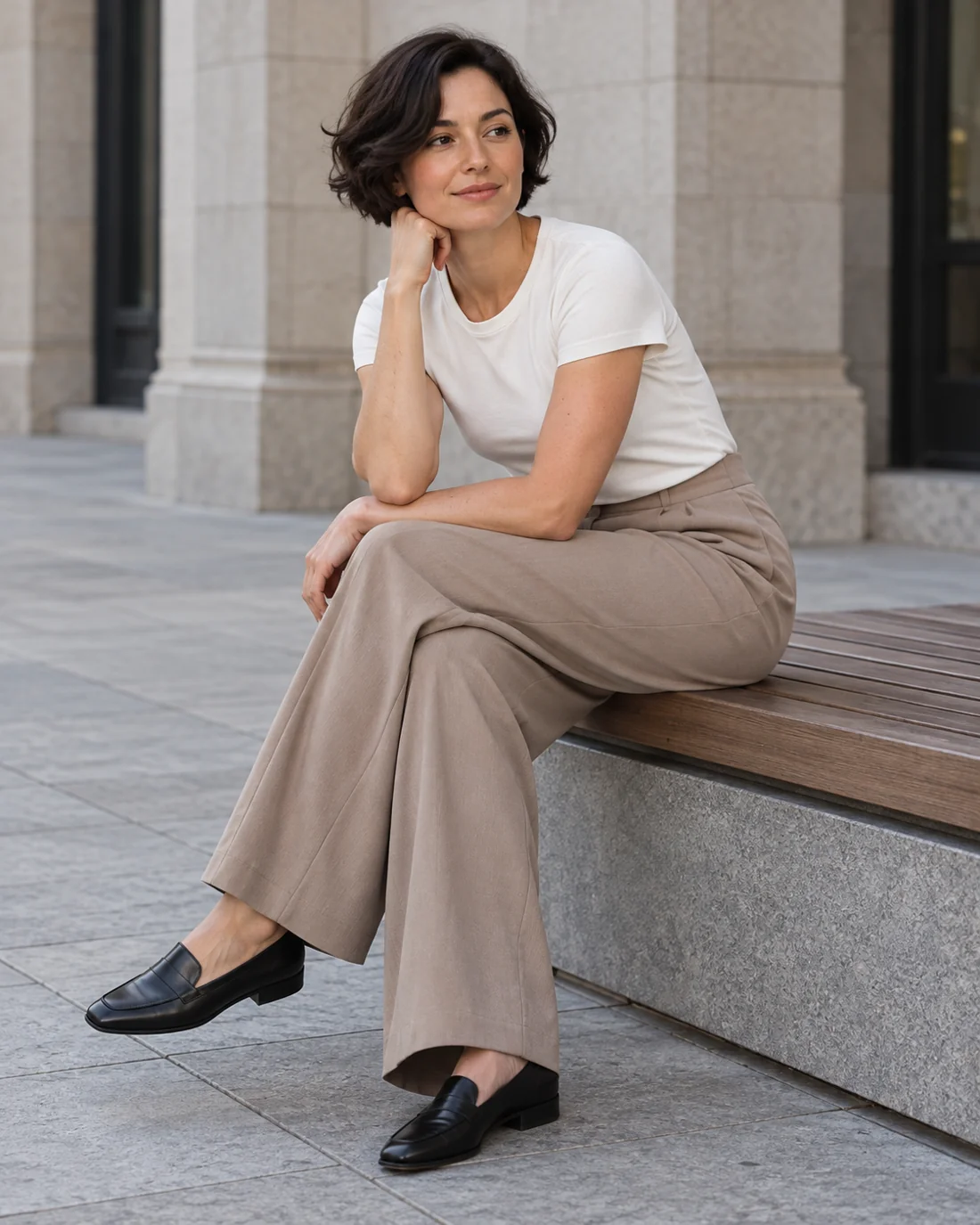
Start with shoulders and sleeves
The blazer should allow movement over the chosen top. A thick sweatshirt needs more space than a fine T-shirt. If sleeves bunch, try a thinner layer first. A larger blazer may be an option, but is not automatically the right solution for every shoulder shape.
Move your arms forward and sit. Even if you intend to wear the blazer open, check whether it closes comfortably when needed. A jacket that fits only open can work, but gives fewer options on windy or cooler journeys.
Compare the denim wash with the blazer fabric
A smooth dark blazer beside strongly faded denim creates a clear material contrast. Softer blazer fabric may connect more quietly with a medium wash. Look at both in daylight. The combination does not need to be as uniform as possible; the difference can remain deliberate.
With a patterned blazer, a plain top can simplify the connection. With a solid-colour version, a striped T-shirt can add another area. Change one piece at a time so you can judge what you actually like.
View lengths in the complete outfit
A longer blazer covers more of the jeans waistband and pockets. A shorter one marks the upper boundary more clearly. Check the side view with the top you will really wear. A long T-shirt can remain visible beneath a short blazer, but should not slip out accidentally on only one side.
Choose shoes for the planned distance and check the jeans hem. An ordinary walk through town does not automatically require formal shoes because a blazer is involved. A familiar pair can make the combination useful for daily wear if it suits the occasion. Save a successful version as a photograph, including the bag and outer layer for the journey home.
The difference between a commute and a free day
For a day involving documents or a laptop, the work bag affects the combination. A backpack loads the blazer shoulders differently from a small crossbody bag. Test the filled bag and see whether the collar pulls backward. On a free day, you may experience the same clothes differently with less luggage.
This does not require two blazers. A changed carrying position or another existing top may create enough room. If the jacket remains uncomfortable with a particular load, assign it to other journeys instead. Blazer and jeans form an option rather than an obligation for every everyday situation.