Try a clear upper edge
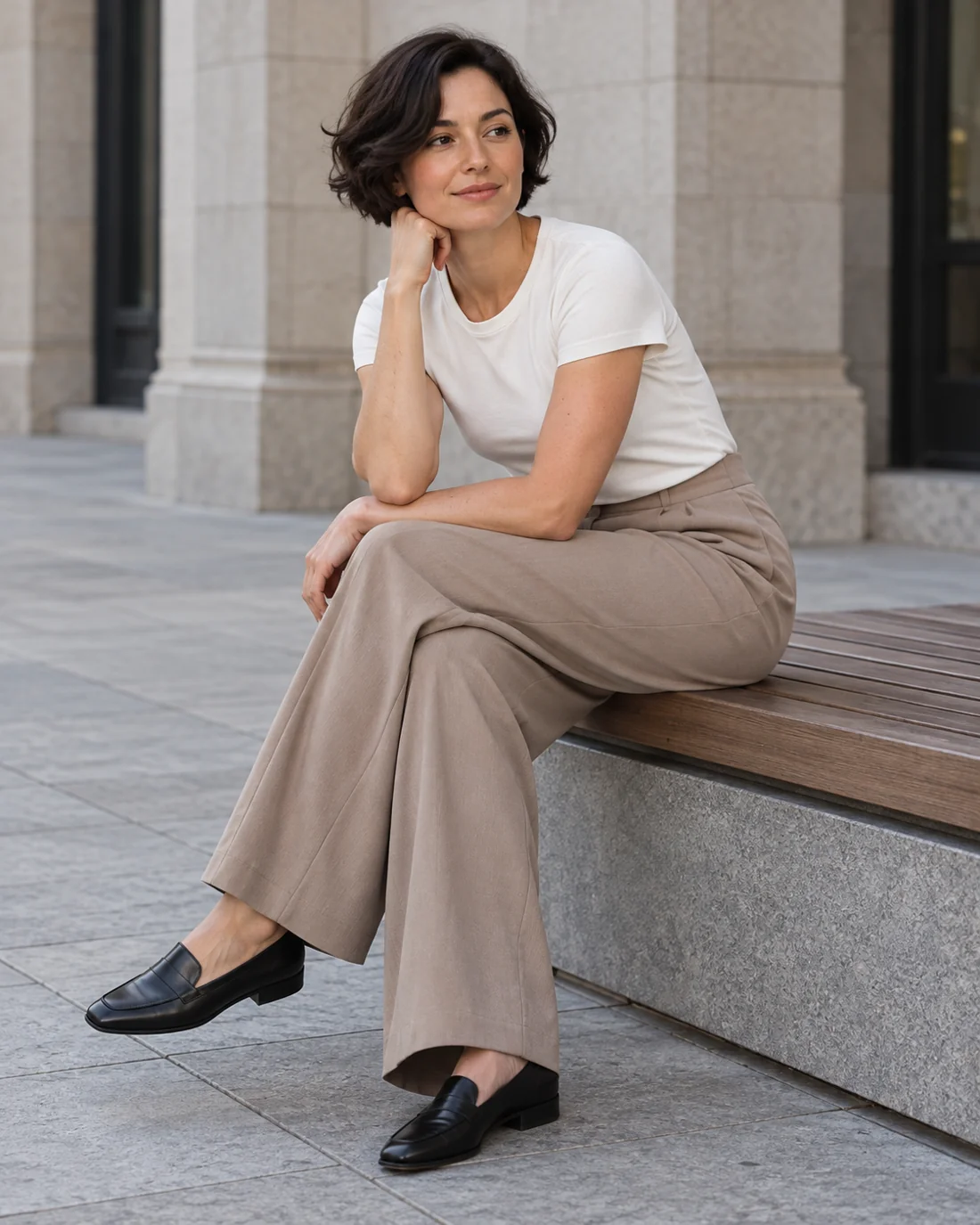
A shorter top exposes the waistband and shows the full width of the leg. It need not be tight to do that. A loose T-shirt ending near the waistband creates a different shape from a narrow bodysuit, but can look equally deliberate. Try both only if you already have suitable pieces.
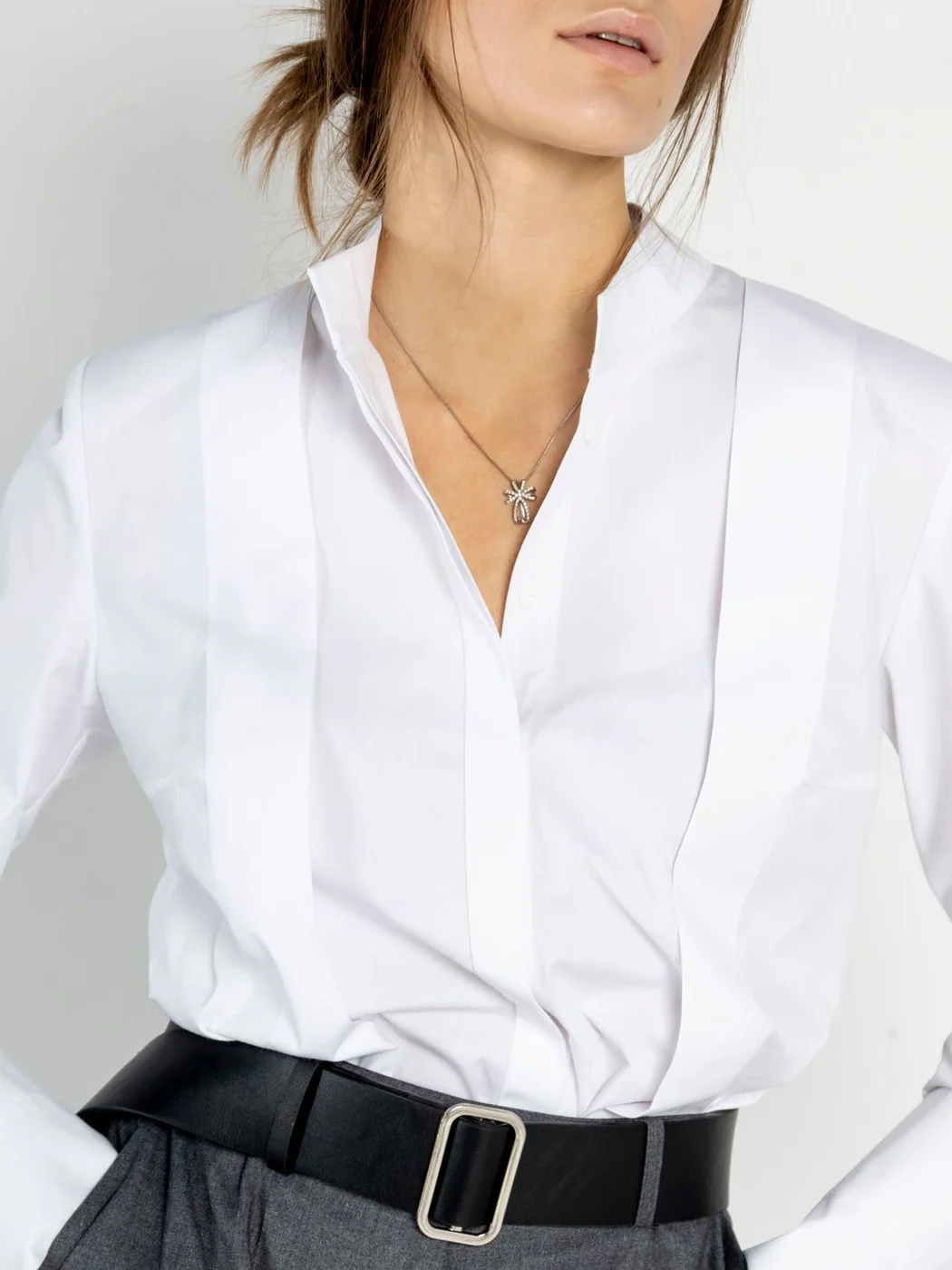
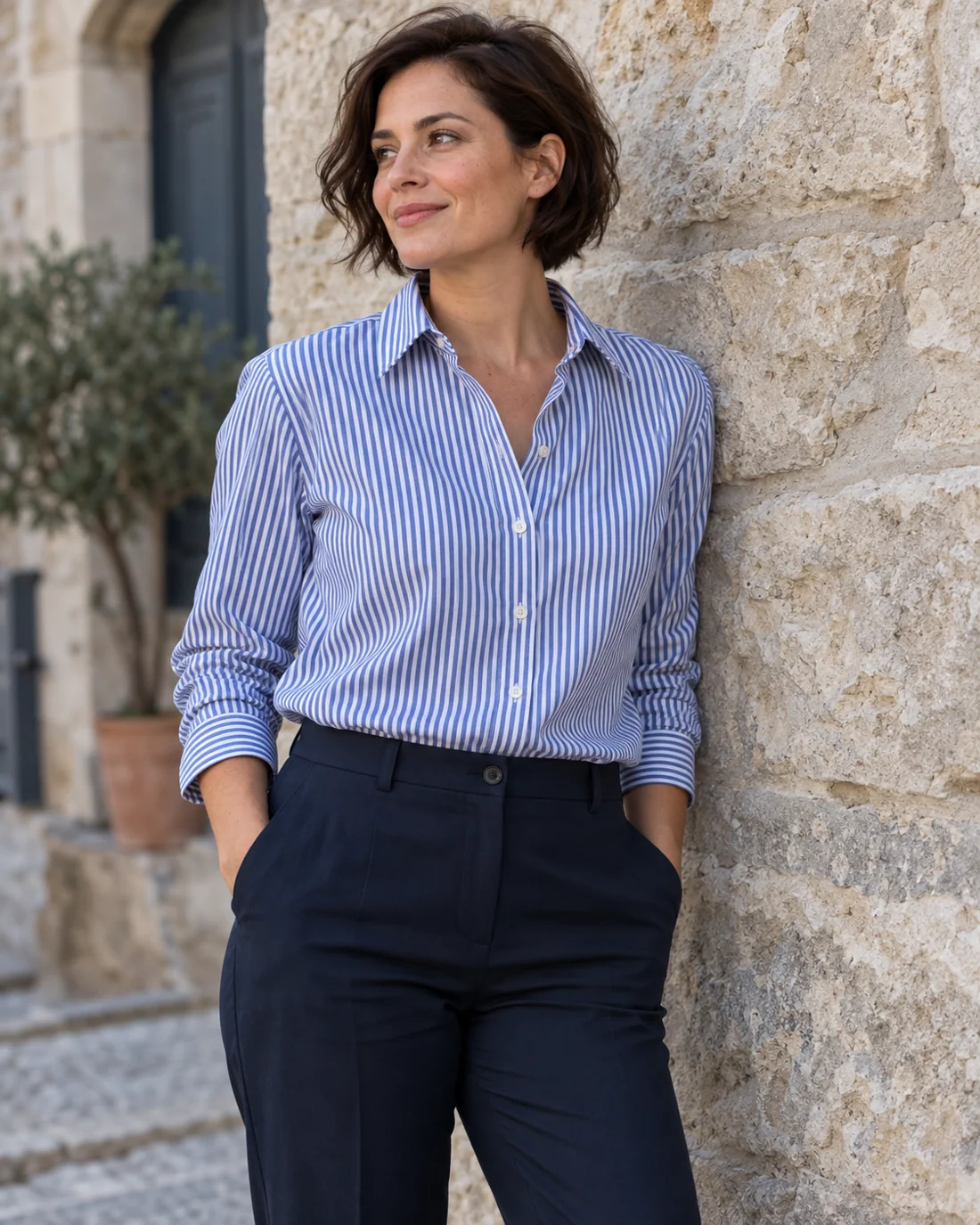
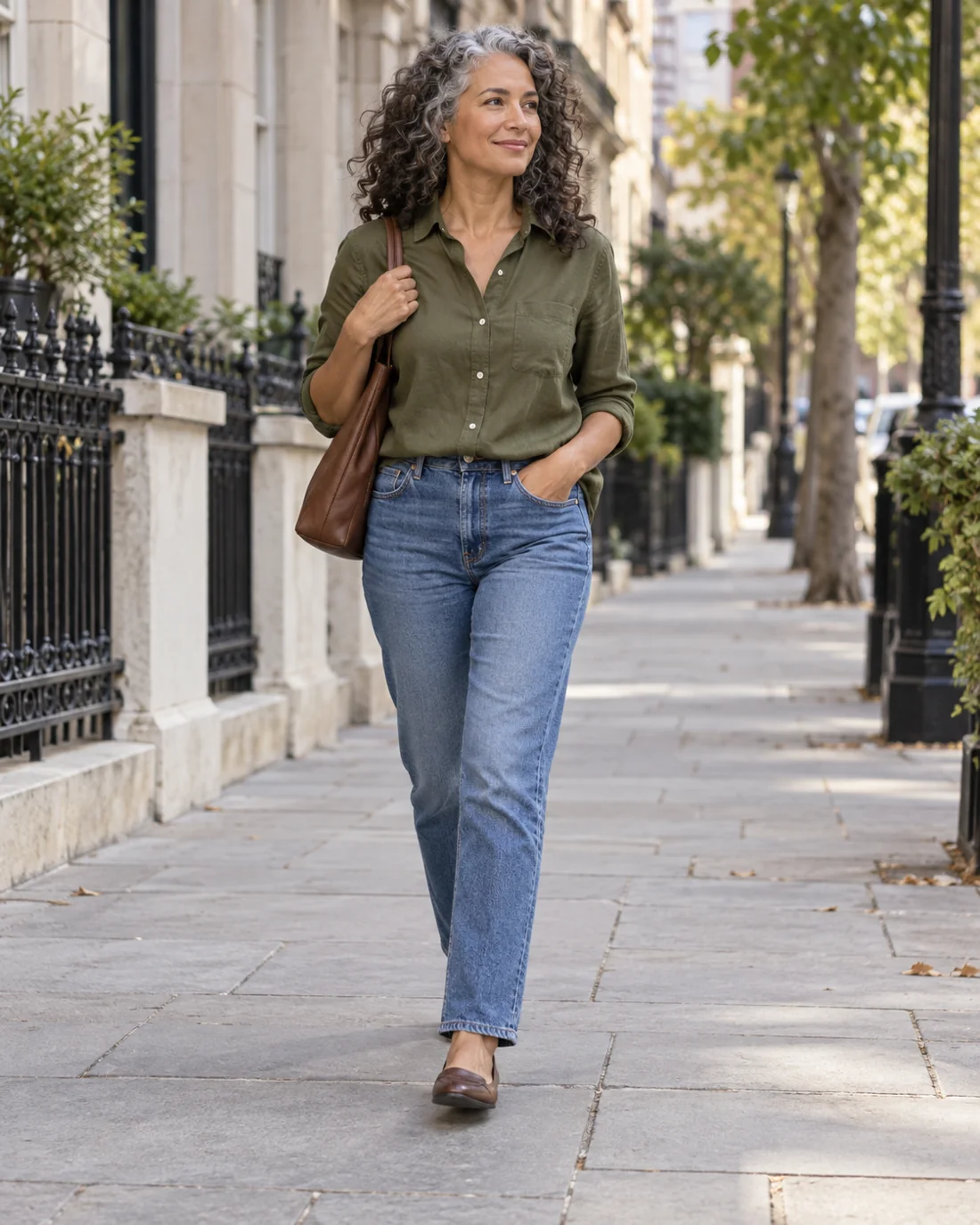
With a longer shirt, tuck one front section and leave the rest loose. Make sure the fabric does not form a large bundle at the waistband. Thick shirt fabric needs more space than thin fabric. If it presses, wear the shirt open or choose another length.
Wear width over width deliberately
A loose jumper over wide trousers is a possible combination. The visible transitions matter. Decide whether you want to see where the trousers begin or prefer a continuous loose outline. A side view shows how much fabric overlaps at the front and back.
If the combination feels heavier than intended, change one edge first. Turn back a sleeve, open a collar or try a shorter hem. These adjustments alter the area without automatically requiring a tighter top.
Compare jacket lengths
A short jacket draws a clear boundary above the wide trouser legs. A longer coat continues the area. Either can work, but each needs a different movement check. With a long open layer, its fronts should not catch between your legs while walking.
Close the jacket completely once. A combination that falls comfortably open can bunch at the waistband when closed. If you need to fasten the jacket outdoors, that view belongs in the selection. An outfit planned only for an open photograph is less flexible in daily use.
Decide shoes and hem together
Test walking on a level surface and a step. The hem should not catch beneath the heel. If you want to wear the trousers with several sole heights, check each one. Altering the length may help, but should reflect the shoes actually used.
Keep two complete combinations as starting points: one with a short knitted top and another with an open shirt, for example. This gives the wide trousers different uses without requiring a fresh decision every time.
Treat trouser drape as another variable
Two equally wide trouser cuts can form different shapes while walking. Observe whether the fabric moves around the legs or keeps a more defined outer line. If you own suitable examples, try both with the same top. A loose jumper may create continuous movement with softly falling trousers and appear as a more separate shape beside a firmer pair.
Pockets and waistband pleats also affect the visible area. Put your hands in the pockets briefly and remove them. If the fabric settles differently, that belongs to the worn combination rather than being a detail that must be removed for every photograph. Then check whether the top covers those areas or leaves them visible.
When considering a purchase, this comparison can help identify a meaningful addition. Another wide pair with almost identical drape and the same shoe requirements may provide fewer new combinations than expected. A different drape may offer other possibilities, but it still needs a complete try-on with the tops already in your wardrobe.
A complete comparison
Combine the same wide trousers once with a short jumper and once with a long open shirt. Use the same shoes and simple top beneath. The first version clearly shows where the legs begin; the second adds vertical edges over the trousers. Photograph both from the front and side.
Do not choose from the standing image alone. Sit and walk with your everyday bag. The long shirt may ride up beneath the strap, while the short jumper shows more waistband when seated. These differences help assign the versions to suitable days rather than declaring one universally better.