With a simple knitted top
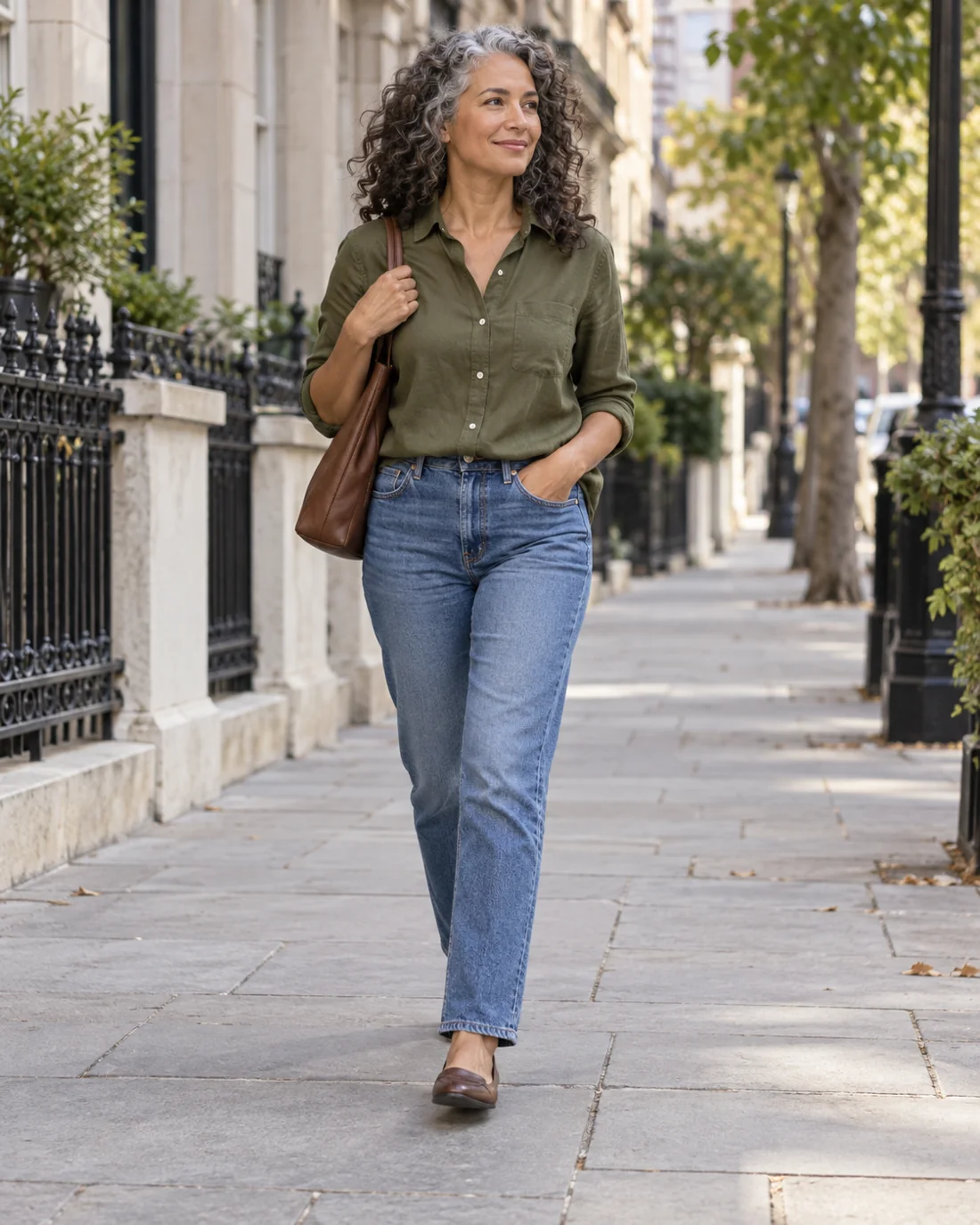
A fine jumper leaves the straight leg visible without making the entire outfit feel strict. Check where its hem ends. A length just above the back pockets looks different from a short finish at the waistband. If you partially tuck the jumper, the fabric should not bunch excessively when seated.
Choose shoes whose shape remains visible beneath the straight hem. These might be flats or another familiar style. What matters is that the hem stays off the ground and you do not need to pull the jeans up repeatedly while walking.
With a shirt and defined jacket
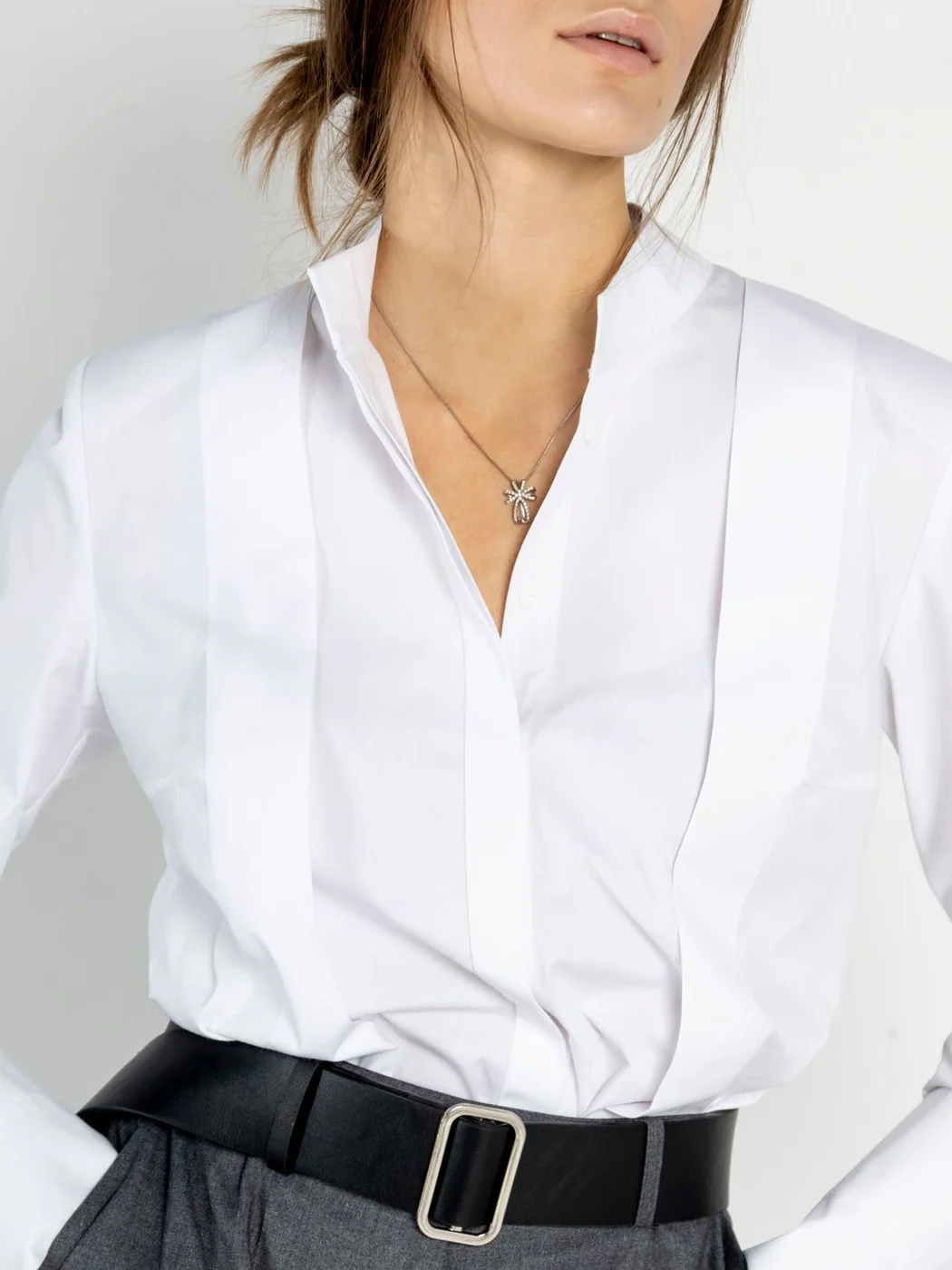
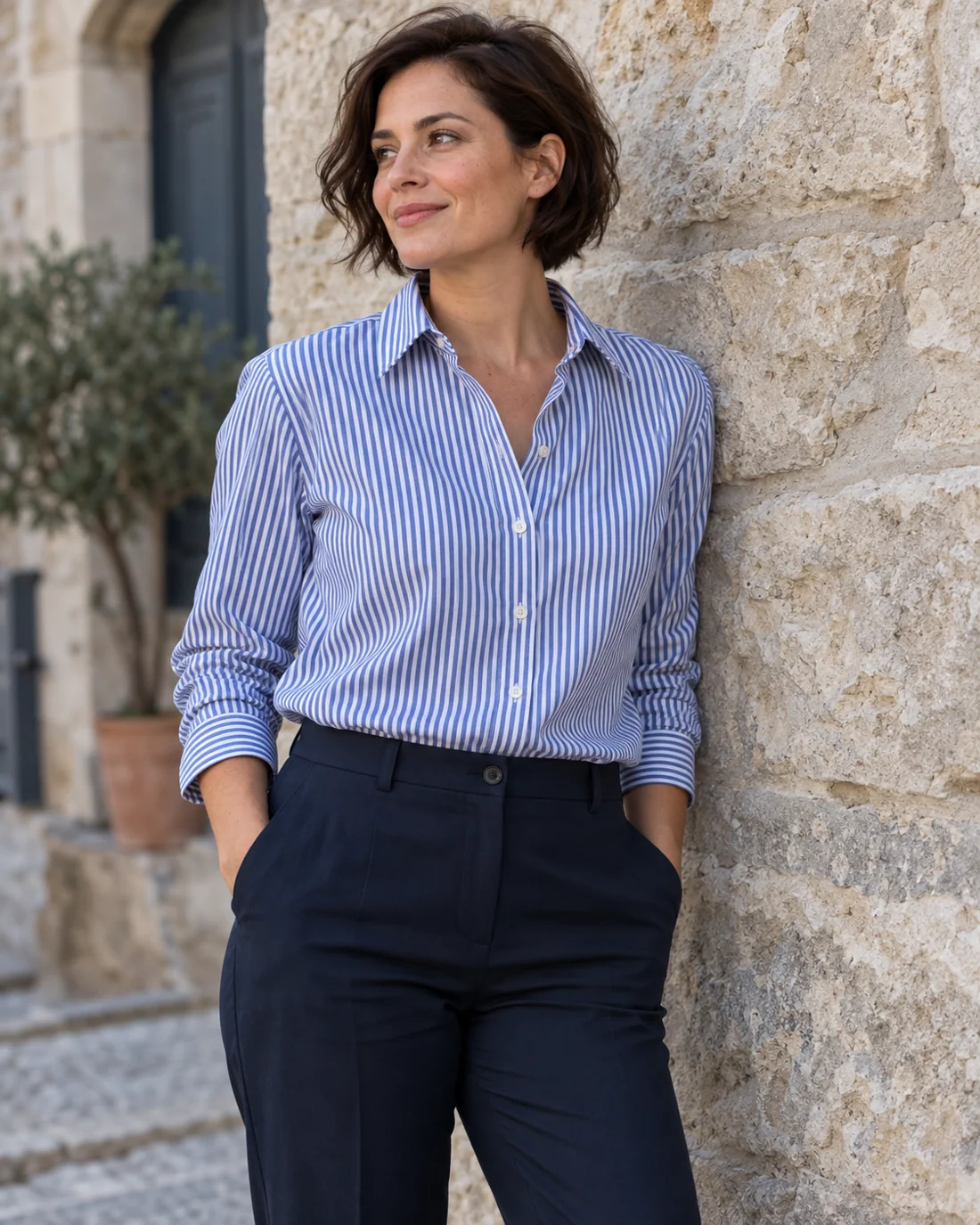
For a different effect, add a shirt and a jacket with a visible shoulder line. Keep the same shoes initially. This reveals how much the upper half changes the combination. A new bag is not automatically needed.
Check the shirt and jacket hems together. A noticeably longer shirt can remain deliberately visible, but should not slip out accidentally on only one side. Open the jacket, sit and stand again. If the fabric constantly rearranges itself, change the tuck or try a shorter shirt.
With an open overshirt outdoors
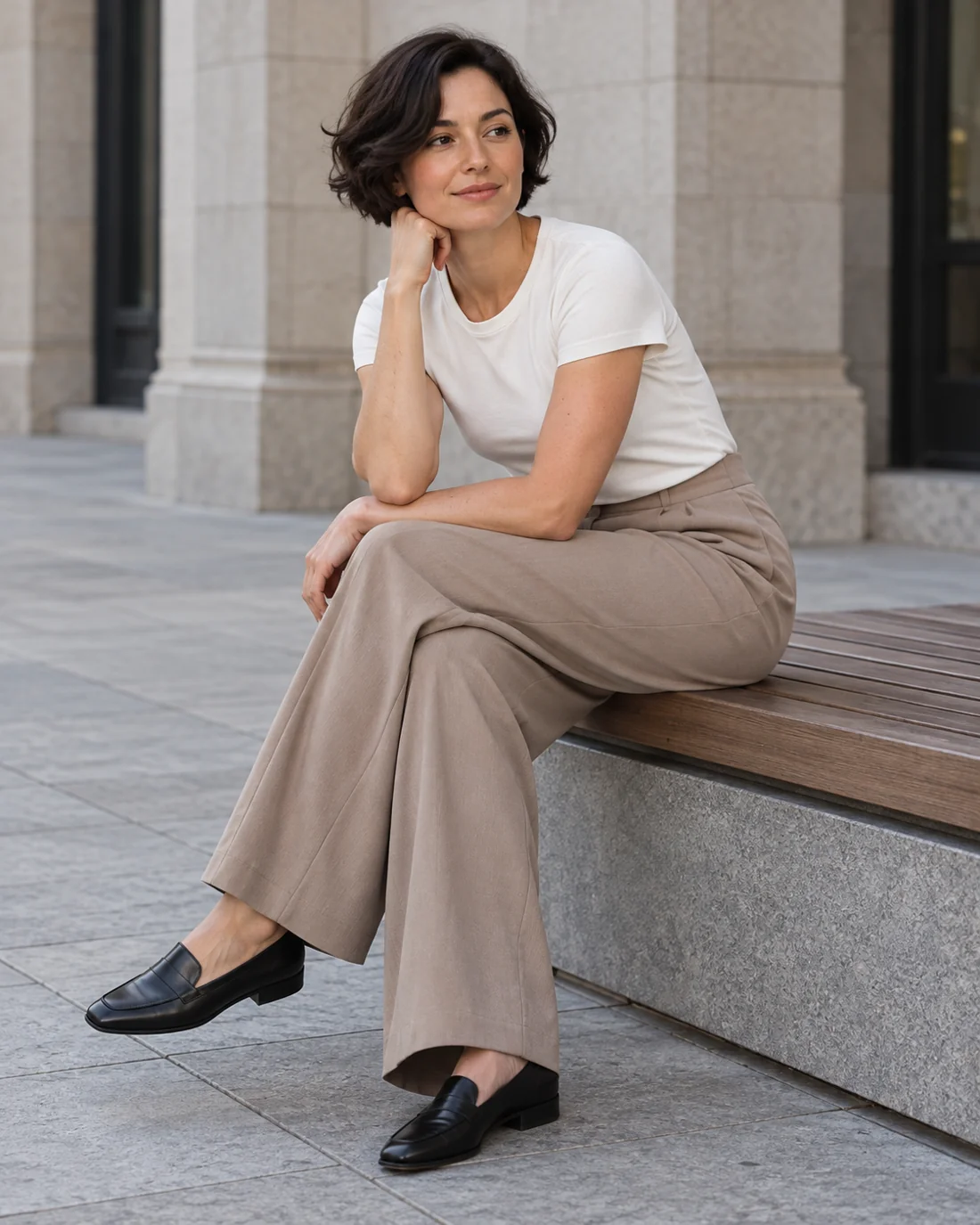
A plain T-shirt beneath an open overshirt creates a removable layer. The jeans stay the same while the upper layer's weight and pockets produce another effect. Choose the overshirt for the actual weather rather than appearance alone.
Test the combination with a filled bag. A backpack can push a loose shirt hem upward. If you often use one, include that view in the fitting. Photograph the three successful versions under the same lighting. You can then see their differences clearly and find a suitable combination for each kind of day later.