Gather clues before the first morning
An explicitly stated clothing rule takes priority over general ideas about office dress. If there is none, information about the schedule can help: will you tour different work areas, meet clients or mainly have conversations at a desk? When expectations are unclear, a brief question about normal clothing is more useful than guessing from the industry.
Company event photographs may show more formal outfits than an ordinary working day. Treat those pictures as only one clue. A shirt or simple blouse with existing fabric trousers provides a starting point you can adjust after your first day.
Plan a layer you can remove
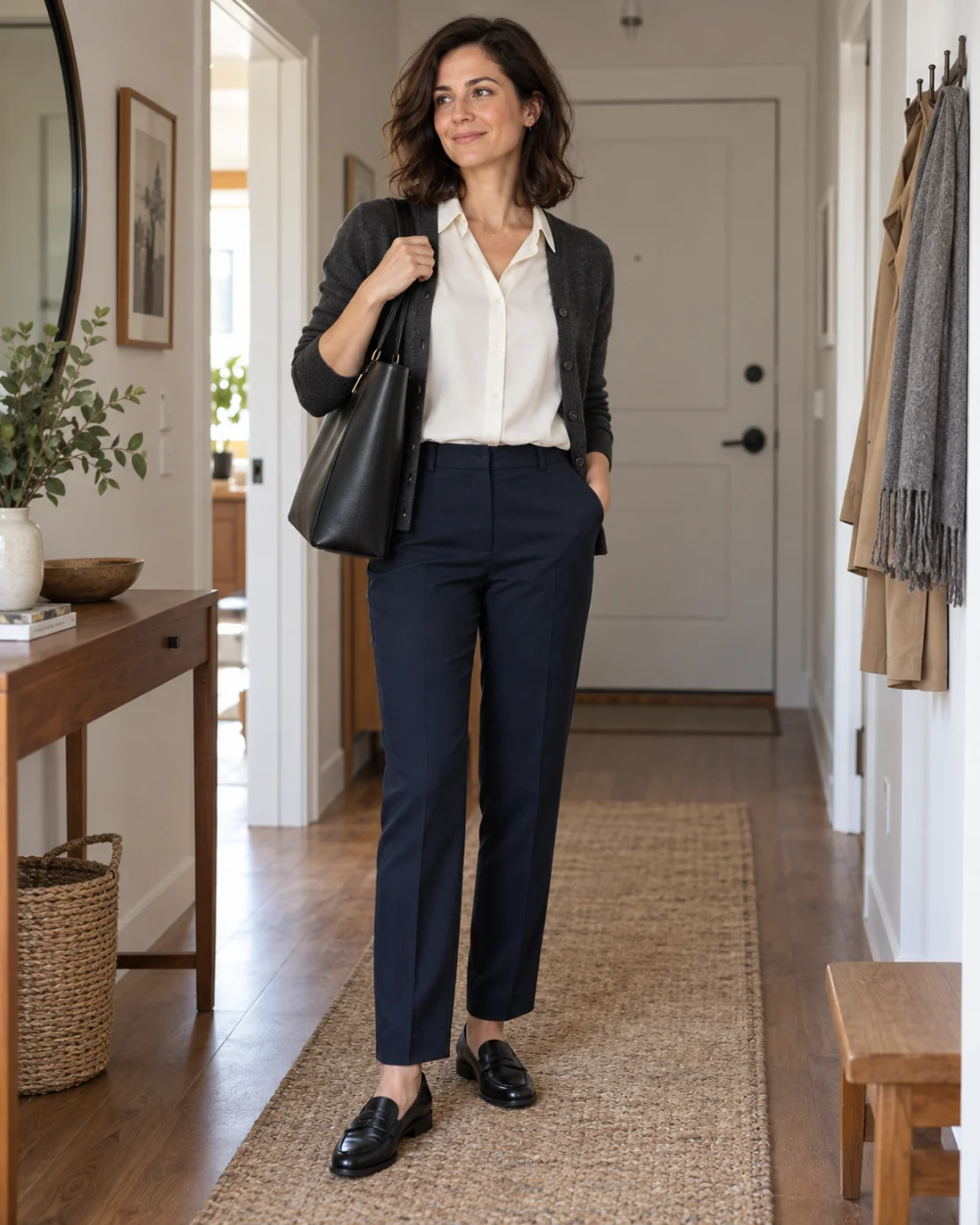
A jacket or cardigan allows small adjustments without carrying a second outfit. Check that the top underneath works on its own and does not shift when you take the jacket off. Very wide sleeves can bunch beneath a narrow jacket, something you may only notice when seated.
Try packing the documents you need in your bag. If you must carry a heavy laptop, the shoulder strap needs to work with the clothes. A bag that constantly slides off smooth jacket fabric becomes irritating during a tour. Keep keys and a travel pass somewhere accessible so you do not have to reorganise everything at every doorway.
Decide the evening before
Lay out the full combination, including underwear and socks. Look at it in daylight and while sitting down. This reveals sheer fabric, a gaping button opening or a rising hem before the morning becomes rushed.
After the first day, note what actually worked. Did you need the extra layer, were the shoes suitable for the walking involved, and was there a visible difference between internal and external appointments? Adjust individual pieces from those observations. You do not need a completely new wardrobe to make them.
One complete alternative
If a longer tour is planned for the first day, choose an alternative for poor weather. This does not mean bringing both versions. Decide between them in the morning according to actual conditions. Trousers reaching the ground in rain can be replaced with another existing length; an extra top does not solve that problem.
Also check whether you will remove the jacket during the journey. If it then needs to stay over your arm, the bag should remain easy to handle. A brief walk carrying everything at once reveals whether the selection is realistic. This is especially useful when the route is unfamiliar and you need extra attention for finding your way.