Find the shared base
Choose trousers that remain comfortable while seated and still hang the way you want after several hours. Check the knees and waistband in particular. A loose shirt, fine jumper or plain T-shirt can work above them, provided it is wearable without the jacket you will add later.
If you work at home with your sleeves pushed up, pull them down before leaving and check the creases. Some fabrics retain obvious bunching. That is not automatically a problem, but it should fit the appearance you intend. An additional jacket does not necessarily disguise every detail of an unsuitable top.
Keep the change to a few movements
Put your office shoes and outer layer together in the morning. If the transition always requires a different belt, different socks and a new bag, the base is unnecessarily complicated. First try keeping the same small pieces throughout.
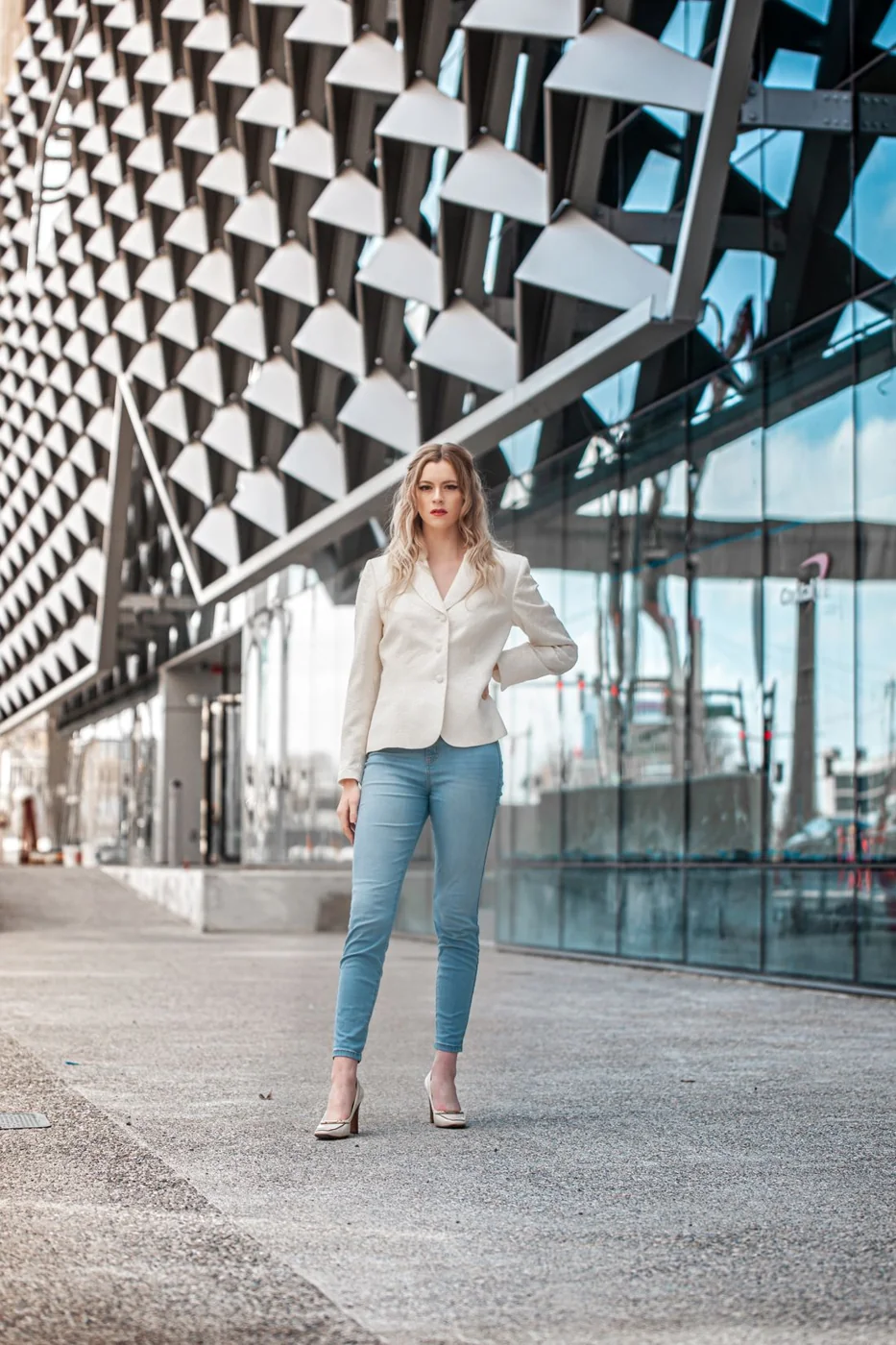
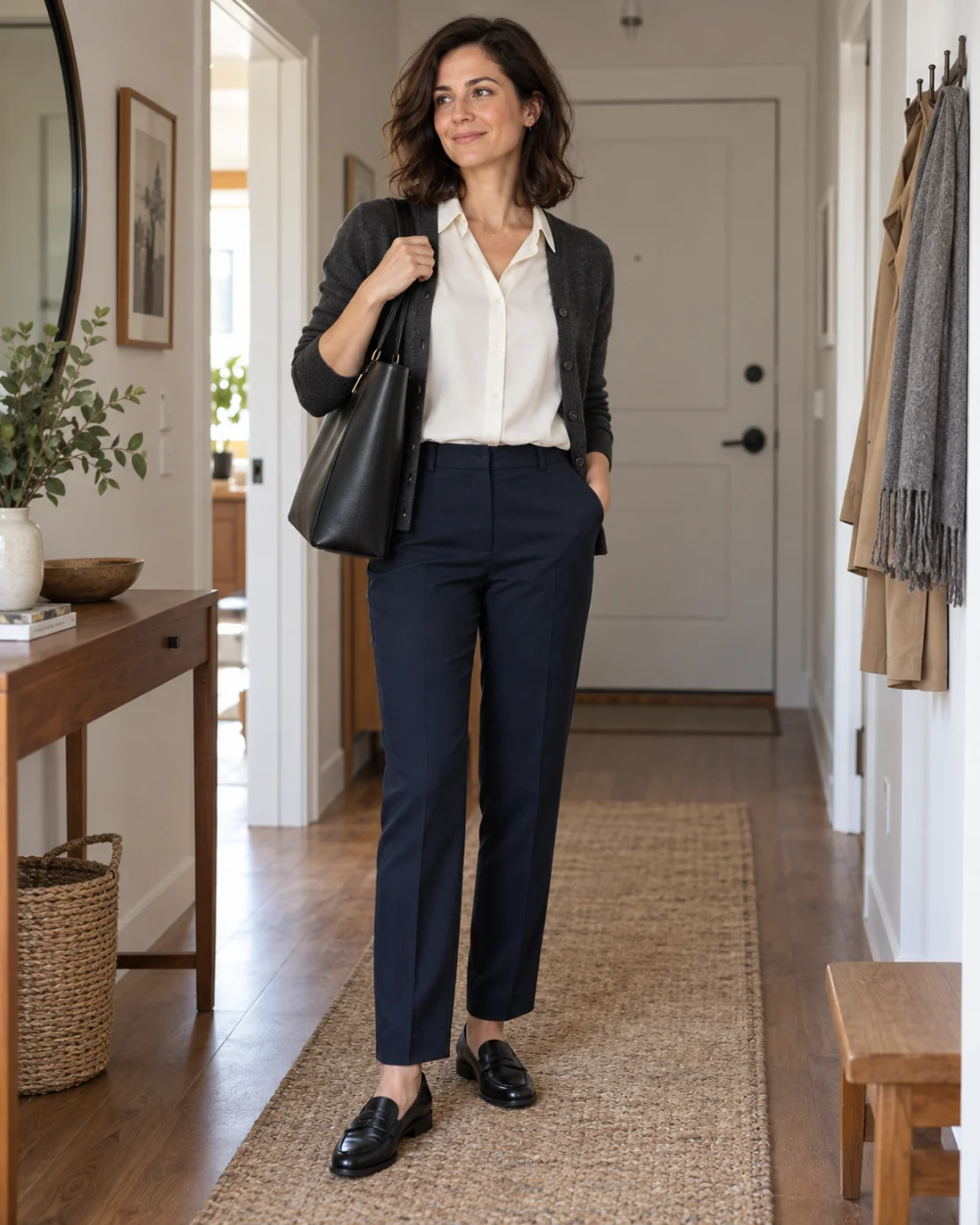
One example is straight fabric trousers with a cotton T-shirt: worn at home with a loose cardigan and outside with an existing short jacket. Another is jeans with a shirt, where only indoor shoes need replacing with outdoor footwear. Whether either version is suitable depends on the actual rules in your workplace.
Allow for carrying things and coming home
Test the combination with your filled work bag. A wide shirt hem can ride up beneath a backpack, while a very long cardigan may be awkward to put away. The change should work in reverse too, when you remove a layer on the way home.
After a few days, note which base has proved useful. Two or three dependable combinations reduce decisions more than a large collection of outfit pictures that each require several missing garments. Let your everyday experience change the selection rather than forcing yourself into a rigid outfit formula each morning.