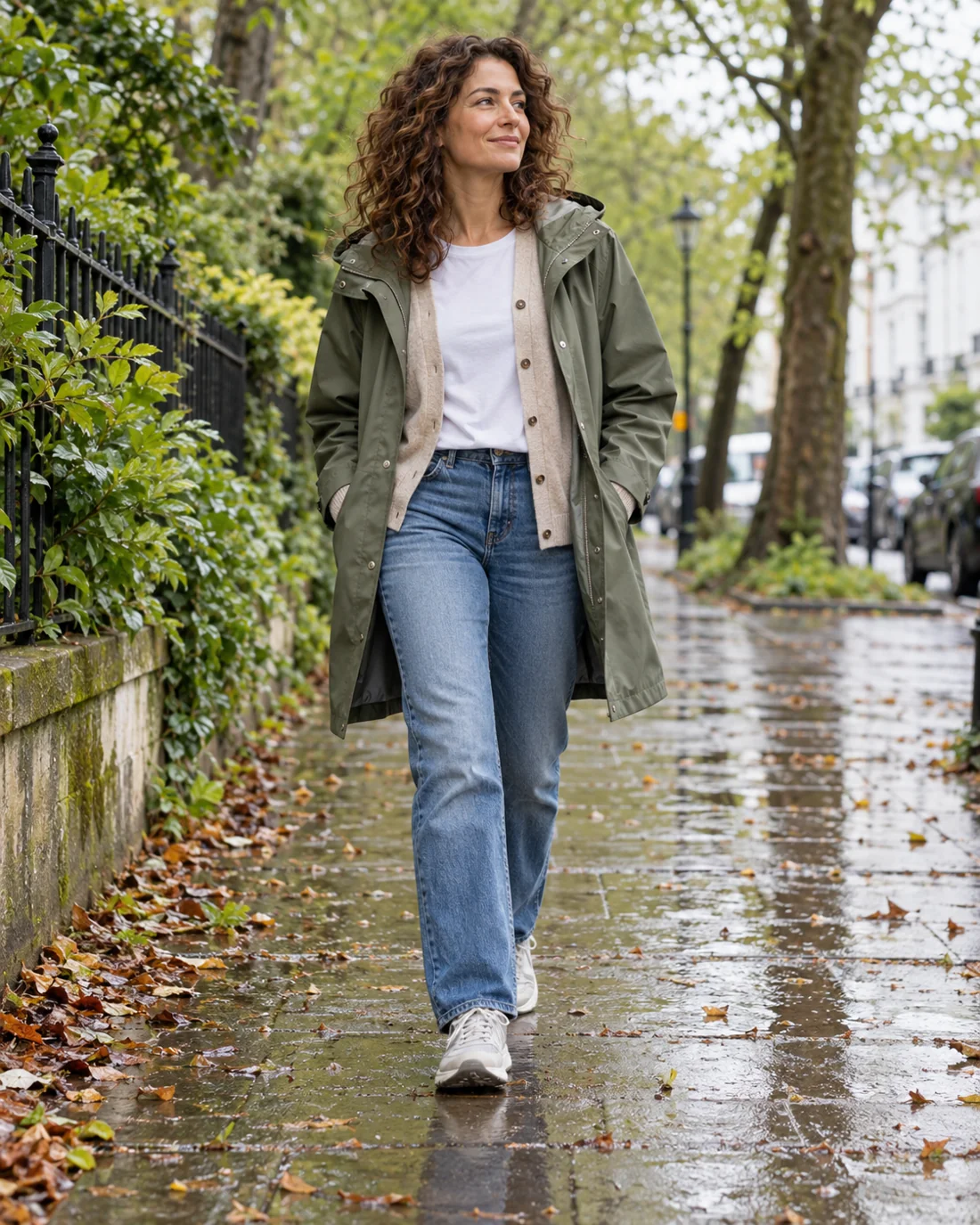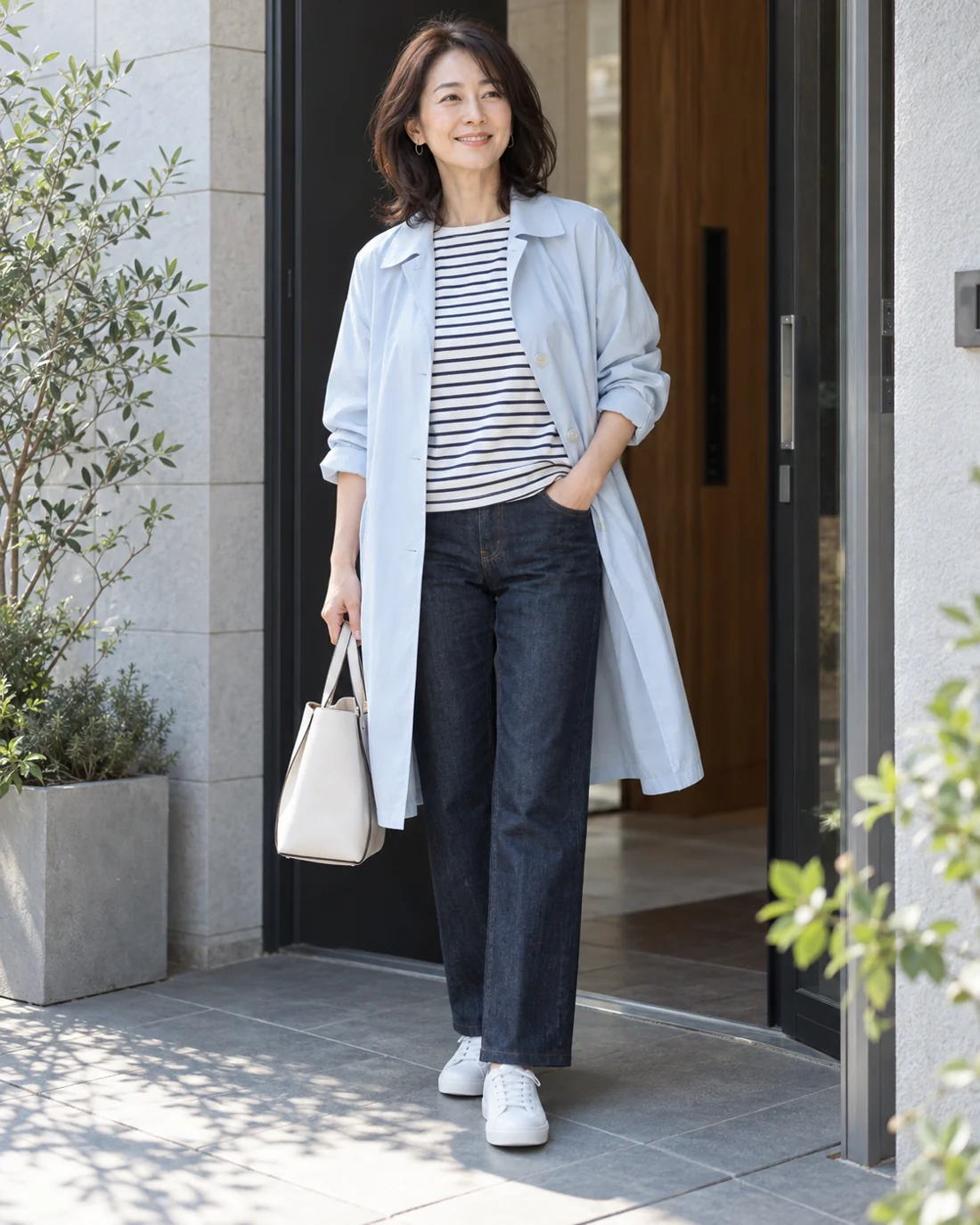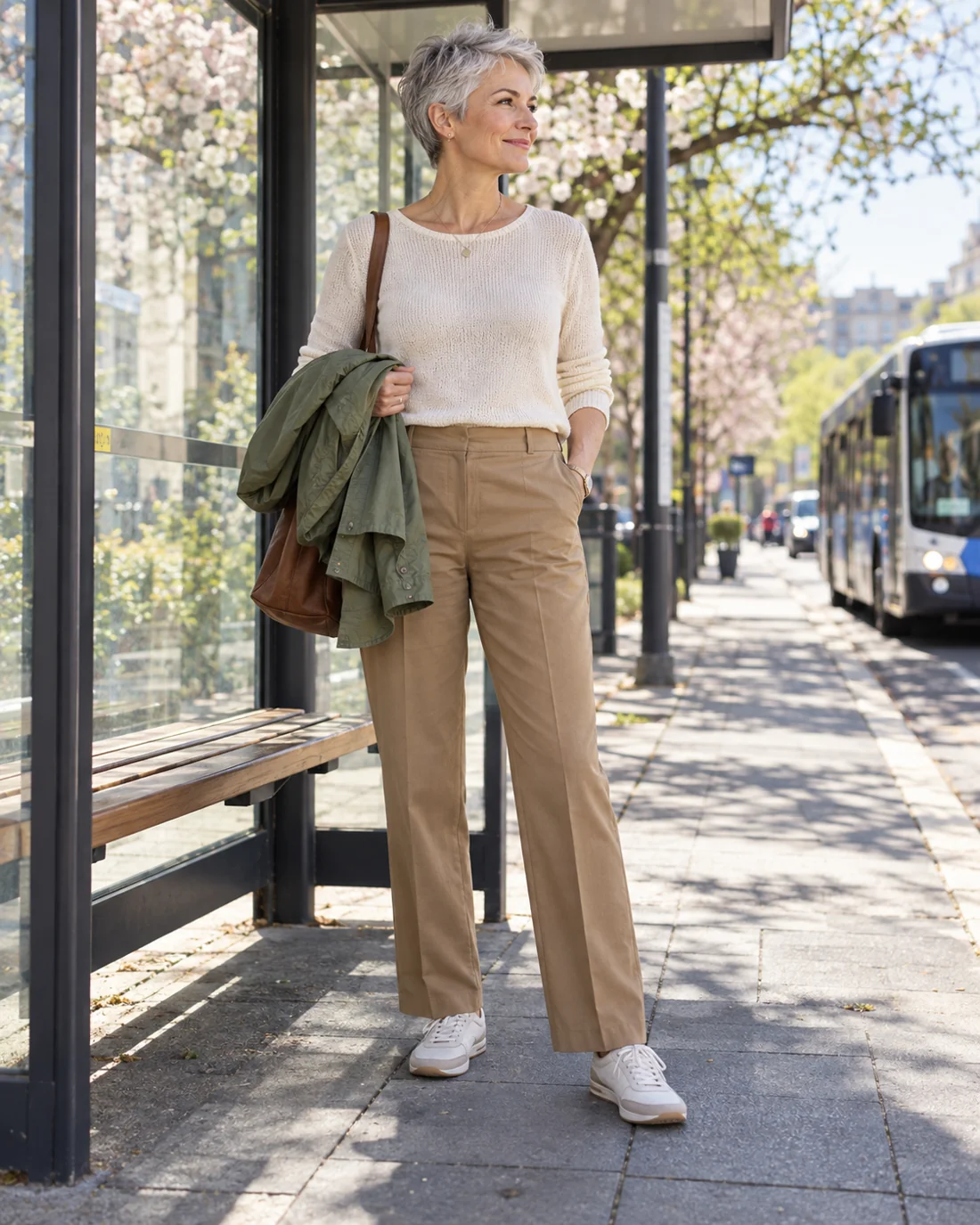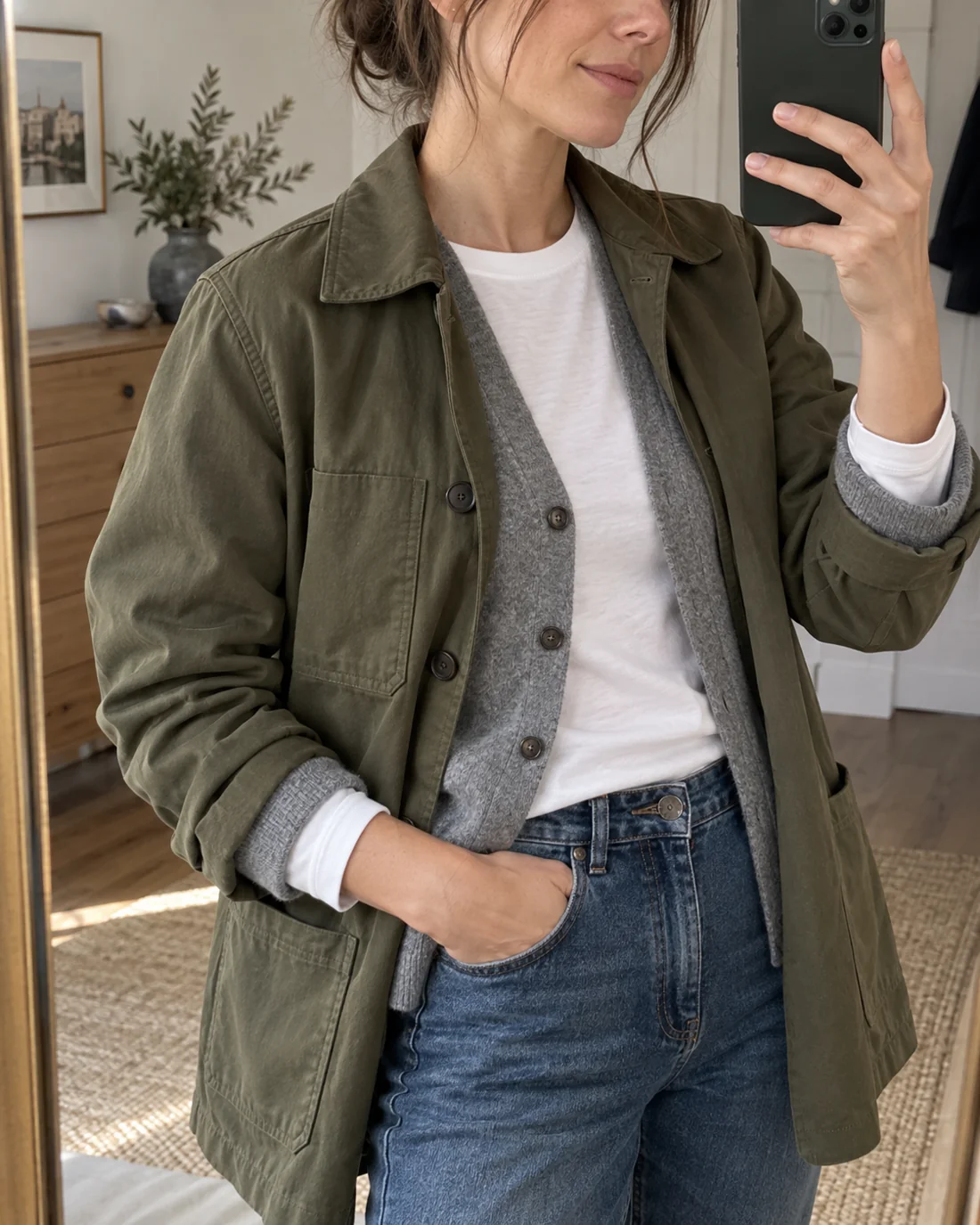
Dress from the inside out
Begin with the innermost layer and inspect it alone. Are the side and shoulder seams where you want them? Does the hem remain in position after sitting? A twisted tee does not automatically become smooth beneath a jumper. Arrange it first and decide whether its cut works as a base at all.
Put the next layer on slowly and watch what changes. If the sleeves are pulled upwards, return them fully to the intended position. If they immediately move again, this is more than a one-off untidy fold: it tells you something about how the two pieces fit together.
Assess the sleeves separately
A wide-sleeved shirt needs more room beneath a cardigan than a smooth tee. Gathered shoulders add volume directly below the armhole. That may be a deliberate visible feature, but it cannot fit inside every close jumper. Choose either an outer layer with enough room or a differently shaped inner garment.
Raise your arms sideways and reach forwards. Ordinary movements should be possible without pulling the entire outfit up the torso. Then inspect the cuffs. A narrow outer sleeve can trap several inner layers in one place even when the shoulder has enough space.
A visible shirt sleeve need not be exactly the same length as the jumper sleeve. If you want it to show, arrange it deliberately. A loosely escaping cuff may instead interfere with hand movements. Decide according to the activity you will perform, rather than only the view with arms hanging down.
Limit what gathers at the waistband
A tucked shirt, thick trouser waistband and close jumper band can push against one another. First make a single change: leave the shirt out, choose a shorter jumper or remove the extra band. Changing several pieces simultaneously makes it harder to identify what resolved the problem.
Distribute tucked fabric around the waistband rather than stuffing it only at the front. Sit for a few minutes afterwards. If the waist becomes uncomfortable, the amount of fabric or the construction is unsuitable for this combination. There is no reason to preserve a tucking technique simply because it produces a defined waist in a photograph.
Coordinate collars and fastenings
Two high collars may feel comfortable or may push each other upwards. Check the neck area with the coat closed if that is how you will wear it. A fine turtleneck beneath a shirt behaves differently from a chunky collar beneath a scarf. The names alone do not establish how much room the actual combination occupies.
Several button plackets or zips stacked together can press while seated. Notice whether a hard point forms there. An open middle layer may help if it still suits the day. Otherwise, a layer without another fastening may be simpler.
Test surfaces together in motion
Some fabrics slide easily over one another; others catch during movement. Judge this while wearing the outfit. A material name alone does not explain every combination, because surface, lining, cut and construction also matter. Walk a few steps, turn and sit before deciding.
If a skirt rides up beneath knitwear, check the jumper's lower edge and the skirt's inside surface. A suitable underlayer you already own may be an option, but it adds another layer in turn. Compare a different top too rather than automatically solving the problem with more fabric.
Record the finished arrangement
Finally add the outerwear and bag. Only then is the arrangement complete. A previously comfortable shoulder may respond differently beneath a heavy strap, and a coat may trap a free hem. Test the outfit with the usual bag contents.
Note the pieces in a successful version and the order in which you put them on. Record which layer can come off indoors as well. This creates a repeatable combination without requiring the same number of layers every day. The aim is room for movement in the right places, not a silhouette that is always as narrow or as bulky as possible.