A T-shirt for a straightforward combination
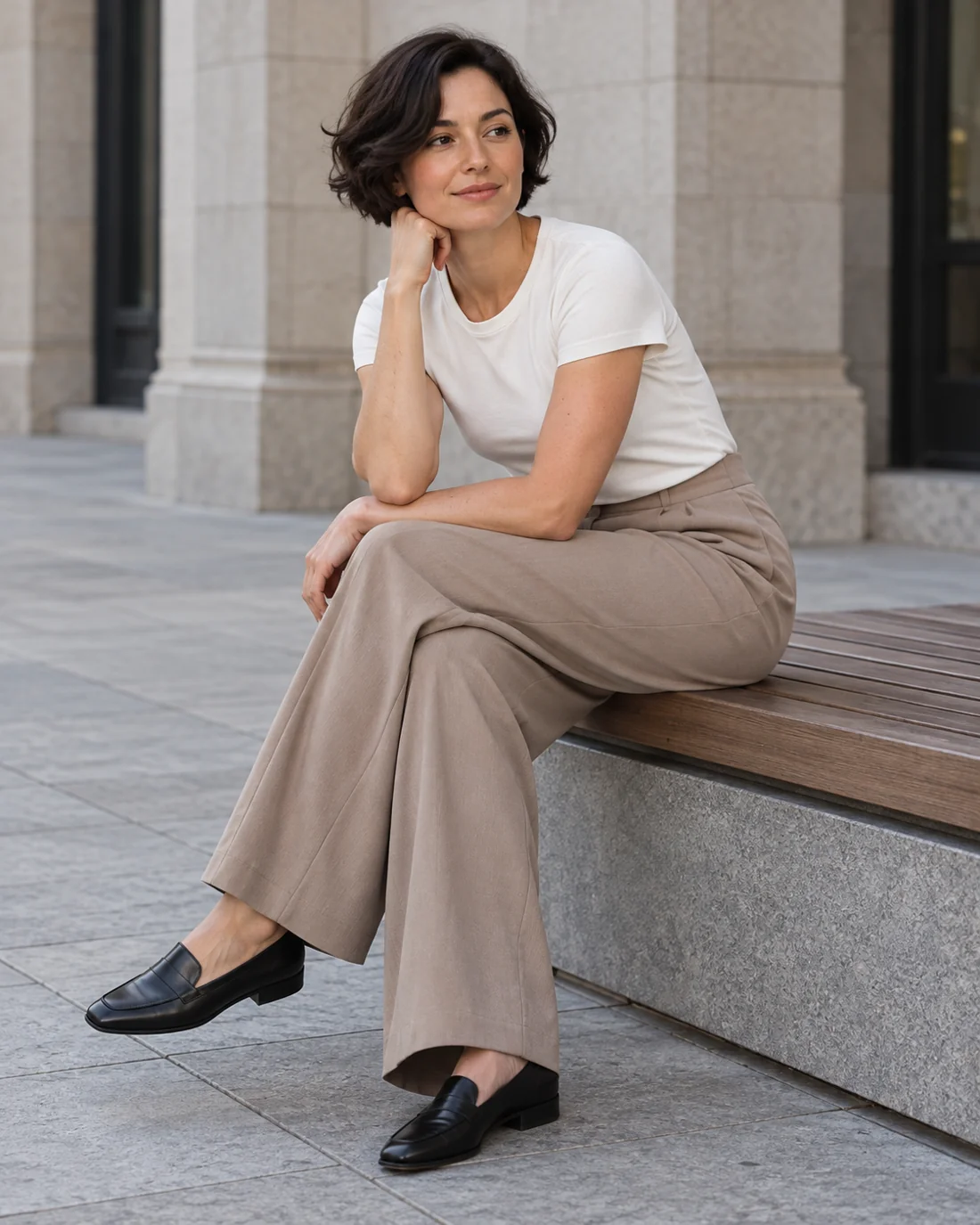
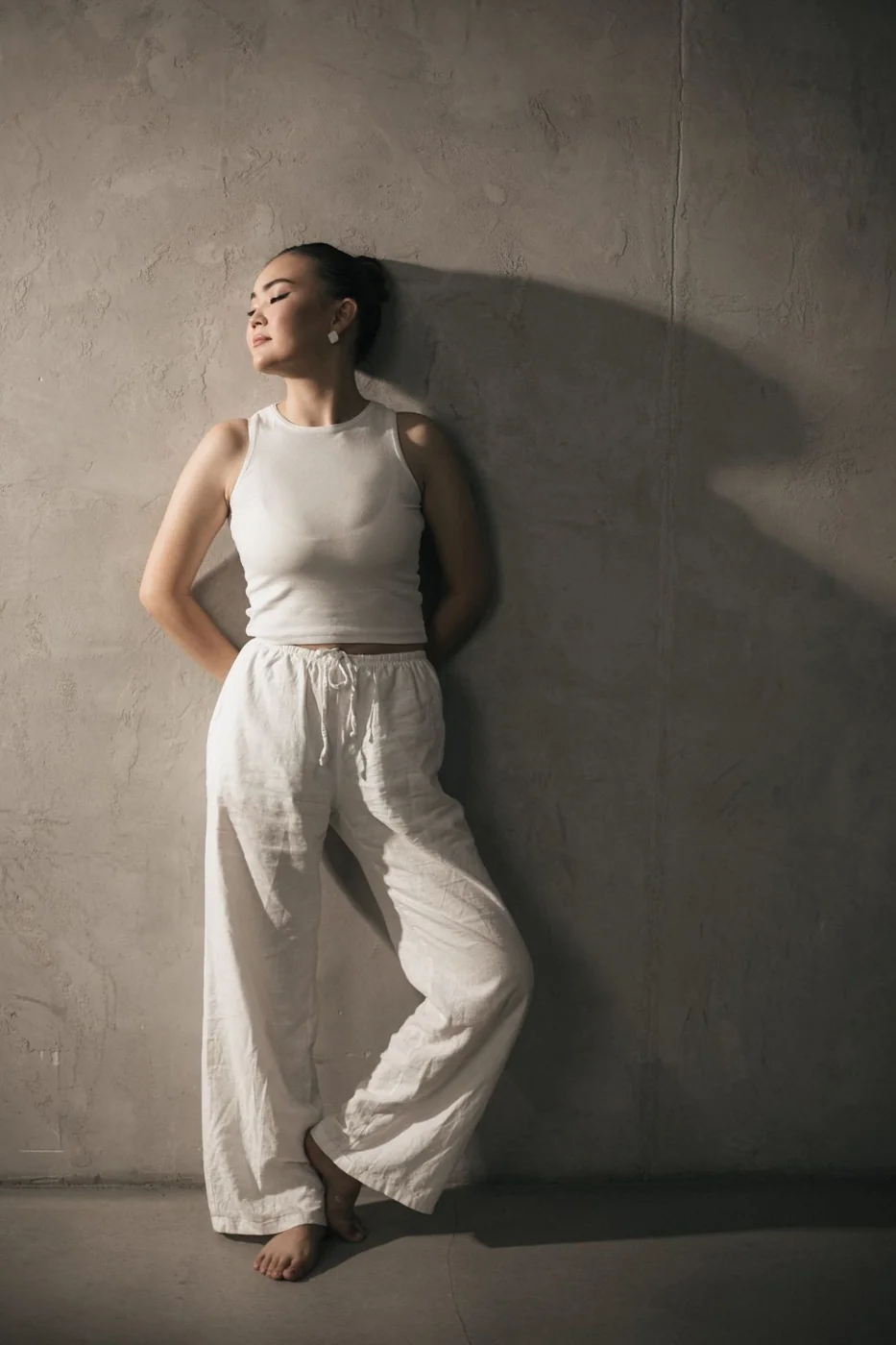
A plain tee leaves the trousers clearly visible. With an elastic waist, a short hem can sit above it without tucking. Part of a longer tee can go inside if it does not form a thick roll. Check the side view as well for overlapping pockets and folds of shirt fabric.
Look at very thin pale trousers in daylight with the underwear you plan to wear. Decide from the specific fabric whether you want more coverage. A longer top can be a deliberate styling choice, but it does not replace a sitting test, when fabric tension changes.
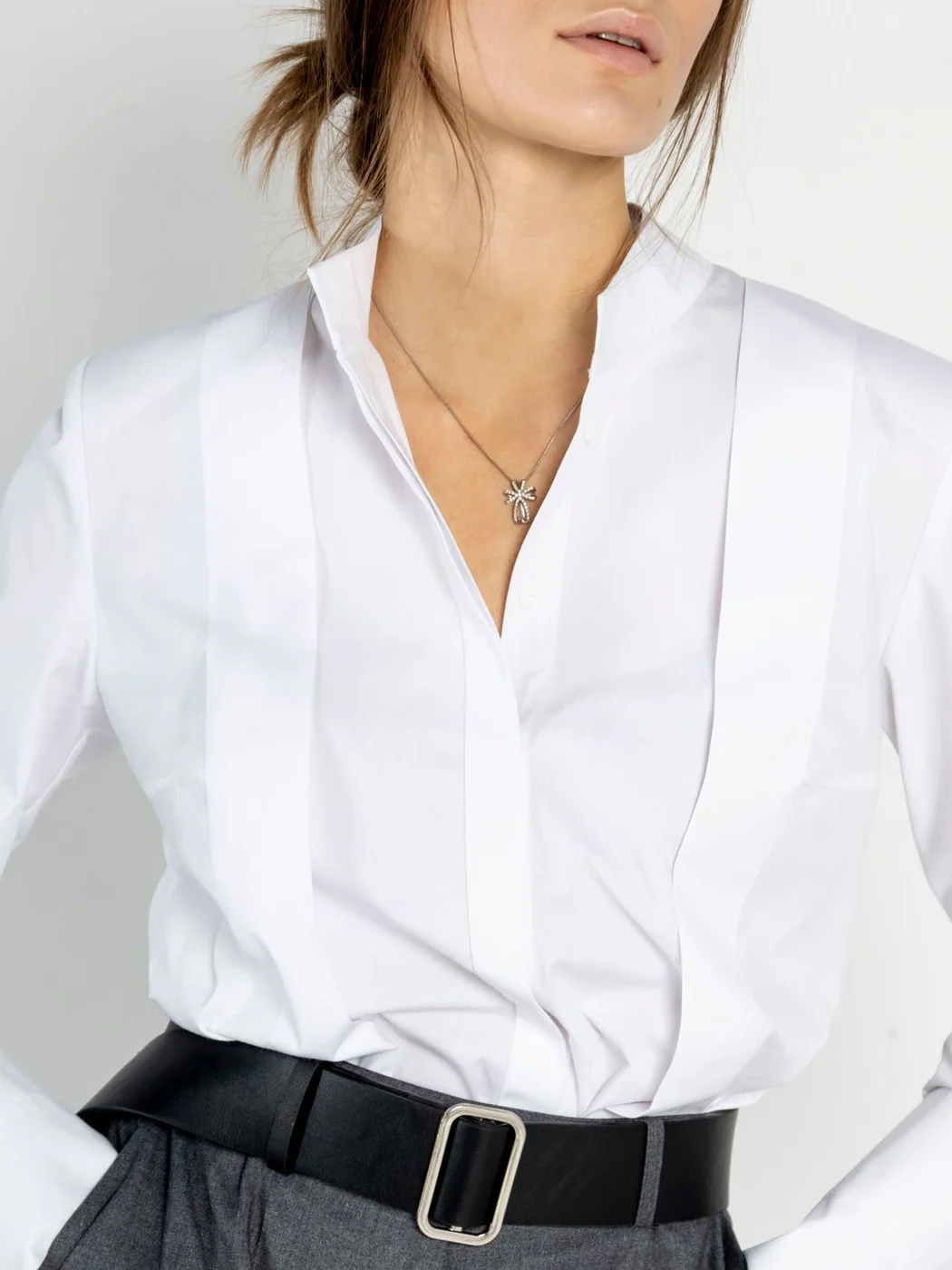
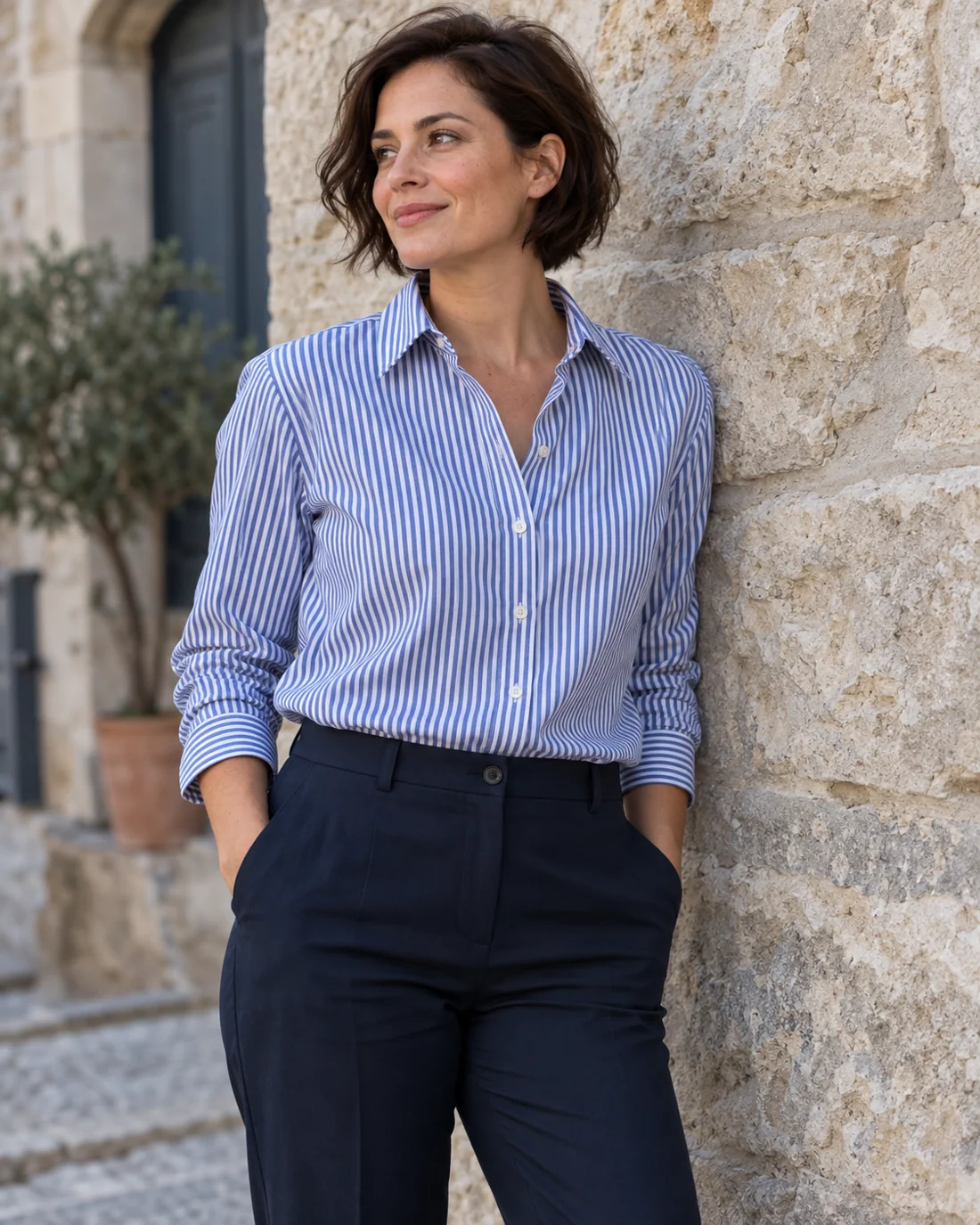
A shirt or knit changes direction
A shirt in a similarly relaxed fabric creates a continuous, soft combination. It does not have to be an exactly matching set. If both garments are beige, compare their undertones in daylight. Clearly different colours are often easier to combine deliberately than two almost identical shades.
A fine jumper introduces another surface. Check its lower edge carefully: a close knitted band can lift lightweight trousers or compress the elastic waist. A straight, loose hem often lets the trousers hang more freely.
For a blazer combination, first put the jacket over a plain tee. This makes it easier to see whether its shape works with the trousers. Add a blouse, belt or jewellery only after establishing that relationship.
Shoes determine the usable length
Wide linen trousers can work with several shoes, but one hem length does not suit every height. Walk in the intended footwear and check whether the fabric slips beneath your heel at the back. A temporary turn-up changes the drape; a neat alteration is more predictable for permanent shortening.
Expect the outfit to look different after sitting than when freshly put on, and assess it at that stage too. Washing and ironing decisions belong to the garment label. The outfit itself can benefit from accounting for the visible texture from the beginning.