Beneath short sleeves
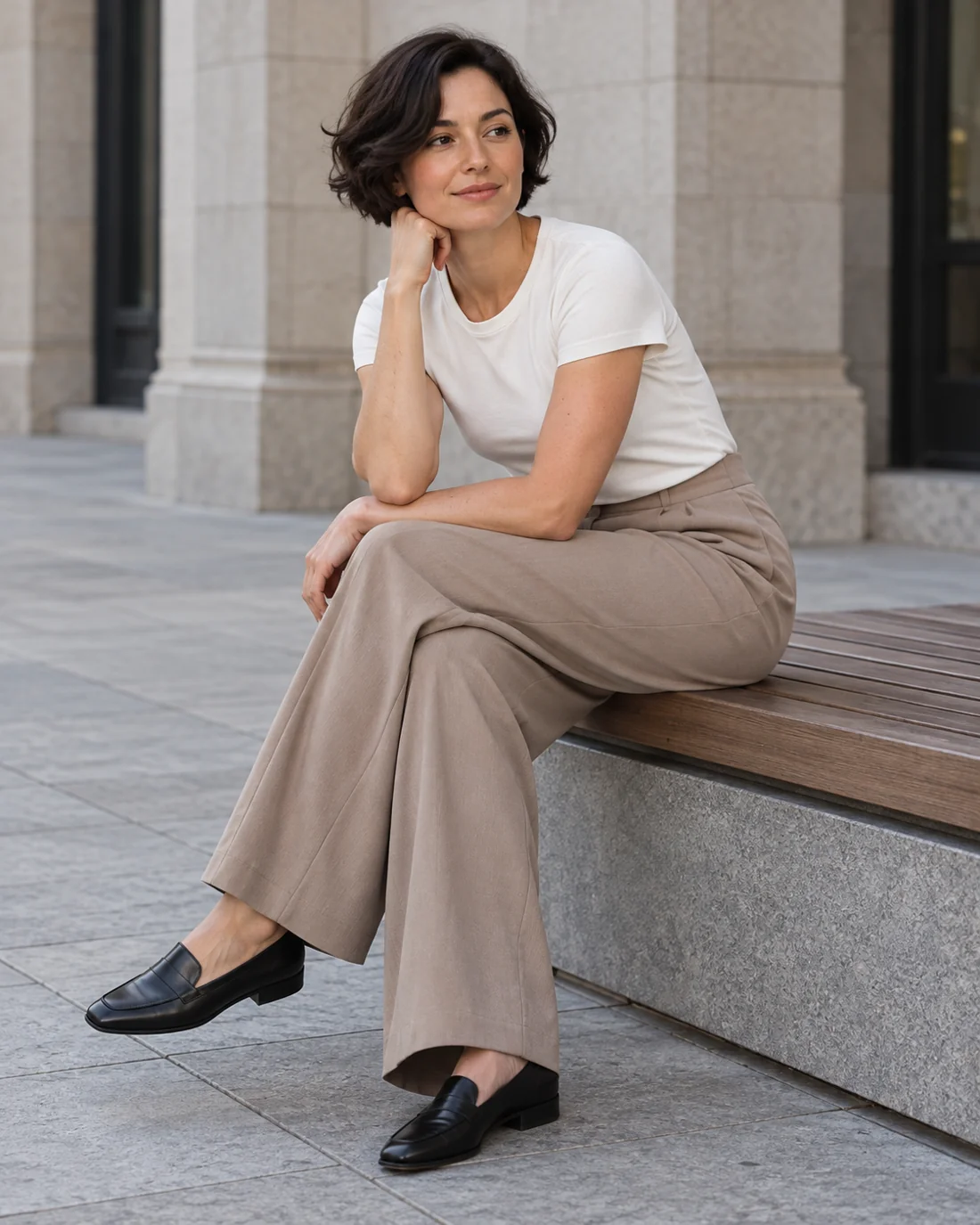
Compare the two sleeve shapes first. A wide short sleeve creates a clear narrow line beneath it. If the outer opening is very close, it may squeeze the long sleeve into folds. Try the pieces on and extend your arm rather than judging the fabrics on a hanger alone.
A pale long sleeve beneath a dark T-shirt is more noticeable than two similar colours. With a large graphic above, a quieter second colour can keep the arrangement easier to read. If you deliberately combine several colours, there is no need to repeat every one in shoes and a bag.
The neckline and hem count too
A second neckline can remain visible. Check whether it shows by roughly the same amount all the way round or appears only at one shoulder. Different neck shapes can be interesting; a twisted inner layer is usually uncomfortable and can be resolved by rearranging it or changing the cut.
At the bottom, you can conceal the long-sleeve tee, tuck it in or reveal it as a longer layer. Choose one arrangement deliberately. A thin hem that escapes on one side looks different from an evenly visible strip. Check the back again after sitting down.
Beneath an open layer
An open shirt or vest also reveals the front of the tee. This can suit stripes or a colour you want to wear in a smaller area. Make sure pockets and fastenings on the outer garment do not continually catch against the inner one.
For a first trial, use a plain long-sleeve tee, an open denim jacket and trousers you already enjoy wearing. Then change only the outer layer. You can identify whether you like the longer sleeves for their colour, coverage or extra line. That observation is more useful for future outfits than a list of supposedly essential basics.