Pick up one colour deliberately
Begin with a colour that actually appears in the print. A top need not match it exactly, but the two should make sense together in daylight. Cream and pure white, or warm brown and cool grey, can look more alike on a screen than beside each other on a bed.
The skirt's background colour often creates a quieter connection. A small accent colour makes the top more noticeable. Try both if you own suitable pieces, keeping shoes and bag unchanged at first. That makes the effect of the colour change easier to identify.
Treat a large print differently from a small one
Imagine a skirt with large blue and cream areas. A cream top echoes the light area; a navy one shifts the darker weight upwards. A third shade such as red introduces another deliberate decision. Test the two colours from the skirt first so you have a reference for the stronger option.
With a small multicoloured print, the distant impression may instead be dark or muted. A top matching its tiniest pale detail may then stand out more than expected. Look not only at whether a colour exists, but at how much space it actually occupies.
If a neutral tee feels too simple beside the print, first change its shape: another neckline, a straight rather than curved hem, or a longer sleeve. This creates a difference without immediately adding a second pattern. The suitable option may already be in your wardrobe.
Compare the top's edge with the print
A straight hem may cut a large flower or broad stripe directly through its centre. This is not automatically wrong, but it may not be the position you want. A tucked T-shirt reveals more pattern; a longer top moves the visible section downwards.
At a gathered waistband, leave enough room for tucked fabric. A thin blouse distributes differently from a thick jumper. If you prefer the top outside, check whether it catches between the folds as you walk or hangs freely above them.
Introduce a second pattern
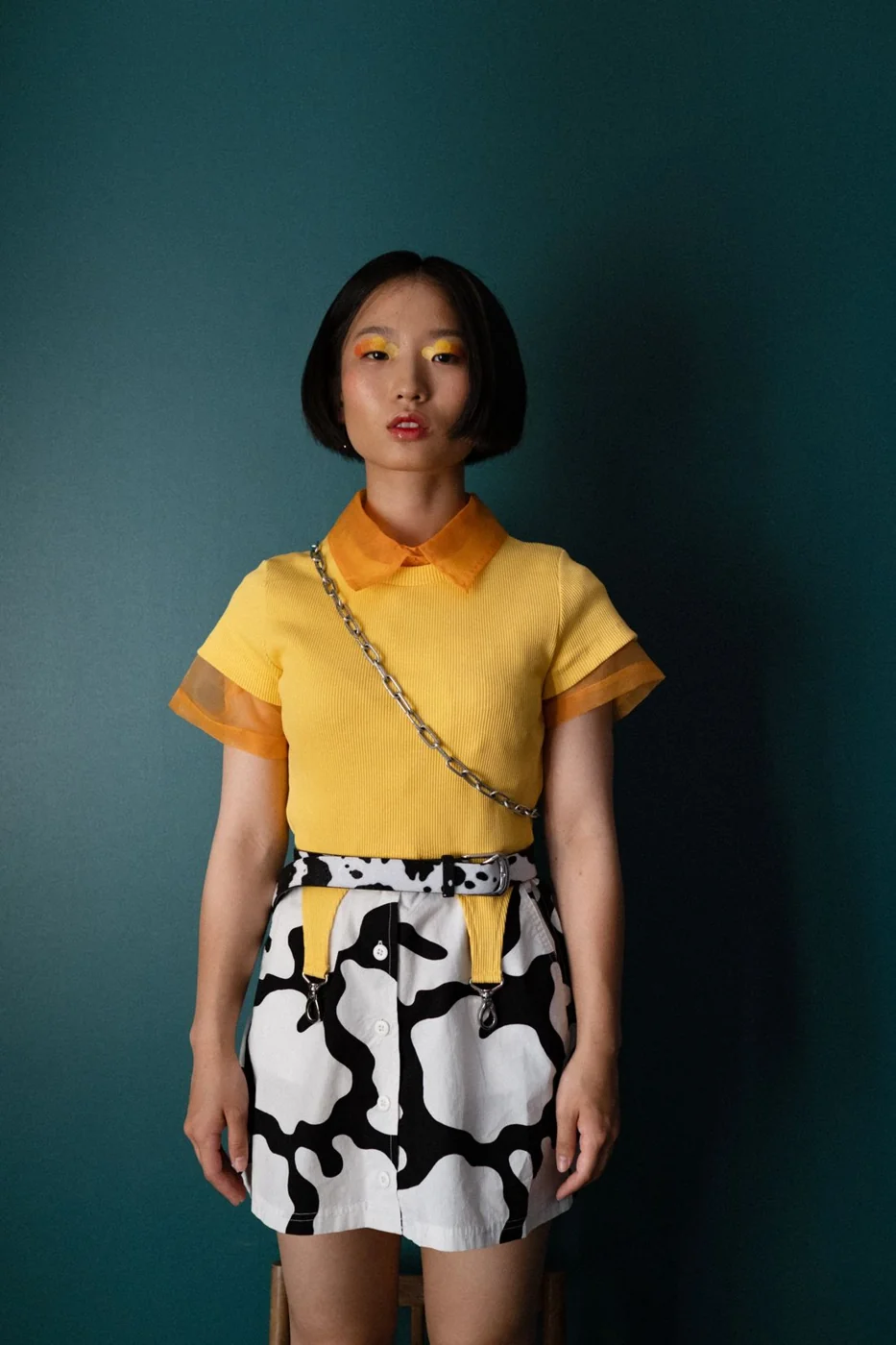
If you want to mix prints, start with noticeably different scales, such as small dots beside large flowers. A shared colour can connect them, but is not a guarantee. View the actual outfit from normal conversation distance rather than comparing tiny fabric samples alone.
A striped top also introduces a direction. Look at how those lines meet the skirt, particularly at the waist. If the result feels too busy, there is no need to question the skirt itself; first return to the plain top.
The back matters too. Some skirts show a different section of the print there or have a visible zip. Turn around in the mirror and check the whole combination before introducing another detail such as a belt or a substantial necklace.