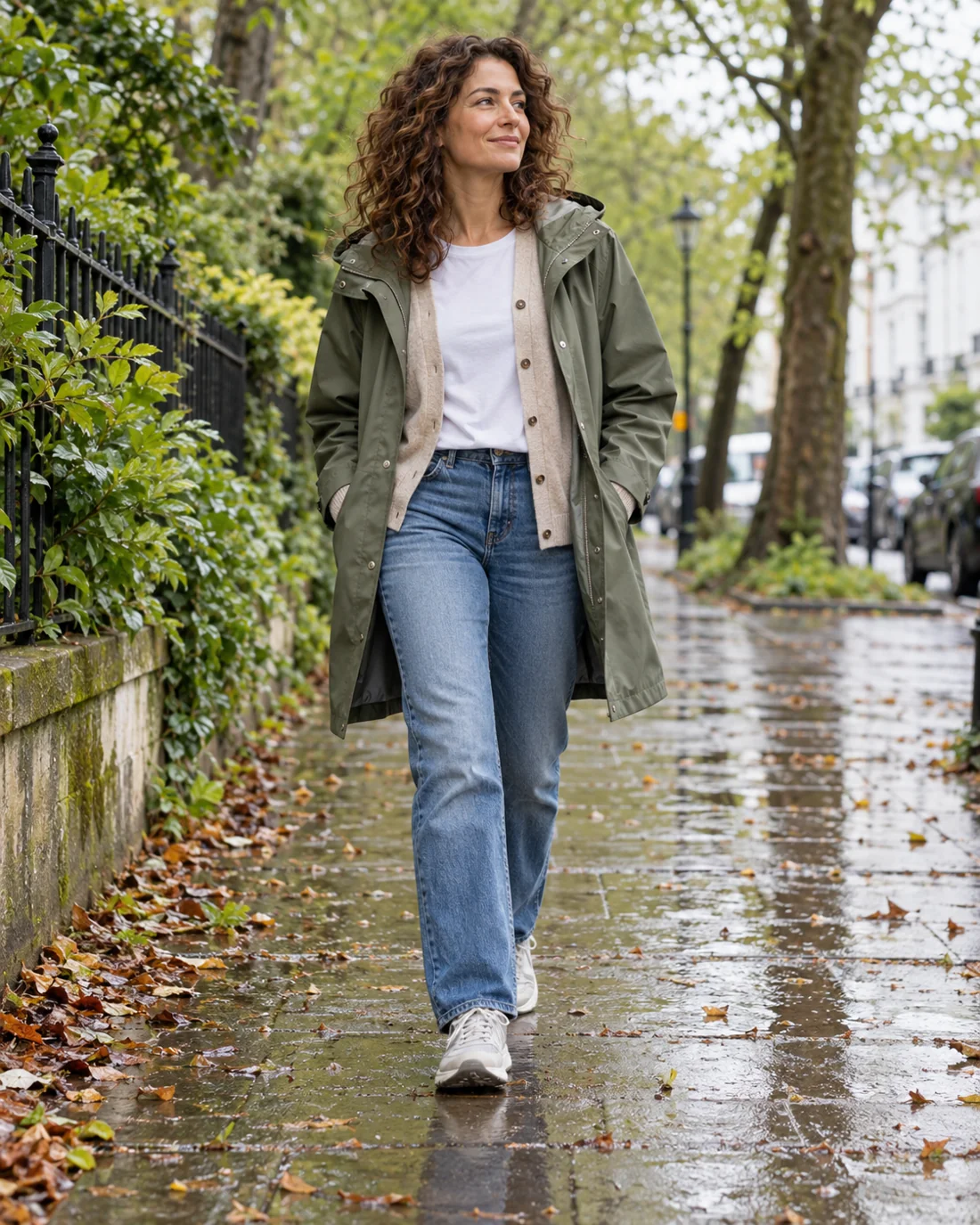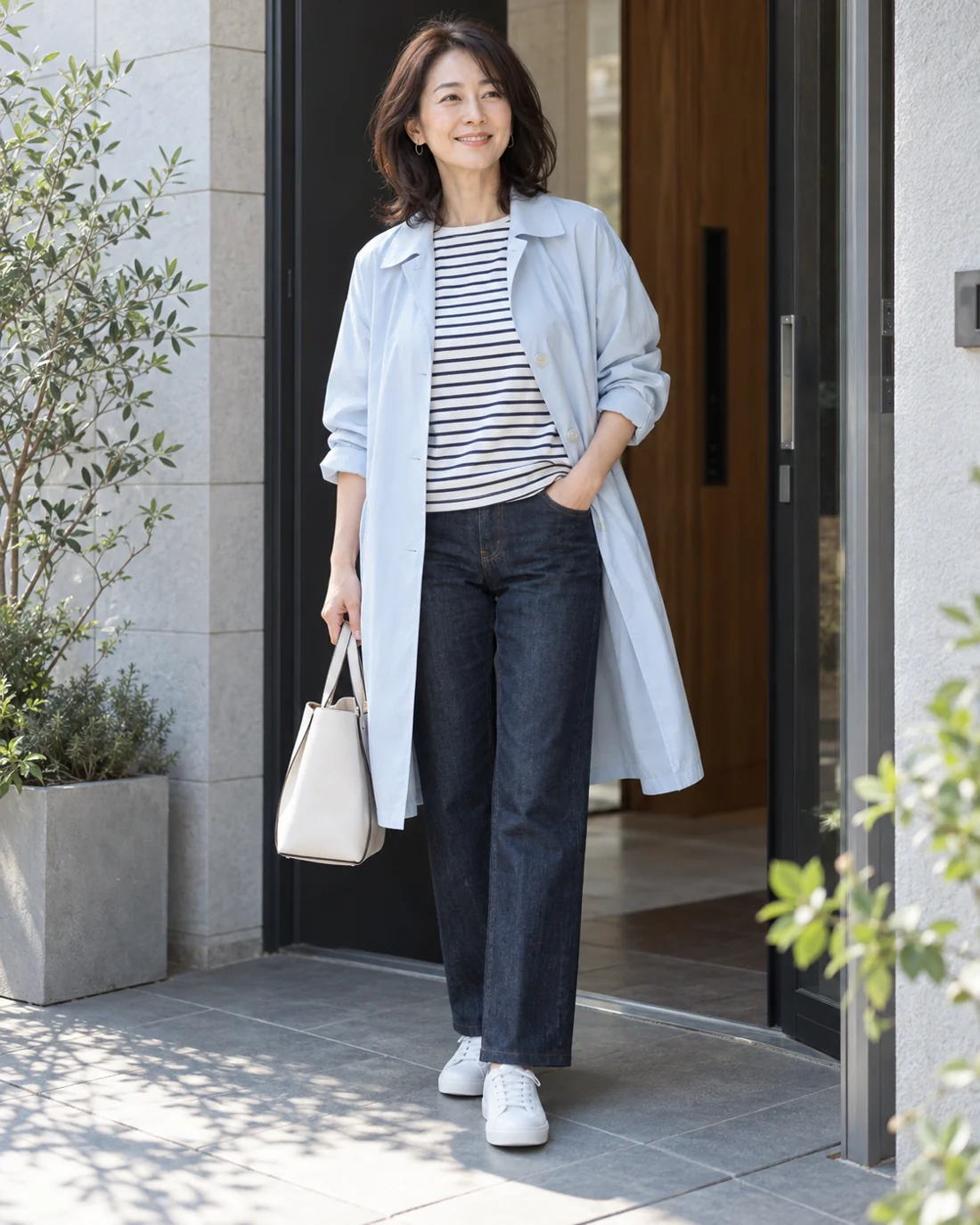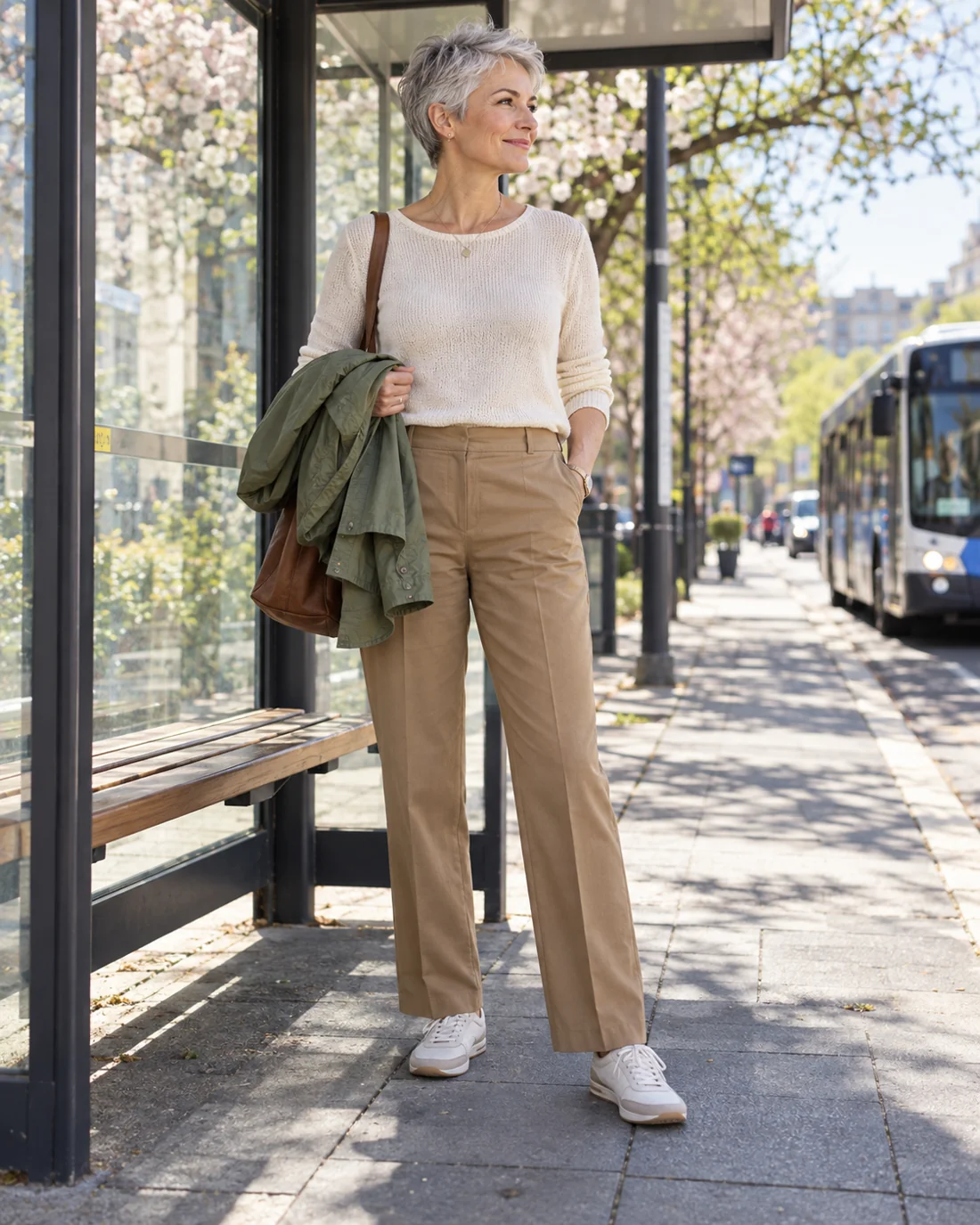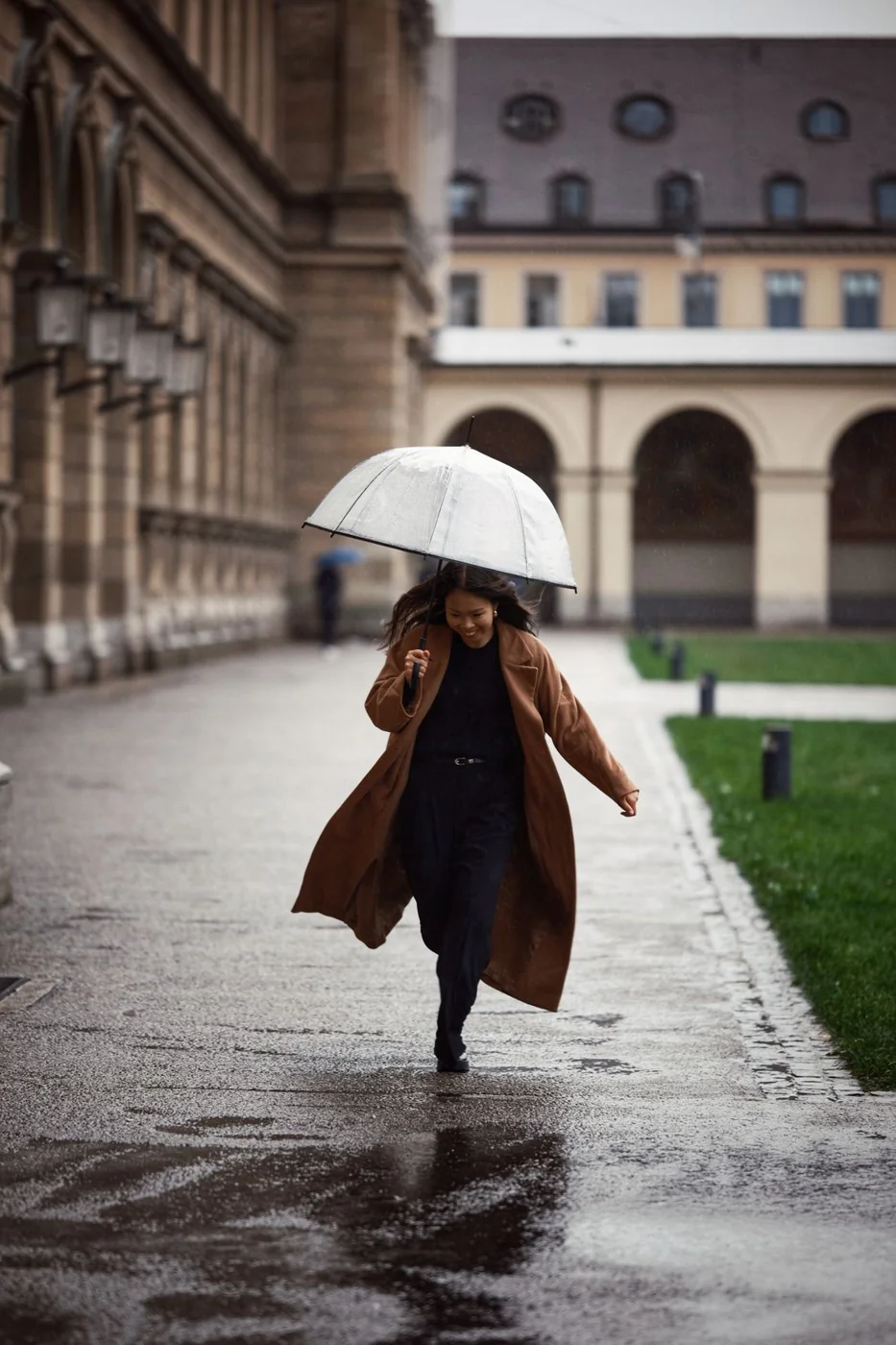
Consider the actual route
How many minutes will you really walk outside? Are there stairs, puddles or an uncovered wait? A short trip with an umbrella differs from a longer walk with luggage. Choose the outer layer by its stated properties and expected conditions rather than the label transitional jacket alone.
The bag belongs in this plan. Papers, electronics and delicate belongings need suitable storage; an open tote does not automatically perform the same job as a closed bag. Check whether the strap fits over the rain jacket and whether you can open doors while holding an umbrella.
Keep the lower half in mind
A long trouser hem can get wet despite a good jacket. Try the trousers with the intended shoes and inspect the back edge while walking. A shorter pair you already own may suit that day better. A temporary turn-up should stay securely in place without adjustment at every step.
With a skirt, check that the coat allows movement. A narrow coat hem over a full skirt can interfere with boarding transport and climbing stairs. The lengths do not have to match exactly; it matters more that both garments move together.
Change at the destination
If you can change shoes at work, prepare the second pair and any socks required. Think about transport: wet footwear should not sit unprotected beside documents in a bag. Without storage, a pair that works throughout the day is often the more realistic choice.
Hang damp outerwear so it can dry according to its care instructions without wetting other belongings. A blazer beneath should still sit comfortably after the coat comes off. Rehearse the whole combination at home once, including the sleeves.
An outfit photograph alone cannot show these transitions. Briefly practise the sequence with bag, umbrella and jacket. If you continually need to put belongings on the ground, simplify the arrangement before considering any additional colour coordination.