Keep one piece and change another
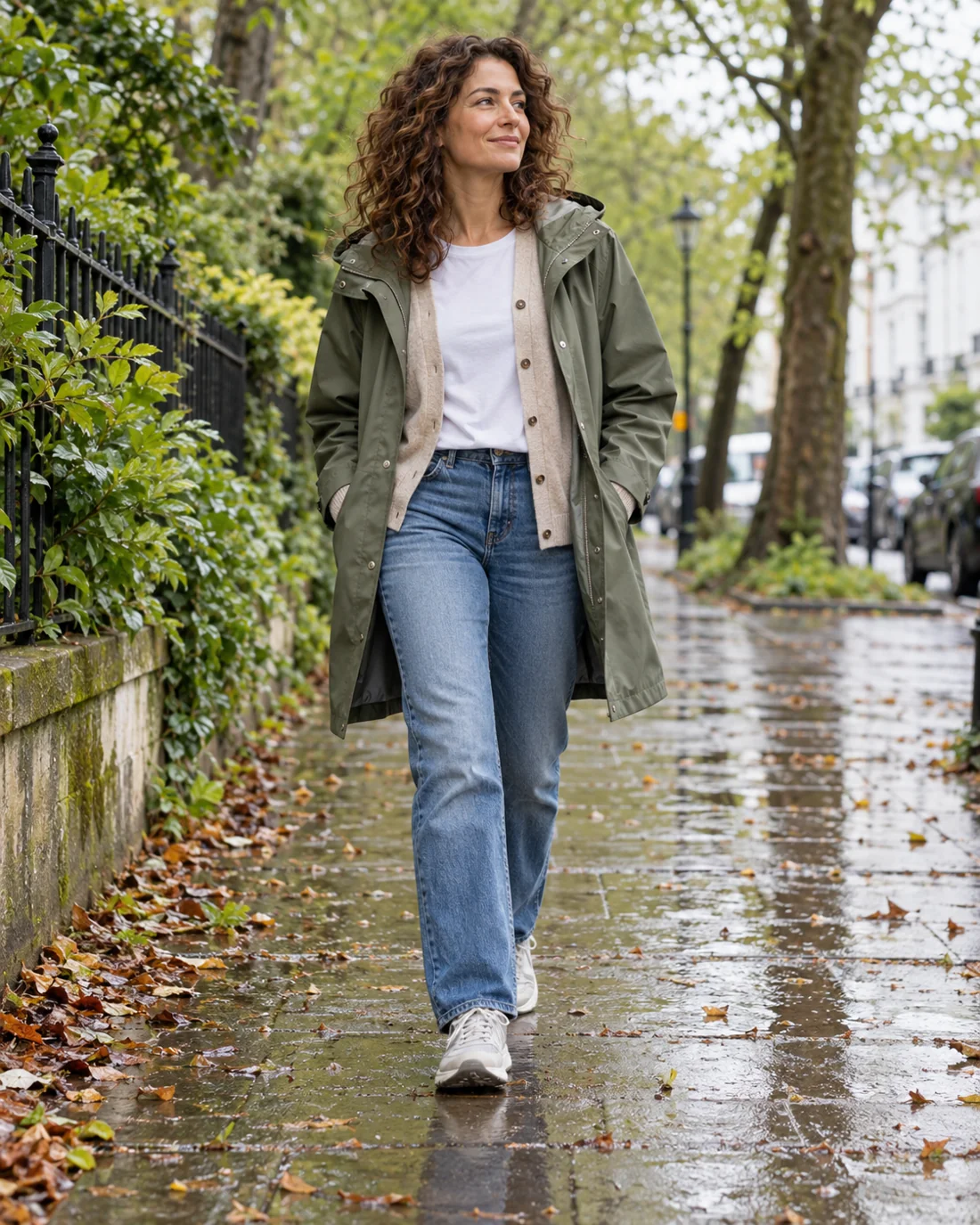
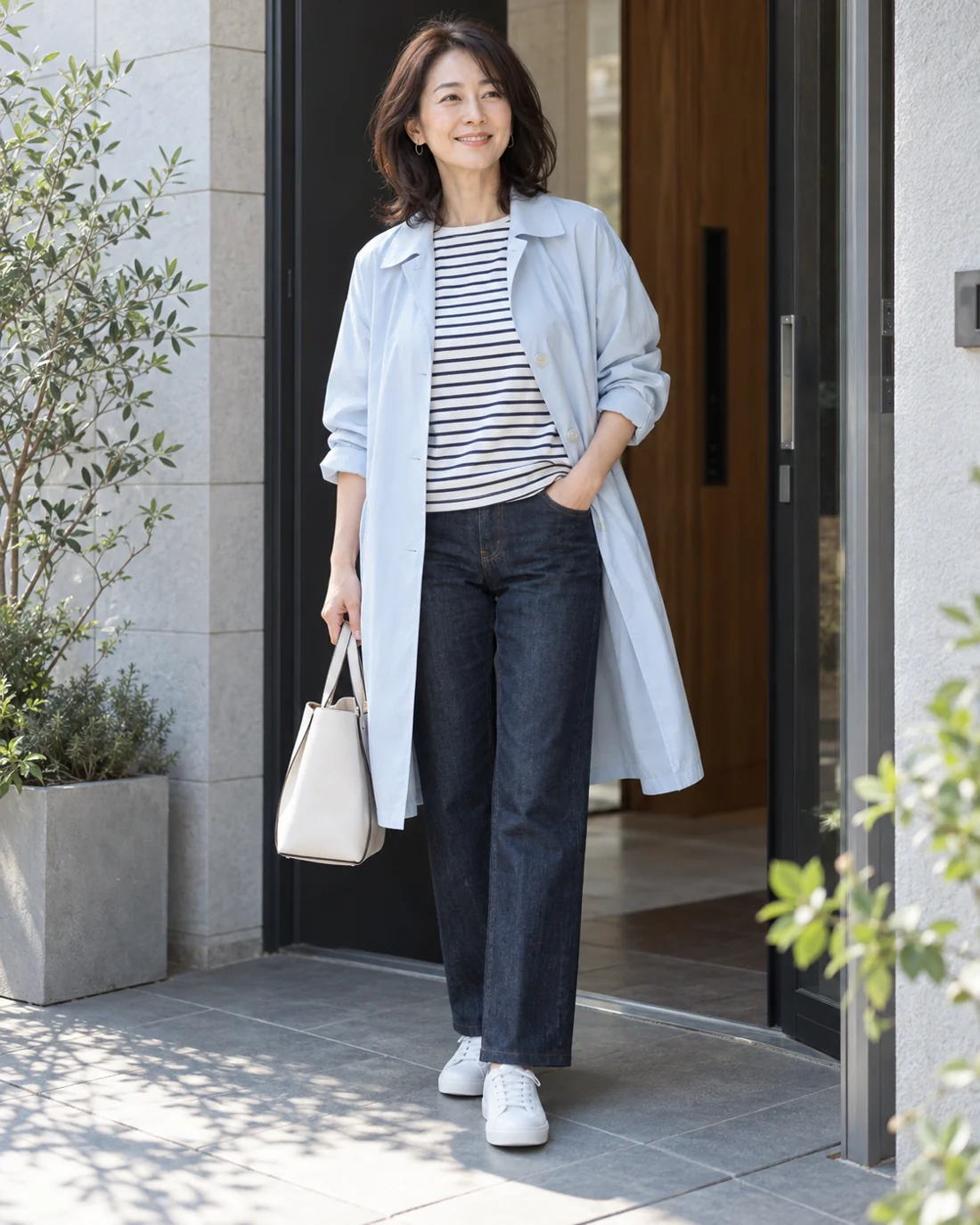
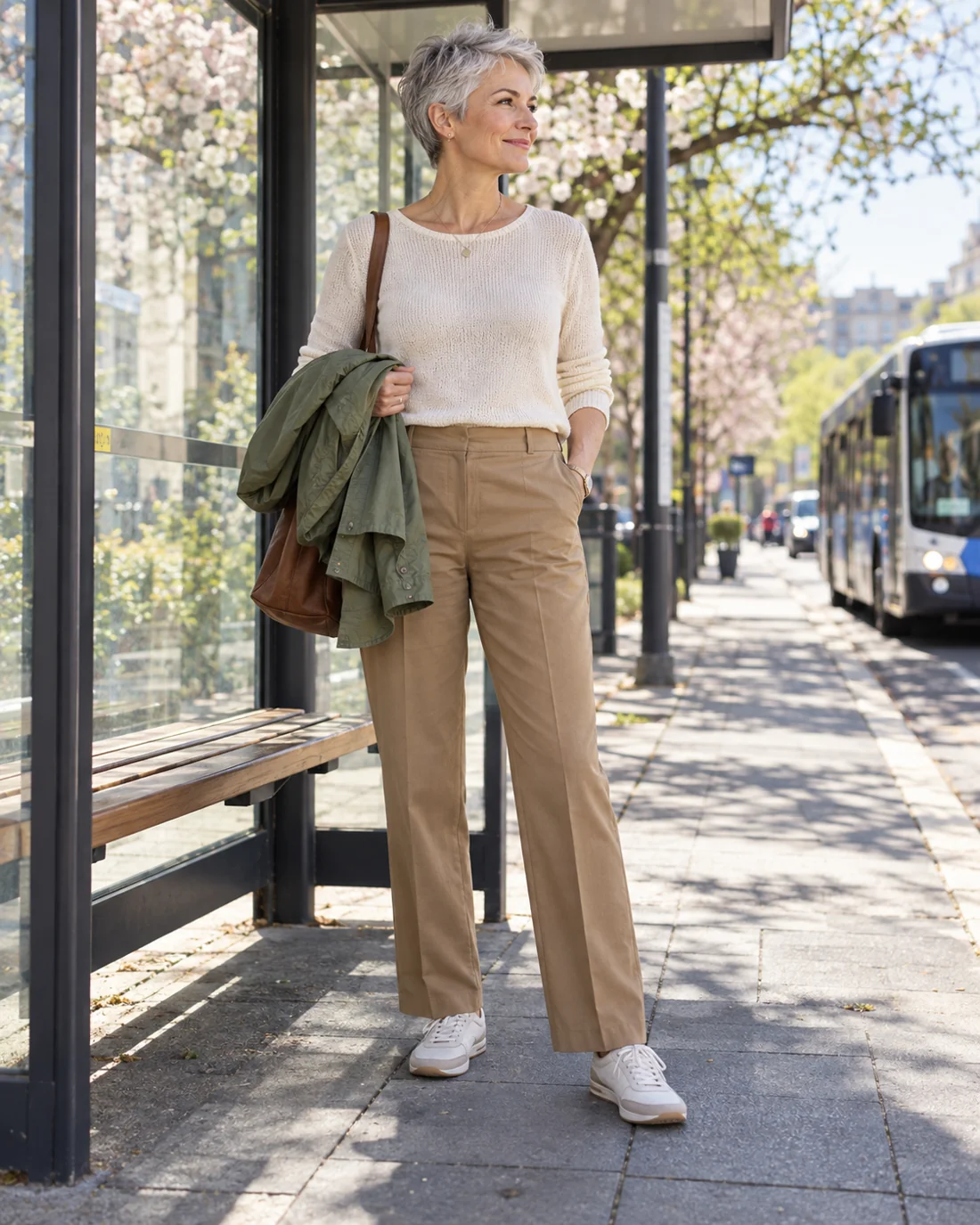
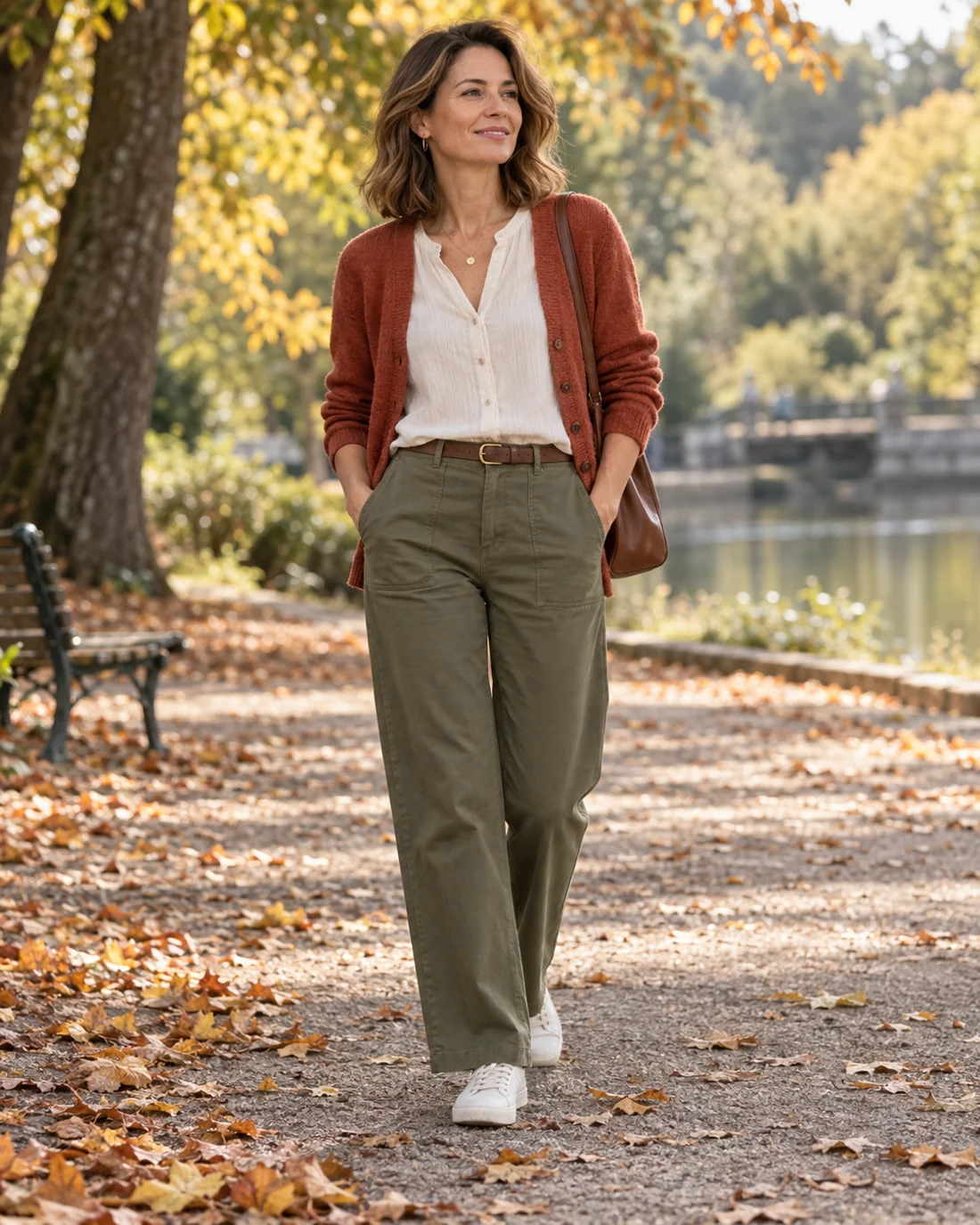
Take a summer outfit you enjoy and initially change only the largest upper layer. A white tee and pale trousers look different beneath a navy jacket than on their own. A colourful dress gains another area through a brown or grey cardigan without needing to lose its own colour.
Choose the addition from what you already have. If two shades nearly match, compare them in daylight. A clear difference can be easier than an unsuccessful search for exact agreement. A light colour can remain in the outfit even when the footwear has become closed.
Photograph the original and changed versions in the same stance. This reveals whether colour really makes the difference or whether jacket length is responsible. Changing shoes, bag, top and hairstyle simultaneously makes that comparison unnecessarily difficult.
Connect the areas that actually show
A scarf containing a dress colour can link it to a jacket. It is only useful, however, if you want to wear a scarf. A plain top that picks up a quieter colour from a skirt print may be enough instead. Every combination does not need a newly purchased linking piece.
Consider which areas appear outside and inside. A coat may cover much of the summer outfit. Once removed, the lighter combination remains; it need not become darker solely because of the calendar. Required warmth and colour effect are separate decisions.
Finish by recording two transition outfits suited to the actual temperatures and routes. One can stay mainly light while the other uses a larger dark area. You retain choice without turning a small seasonal adjustment into a whole new wardrobe.