Decide hems before colours
Long wide trousers can pick up moisture and dirt from wet ground. Check their clearance with the planned shoes. Different trousers or a shorter skirt may be easier for that journey than an improvised rolled hem that repeatedly falls down.
Movement matters with dresses too. A very full, light skirt moves more in wind than in a quiet room. Walk a few steps while holding your bag or umbrella as you would outdoors. You should still be able to free a hand to open doors.
Two journeys with the same summer outfit
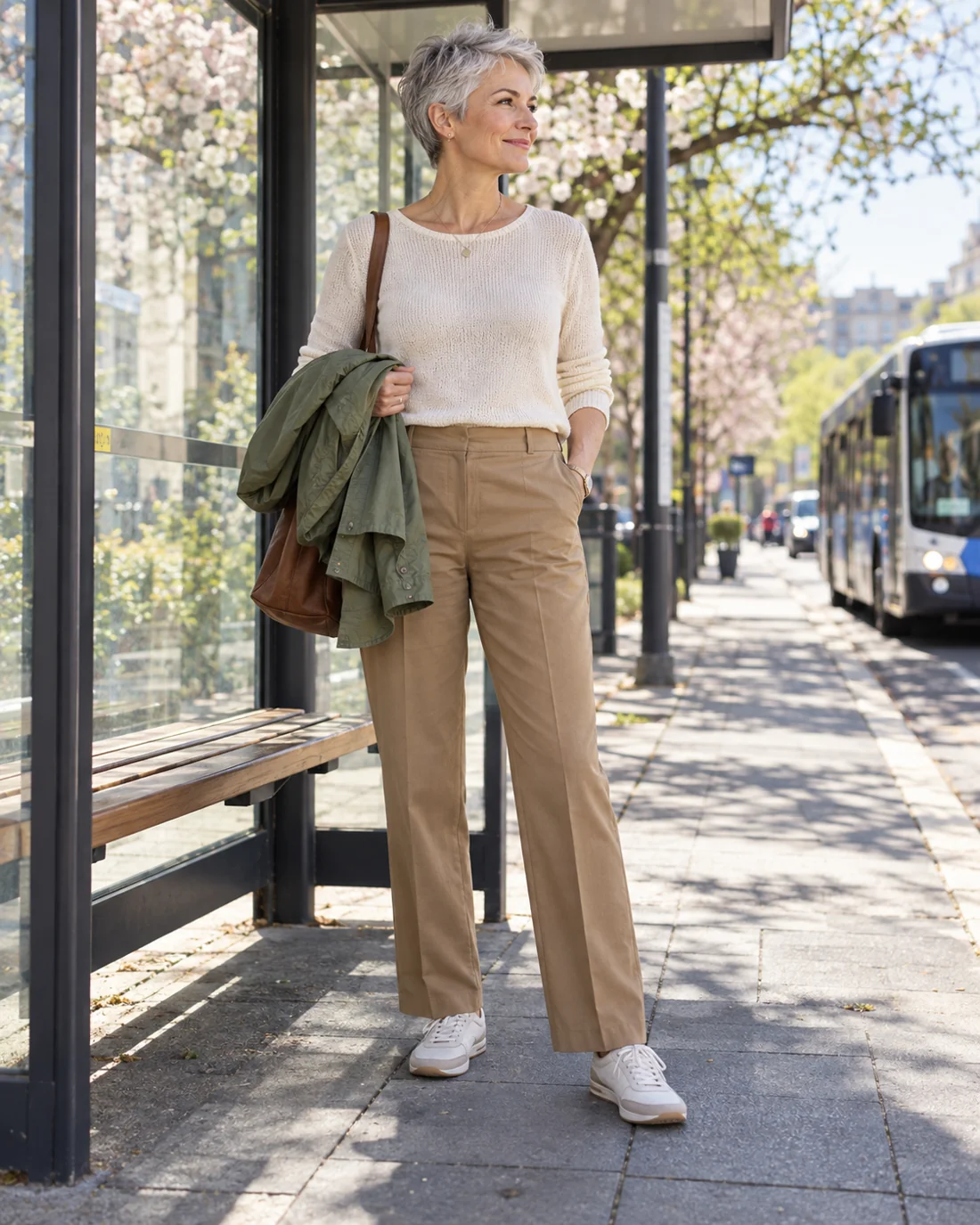
For a short trip to a building with a cloakroom, outerwear may be straightforward: it is worn only en route and removed on arrival. Still check whether damp sleeves or a wet hood touch the top beneath during removal. A small organised place to put it is more useful than immediately forcing everything into a full bag.
A day with several journeys and no fixed storage requires different handling. The jacket comes on and off repeatedly, and an umbrella needs temporary storage. Do not choose the bag solely to match the dress. It must carry what is genuinely needed and separate damp pieces sensibly from other belongings.
The same dress may serve both situations while shoes and outerwear differ. Record those versions separately. This avoids a supposedly universal rain outfit whose problems appear only at the second appointment. A small hem change or another existing shoe pair may contribute more than an extra decorative layer.
Choose the extra layer realistically
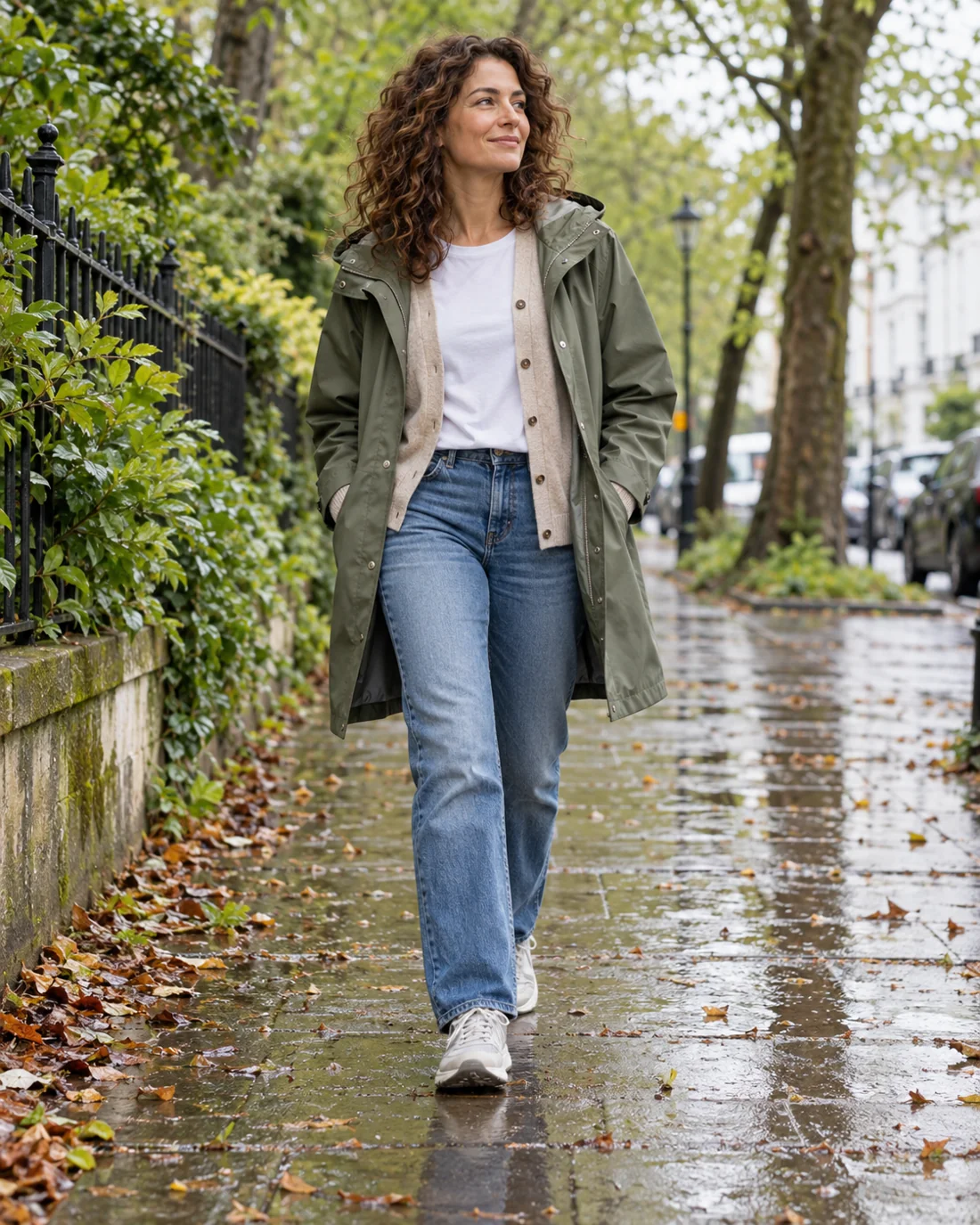
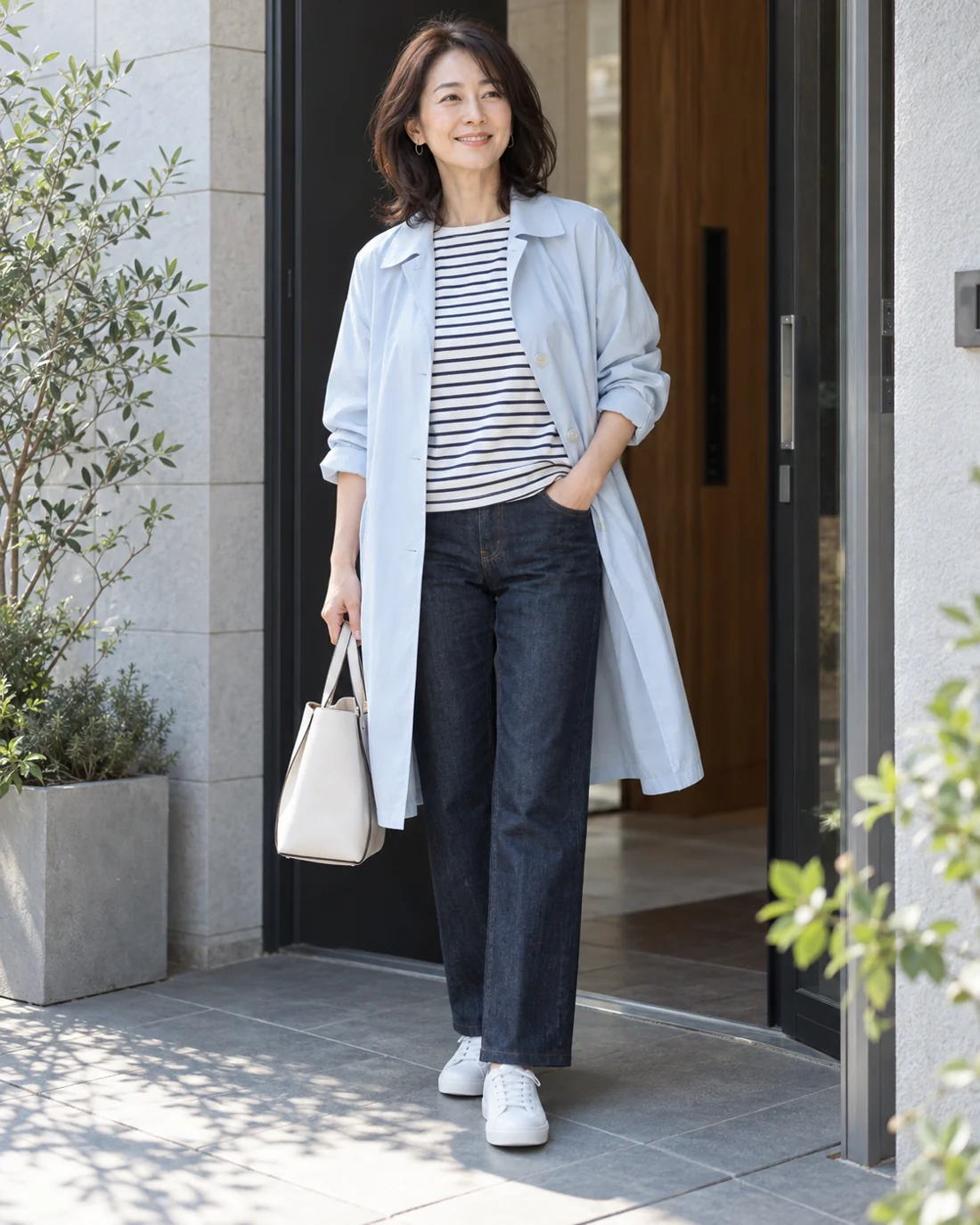
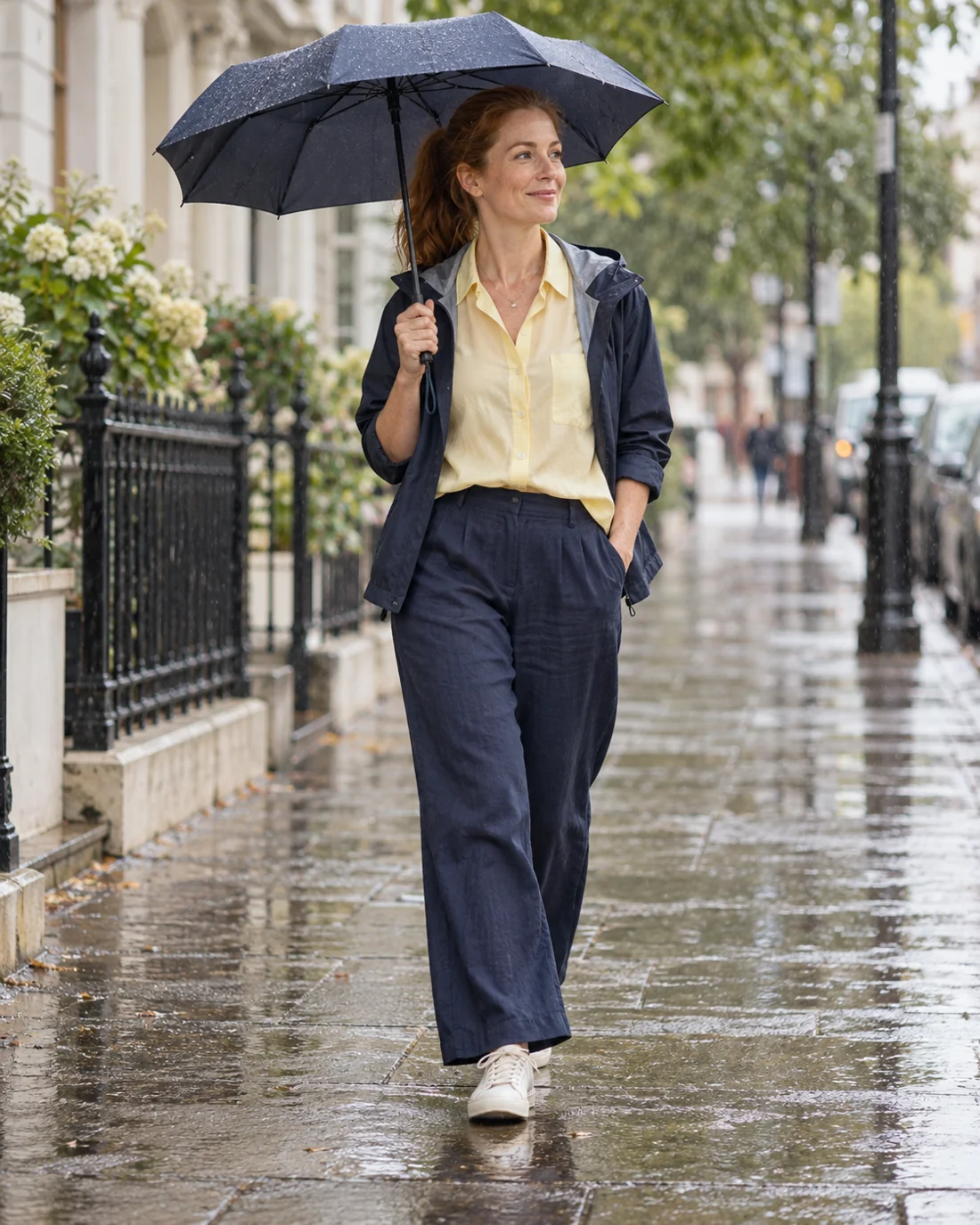
A thin jacket may look like rainwear without being designed for it. Read the manufacturer's information if you expect protection from wet weather. A hood alone says nothing about seams or fastenings. An umbrella can suit a short city walk when wind and handling allow it.
Put the jacket over your summer top and fasten it. If you are also wearing a vest or cardigan, test the whole combination. An extra layer that only fits open may fail to perform the very job you brought it for during a shower.
Keep wearing the outfit afterwards
Plan somewhere for damp outerwear to go. It should not lie directly against papers or delicate belongings in your bag. A suitable separate cover can keep items apart; at home, dry the garment according to its care instructions rather than leaving it packed damp indefinitely.
Choose shoes for the journey and their actual properties. Colour or the label trainers does not establish rain resistance. If you frequently switch between outdoor and indoor settings, a second pair at the destination may be more useful than an entire wardrobe for occasional showers. What matters is what you can realistically carry and store.