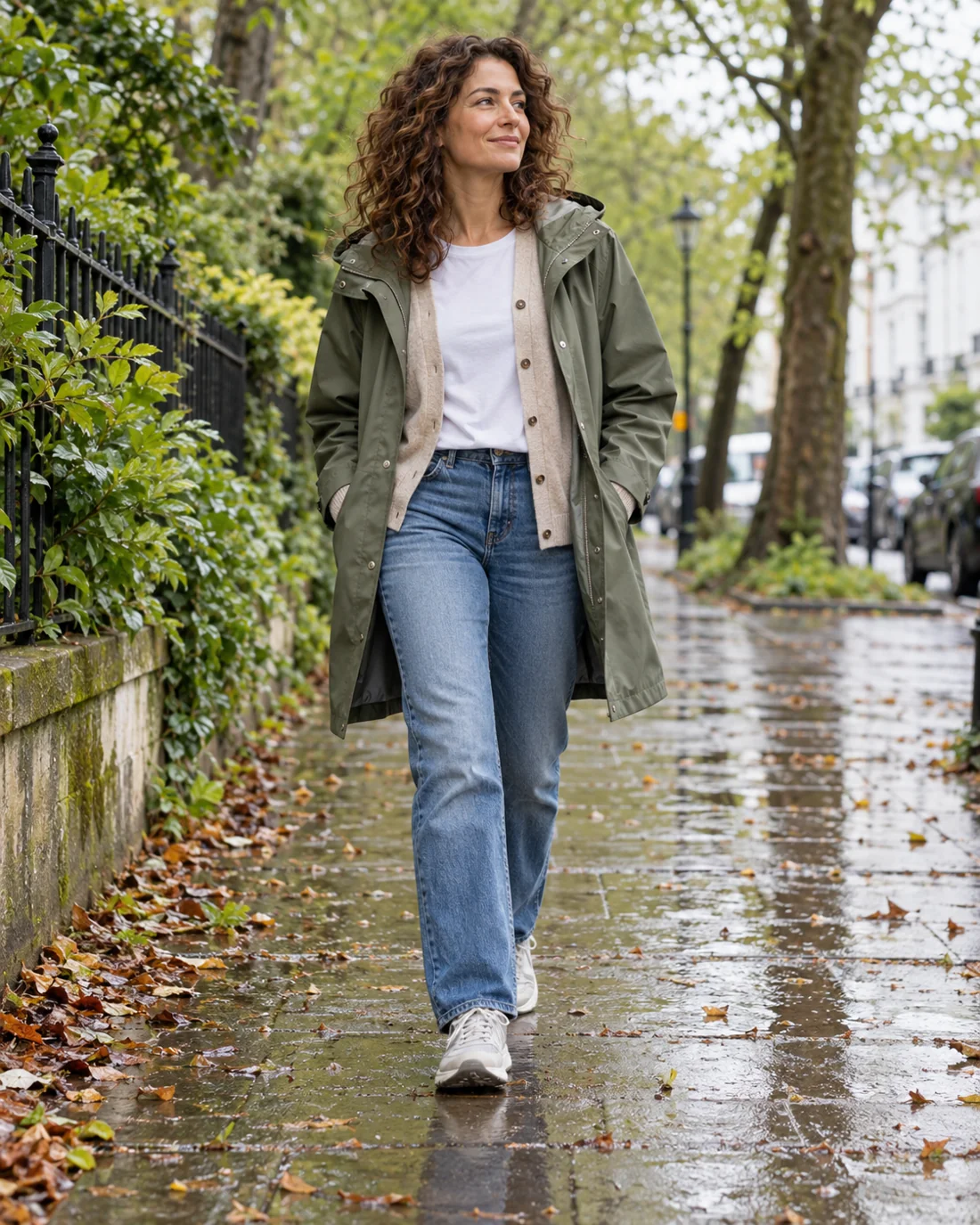
Inspect the contact points
Arrange the jumper smoothly first, then add the jacket. Notice whether the sleeves are pushed upwards. Reach forwards and lift an arm as if taking something from a shelf. If the shoulder pulls, the combination needs more room even when the front looks calm in the mirror.
At the neck, a round neckline may leave an open area beneath lapels, while a higher collar sits closer to their edges. Either is possible. Simply check whether collar and lapels push one another aside. A fine turtleneck can still occupy considerable space when folded several times.
The lower knitted band should not catch directly on a thick belt buckle. Try the jumper untucked and, if its fabric allows, partly tucked. If this creates more folds, another length may be easier. No particular tucking technique is required for wearing a blazer.
Look at the outfit without the jacket
A fine jumper may lie well beneath a jacket but appear more transparent or cling to underwear on its own. Assess it in daylight with the planned underlayer. If you want to remove the blazer indoors, that view should work for you too.
In colour, the knit can quietly complement the jacket or contrast clearly. Keep trousers and shoes unchanged for the first comparison. A different neckline already changes a great deal; you need not introduce several new colours simultaneously.
Finally inspect the knit where bag straps, buttons or rough jacket edges make contact. Care and any repair should follow the particular material and label. A well-fitting existing piece can serve several combinations when each outer jacket leaves enough room.