Consider the intended hem position
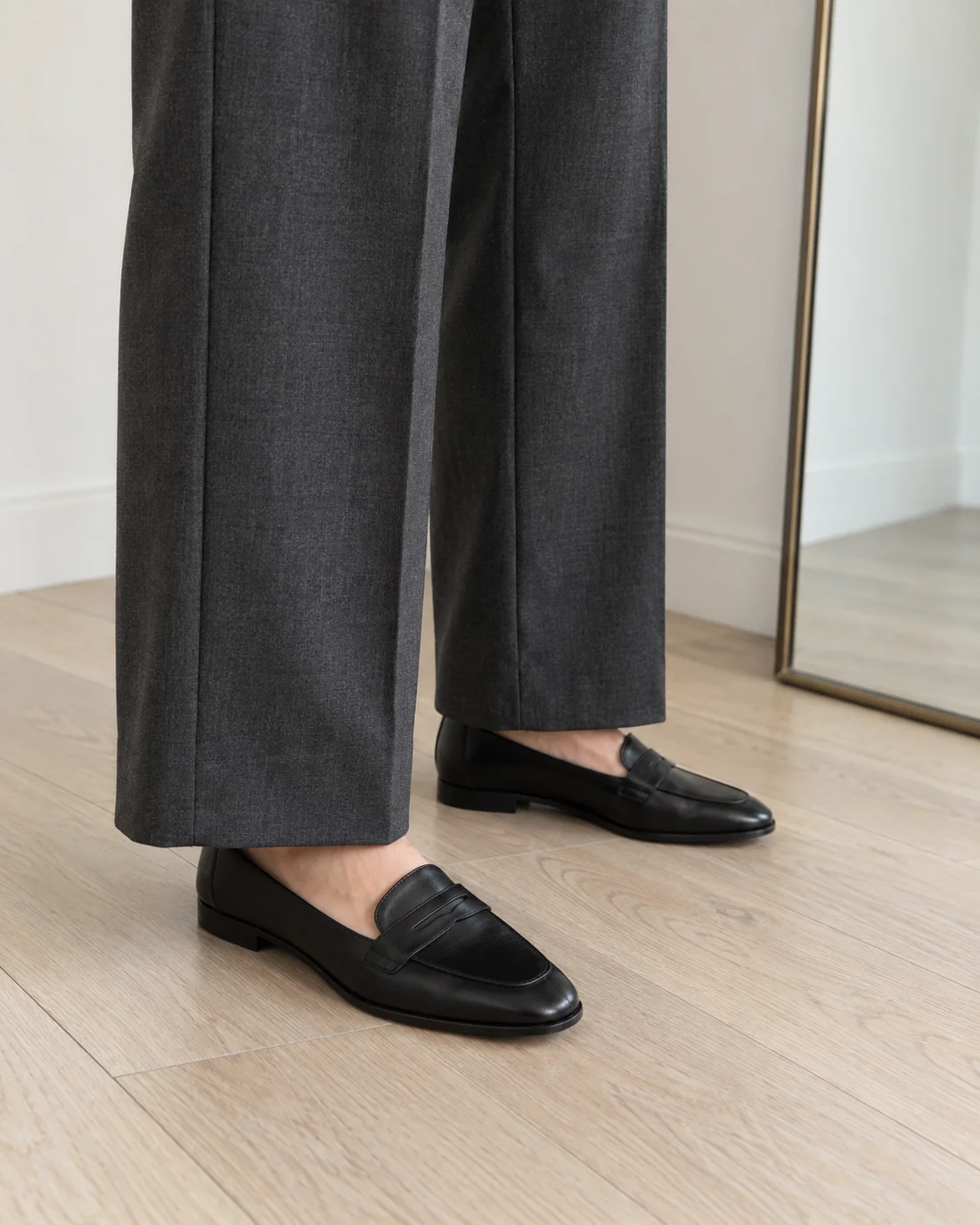
Deliberately cropped trousers should end differently from a long, wide pair. Establish the intended shape first. A visible ankle is not automatically evidence that a cropped design is too short. With a long style, the more immediate question is whether the hem goes under the sole or drags along the floor while walking.
Stand normally with weight on both feet. Do not pull the waistband higher than you would in daily use or lock your knees to change the drape. Look at both legs from the front, side and back. Looking down from above can make it difficult to judge actual clearance from the floor.
Walk and sit down
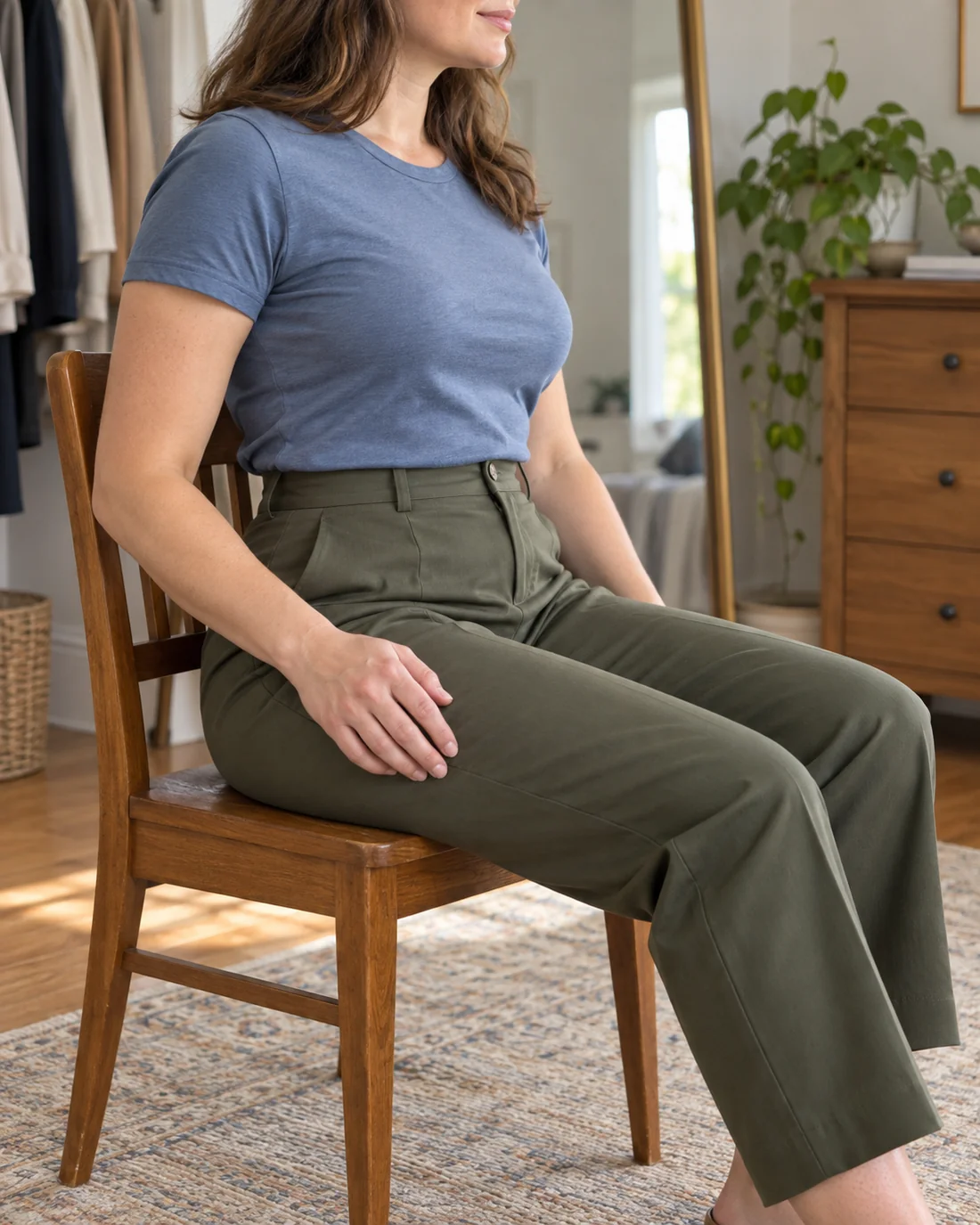
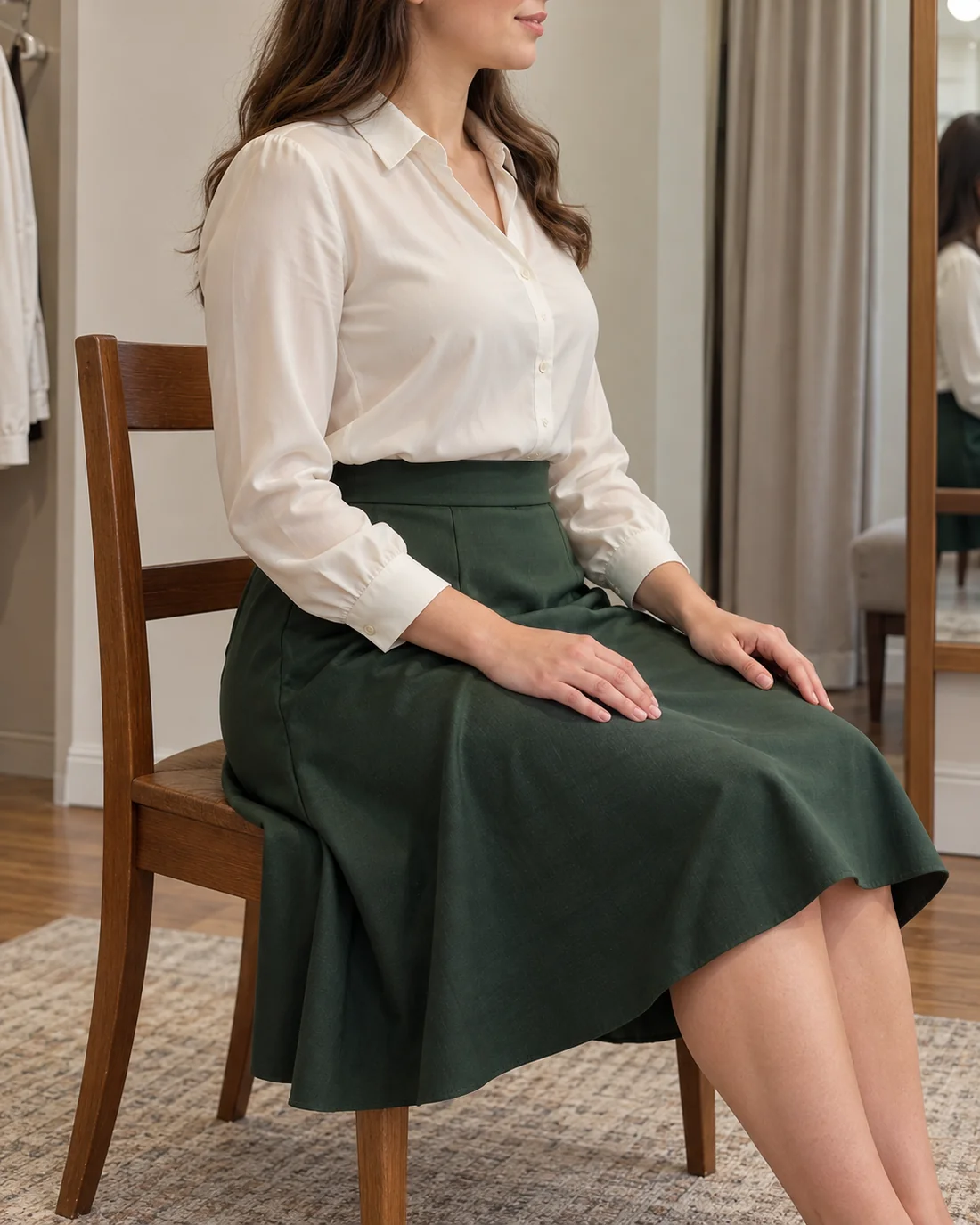
Take a few steps and turn around. Wide trousers may catch on part of a shoe only when moving. Then sit down. The hem will rise; check whether you also like that seated length and whether the visible socks or hosiery work as intended.
If you want to alternate between flat and higher shoes, test both. One hem length may involve a compromise. It is better to choose that consciously than to discover after shortening that the trousers drag with the second pair. Another reasonable solution is to wear the trousers mainly with one sole height.
Check alterations before shortening
Mark a proposed alteration only in a way that avoids injury during the try-on and damage to the fabric. If unsure, an alterations professional can assess the hem while you wear the intended shoes. Splits, zips, broad turn-ups and distinctive hem details change the work involved.
Also consult care instructions and ask about the particular fabric where its behaviour matters to an alteration. Do not cut the hem based on a hurried estimate. Instead, record the intended position and the shoes used to check it. That keeps the decision connected to the combination you will actually wear rather than an isolated measurement made without its context.