Begin without a belt
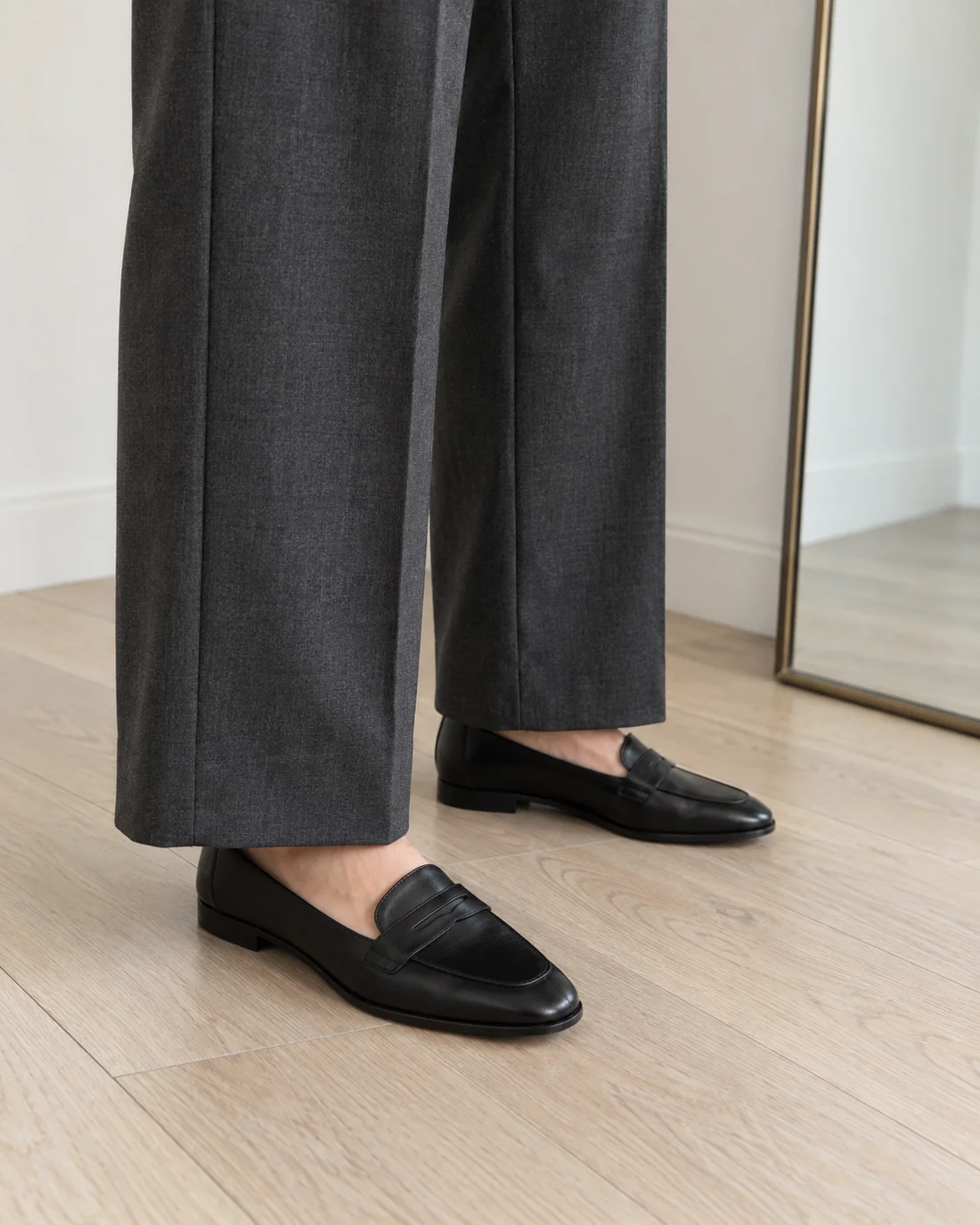
Fasten the trousers and let them sit where their construction places them. Avoid repeatedly pulling them higher to reach a preferred waistband position. If that makes the crotch uncomfortable or changes the way the legs hang, the position may not suit the cut. A belt can hold a waistband, but it cannot create missing room elsewhere.
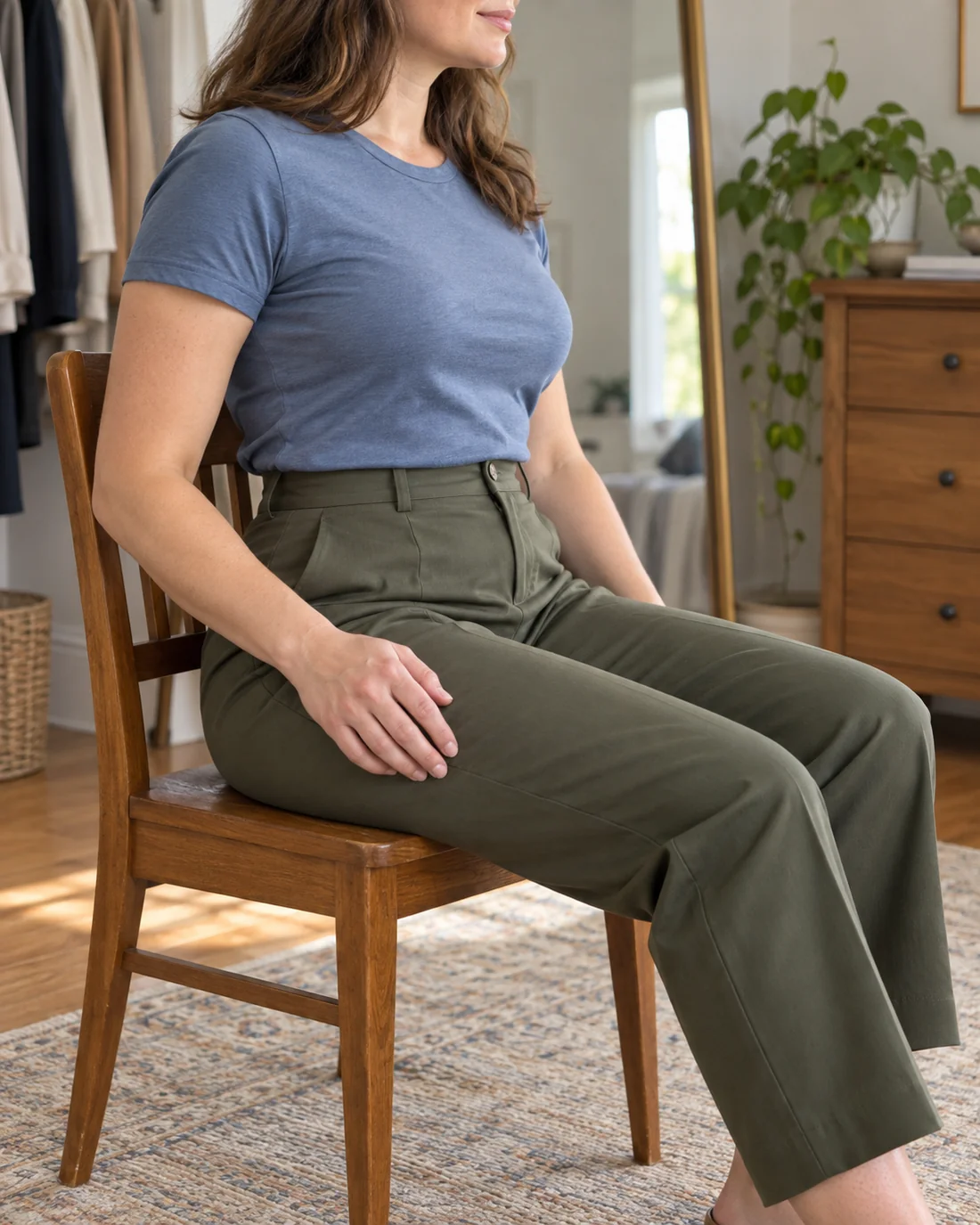
Check the front and back. A waistband may feel comfortable in front but stand away at the back when you sit. Conversely, it may seem loose while standing and press firmly when seated. These observations help distinguish waistband width, shape and rise. They are not a judgement about how your body should look.
Stay seated for a few minutes
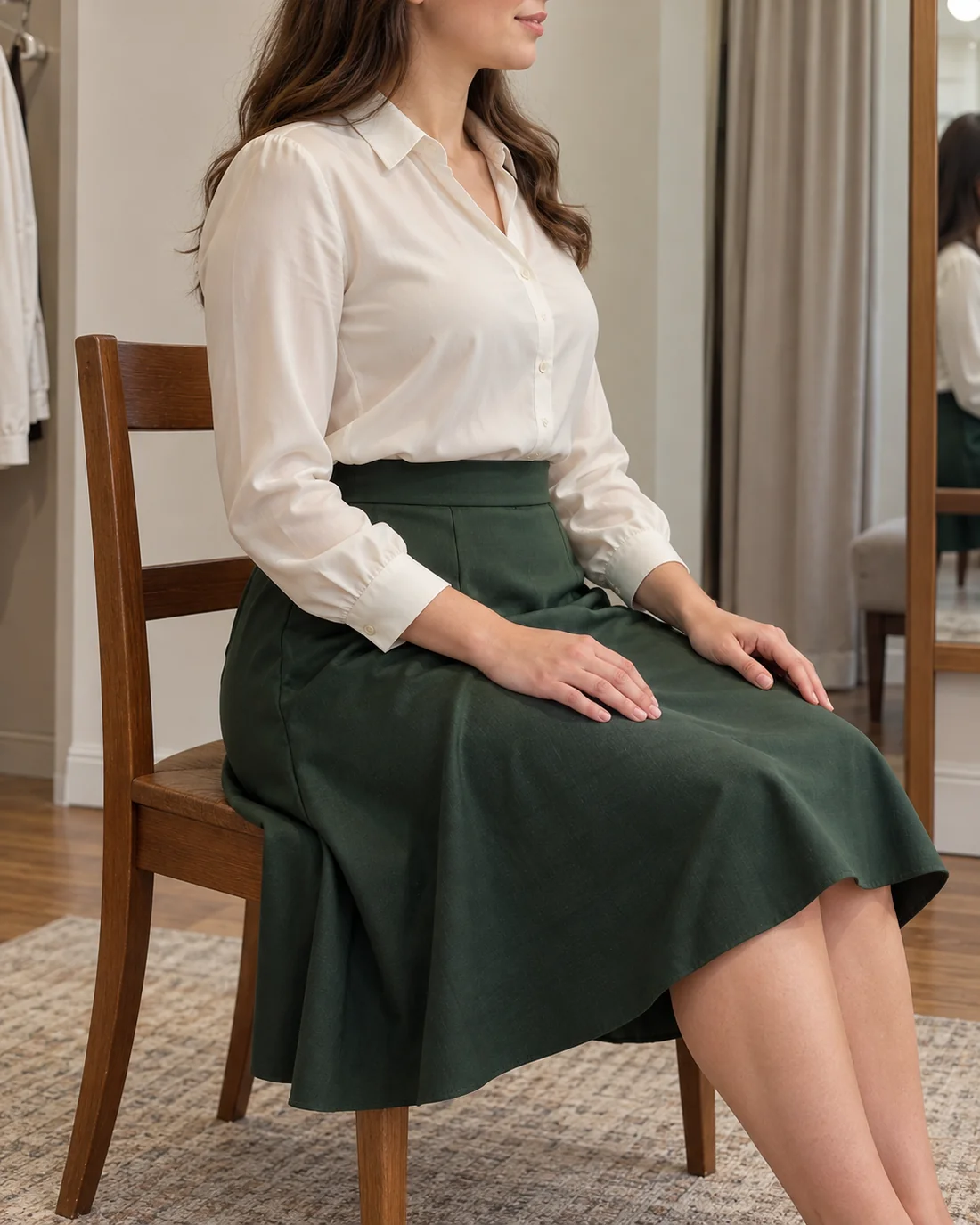
Sit on an ordinary chair and lean forwards slightly. Hold the position briefly rather than standing up immediately. Notice whether the waistband digs in, folds over substantially or moves downwards. Do not undo the fastening for the test; the trousers need to work as you intend to wear them.
Then stand and walk a few steps. If they need pulling back into place every time, consider waistband shape as well as size. Another design may fit better even if its stated rise is similar. Change one thing at a time where possible so that the reason for the difference remains clear.
Decide with the intended top
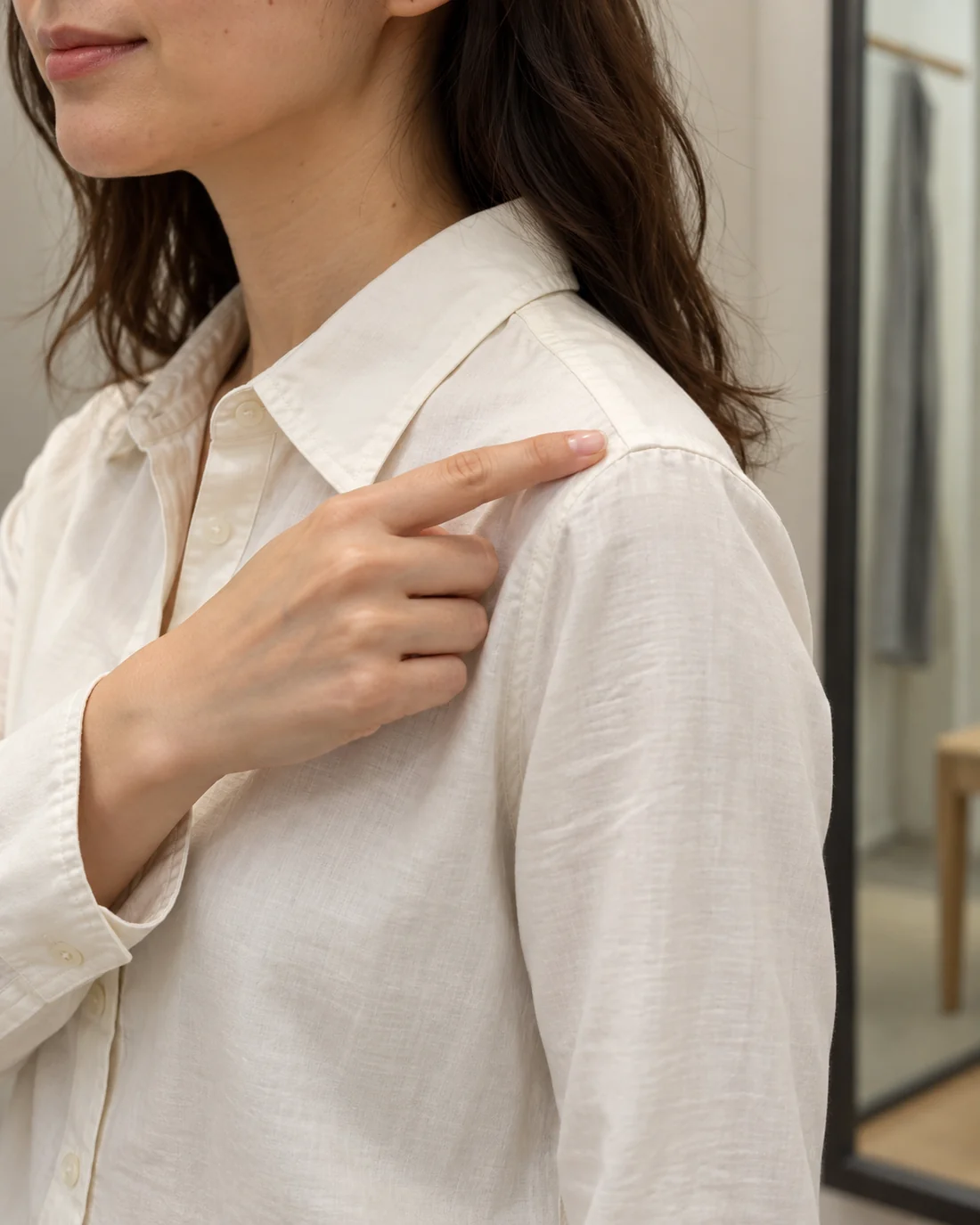
Wear the top tucked in or loose, depending on the planned combination. A tucked shirt needs a little additional space at the waistband. A short top makes changes in position during reaching and sitting more visible.
Keep a well-fitting pair as a reference and note its model. Measurements can help with online comparisons but do not replace the movement test. Choose a rise that works for your comfort and existing tops rather than treating one waistband position as universally more flattering or appropriate.