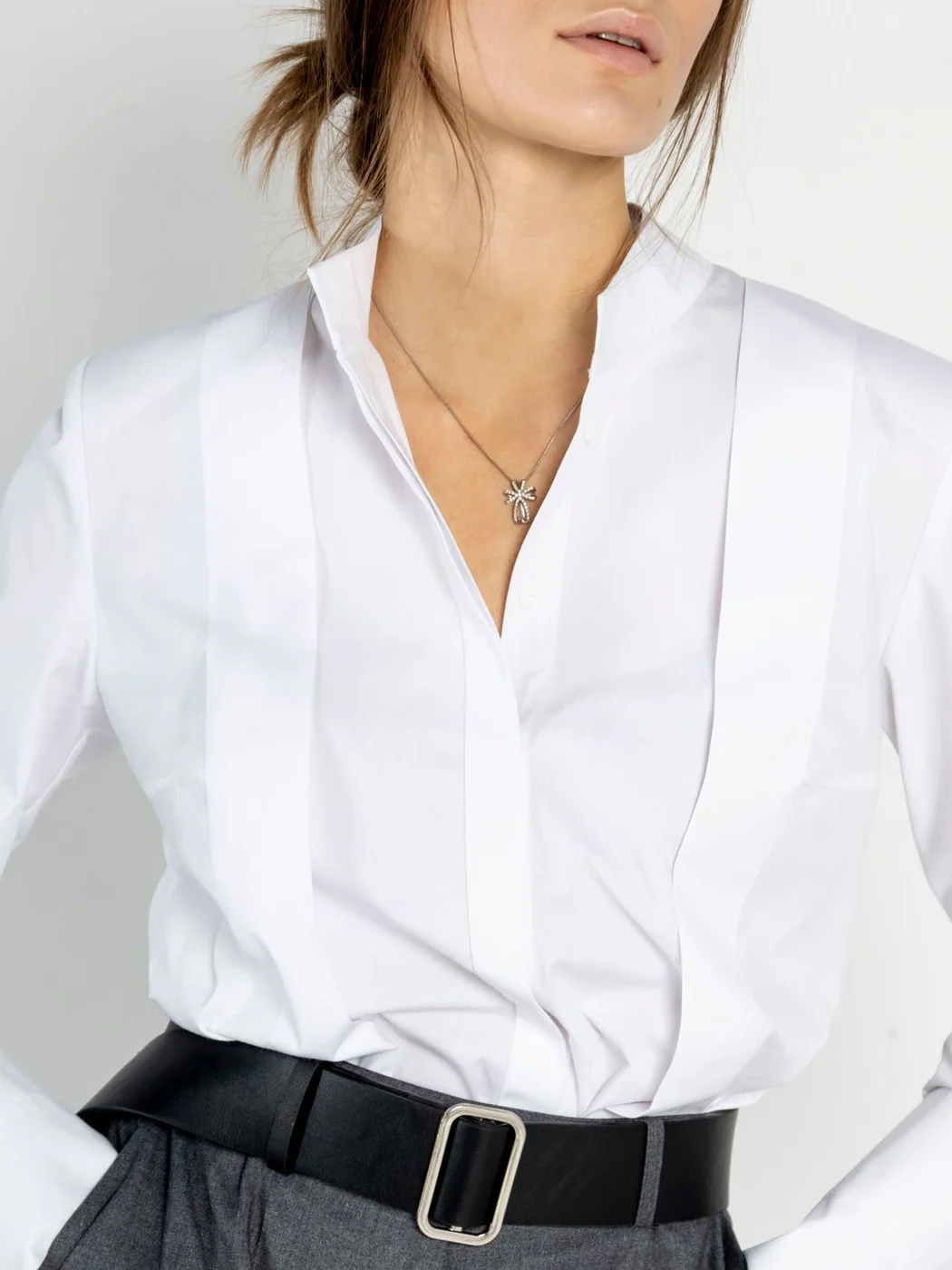
Leave room over a shirt
A very loose shirt can gather at the armholes. Distribute the fabric after dressing and move your arms. If new bundles of folds keep appearing, a narrower existing shirt may feel more comfortable. The waistcoat should not hold the shirt so tightly that reaching becomes restricted.
Check the collar against the waistcoat neckline. A large collar may lie over the front edges, while a small one shows more waistcoat. Either effect is possible. Decide which line you want to emphasise and leave off extra necklaces if the edges already provide enough structure.
Simplify the area over a T-shirt
A plain T-shirt reduces the number of visible fastenings. Its neckline should sit deliberately within the waistcoat opening. If it disappears just beneath an edge, try an existing top with a higher or lower opening. Its colour can sit close to the waistcoat or create a clear difference.
With a short waistcoat, check how much T-shirt remains visible below. A long hem is not automatically wrong, but creates another horizontal boundary. Wear the shirt loose and partially tucked to compare that effect.
Test the buttoned version while seated
Buttons can lie flat while standing and pull when seated. Check the fully fastened version at a table. If you intend to wear the waistcoat open, that is a separate combination rather than simply a way to hide an unsuitable closed fit.
An additional jacket needs room for both layers beneath. Test them together before choosing the outfit for a cool day. A waistcoat can give simple trousers another structure, but does not automatically replace an outer layer. Select the complete combination for the actual day.