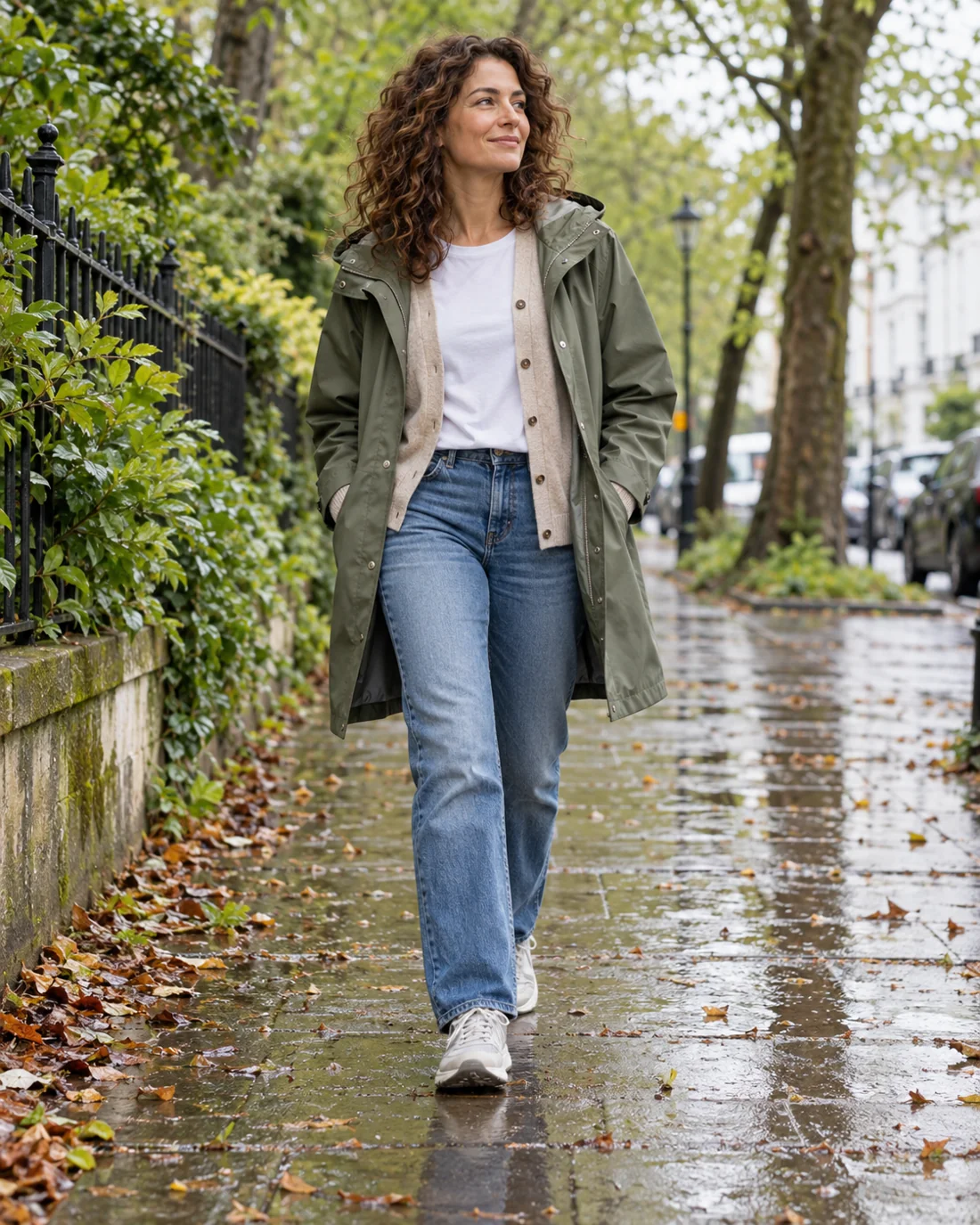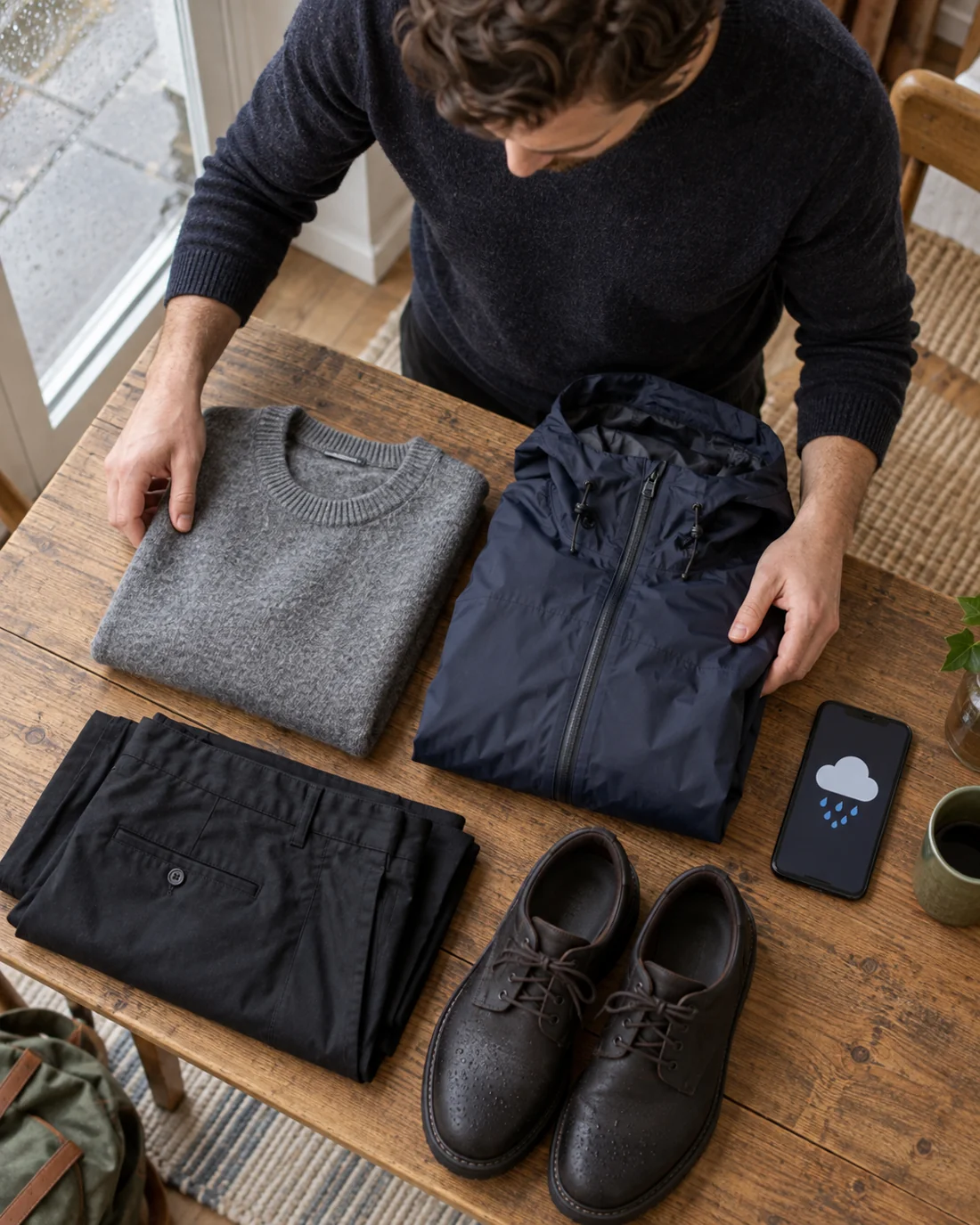
Choose the relevant times
Identify departure, the longest outdoor period and the return journey. The day's maximum temperature may tell you little about the morning commute. If you mainly remain indoors, you also need a combination that works after taking off a coat or jacket.
Do not record every number. Three situations are often enough: outward journey, indoors and return. This turns a long forecast into a concrete clothing question. For each situation, identify the layer worn and the one stored.
Consider rain and wind separately
A probability of rain is not the same as the expected amount or duration of a shower. Check what information your forecast actually provides. The outfit decision also depends on available shelter and the length of the exposed journey.
Wind affects the handling of umbrellas, scarves and full hems. Clothes that are comfortable in still weather may demand more attention then. Rather than automatically changing the colour scheme, inspect fastenings, loose ends and the appropriate outer layer.
Assign existing clothing
Choose shoes for the route and the lower half of the outfit first. Then add an inner top for the destination and finally the outer layer. Check the actual properties of a rain jacket or shoe; appearance alone does not reliably describe its suitability for weather.
If a layer comes off later, reserve somewhere to keep it. The forecast is of limited help when the planned change only works while you carry several pieces awkwardly over an arm.
Learn from the actual day
Afterwards, briefly note which layer was needed and which remained unused. This builds personal guidance for similar journeys. Change it when time outside or indoor conditions change. A fixed temperature threshold for one garment often overlooks those differences.
With official weather warnings, planning activities and routes comes first. Clothing is only one part of that. For ordinary days, a quick fresh check before leaving is enough to avoid discovering a changed forecast only once you are outside.