Distinguish large and small areas
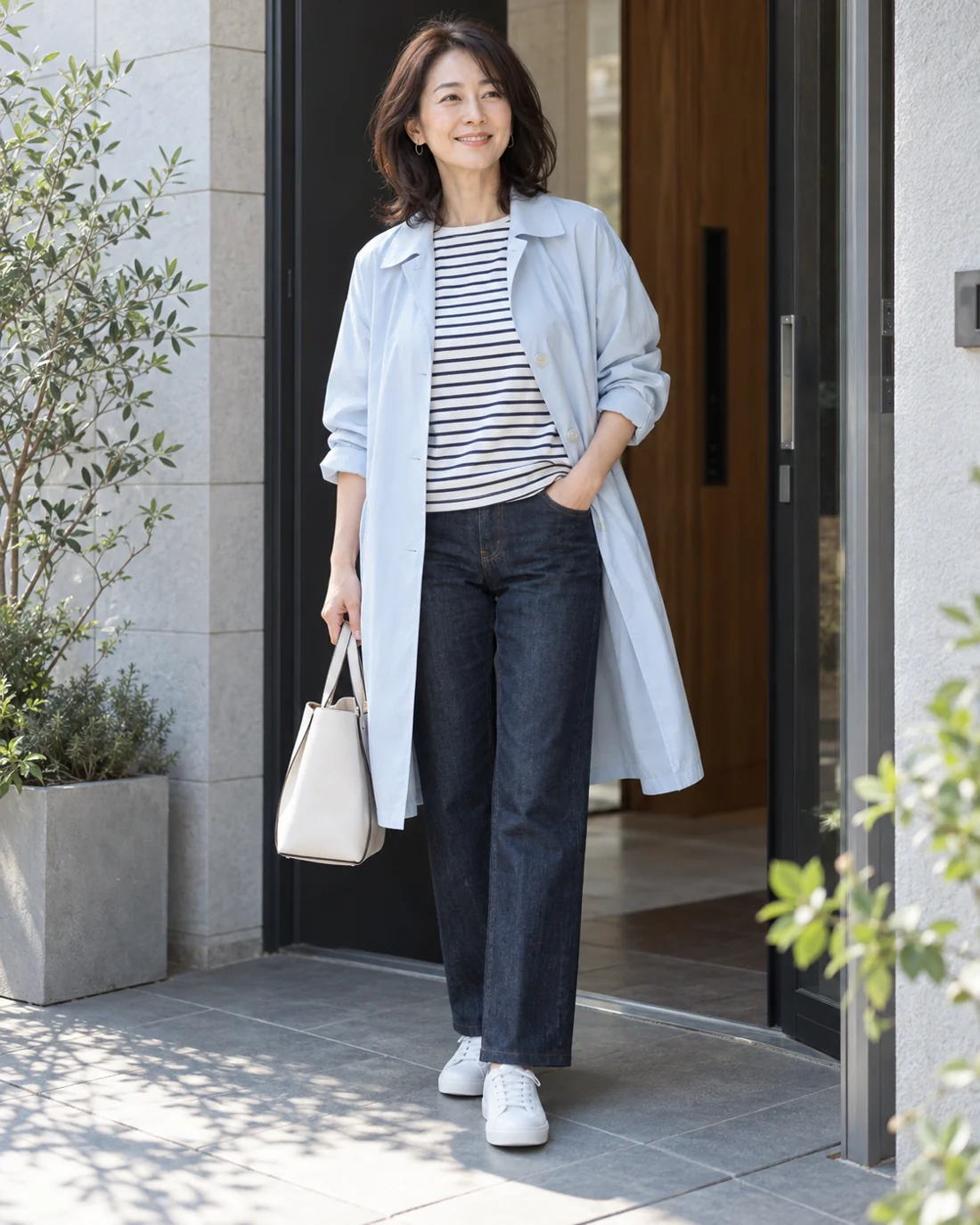
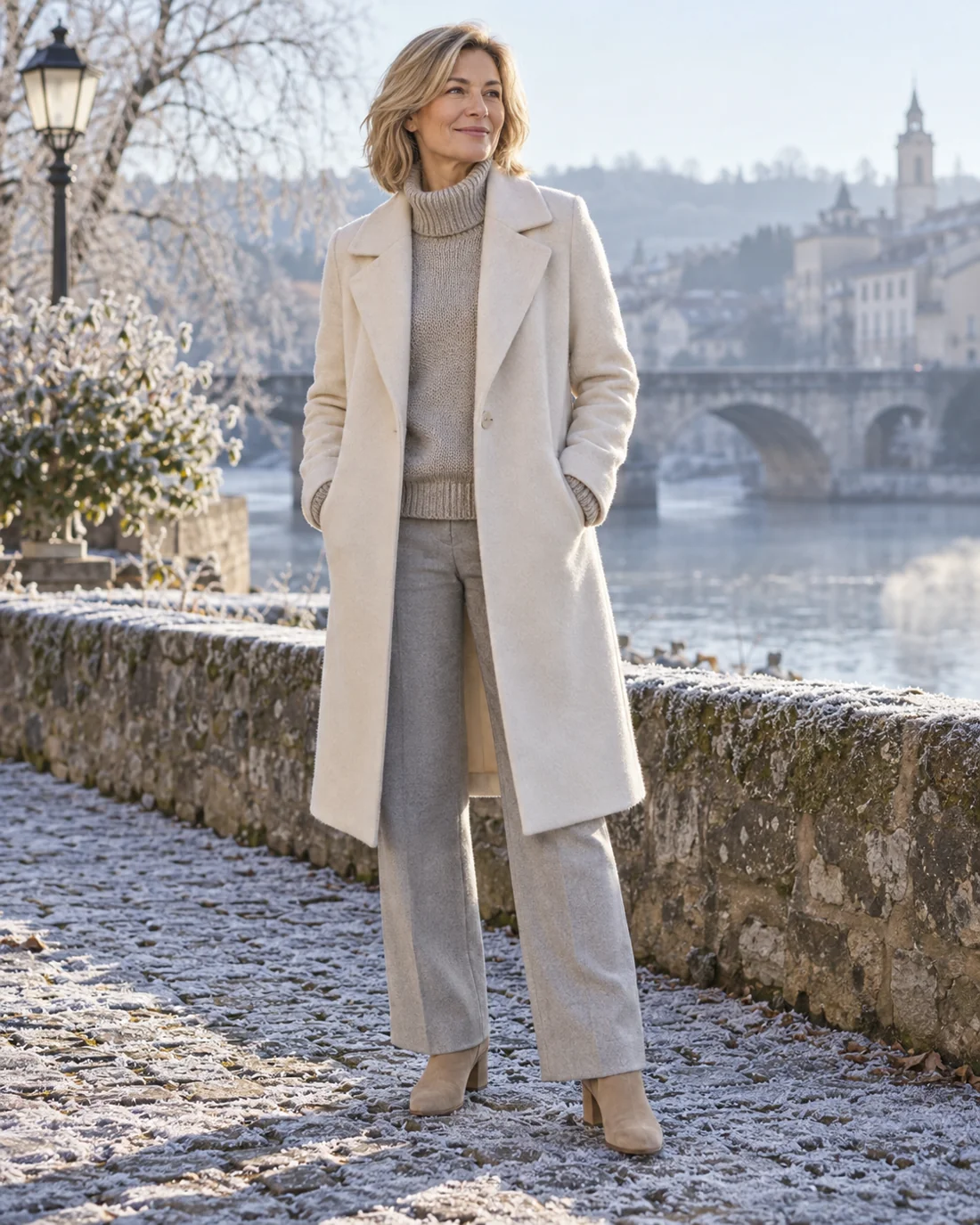
A pale coat defines the outfit even when fastened; a light jumper mainly appears indoors. Decide where you want to see the colour. If you wear dark outerwear all day, a light hat may create more visible change than a top concealed underneath.
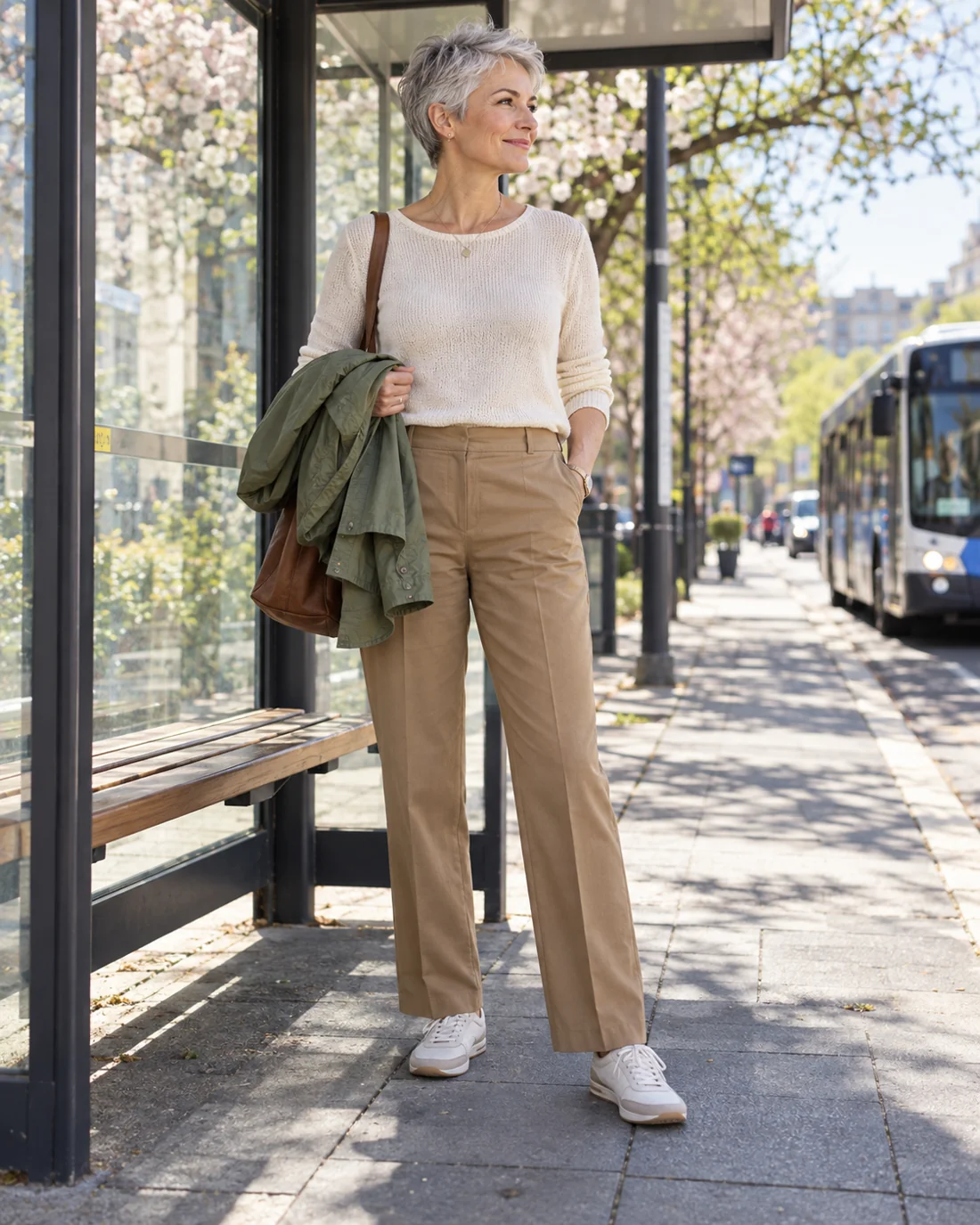
A cream jumper with black trousers gives clear contrast. Pale grey or sandy trousers produce closer areas. Try both directions with unchanged shoes. This reveals whether you like the colour change without altering the entire shape at the same time.
Compare pale shades together
Pure white, off-white and cool grey do not need to match exactly. Compare them in daylight and your usual indoor light. A small difference can feel deliberate when the garments have distinctly different surfaces. If a combination bothers you, a clearer contrast may help more than a lengthy search for an almost identical shade.
You can continue using a dark bag or shoes. They do not need replacing simply because the rest of the outfit is lighter. Dark areas in two places can organise the combination, but this is not a fixed requirement. What matters is which existing items work for your day.
Plan the journey too
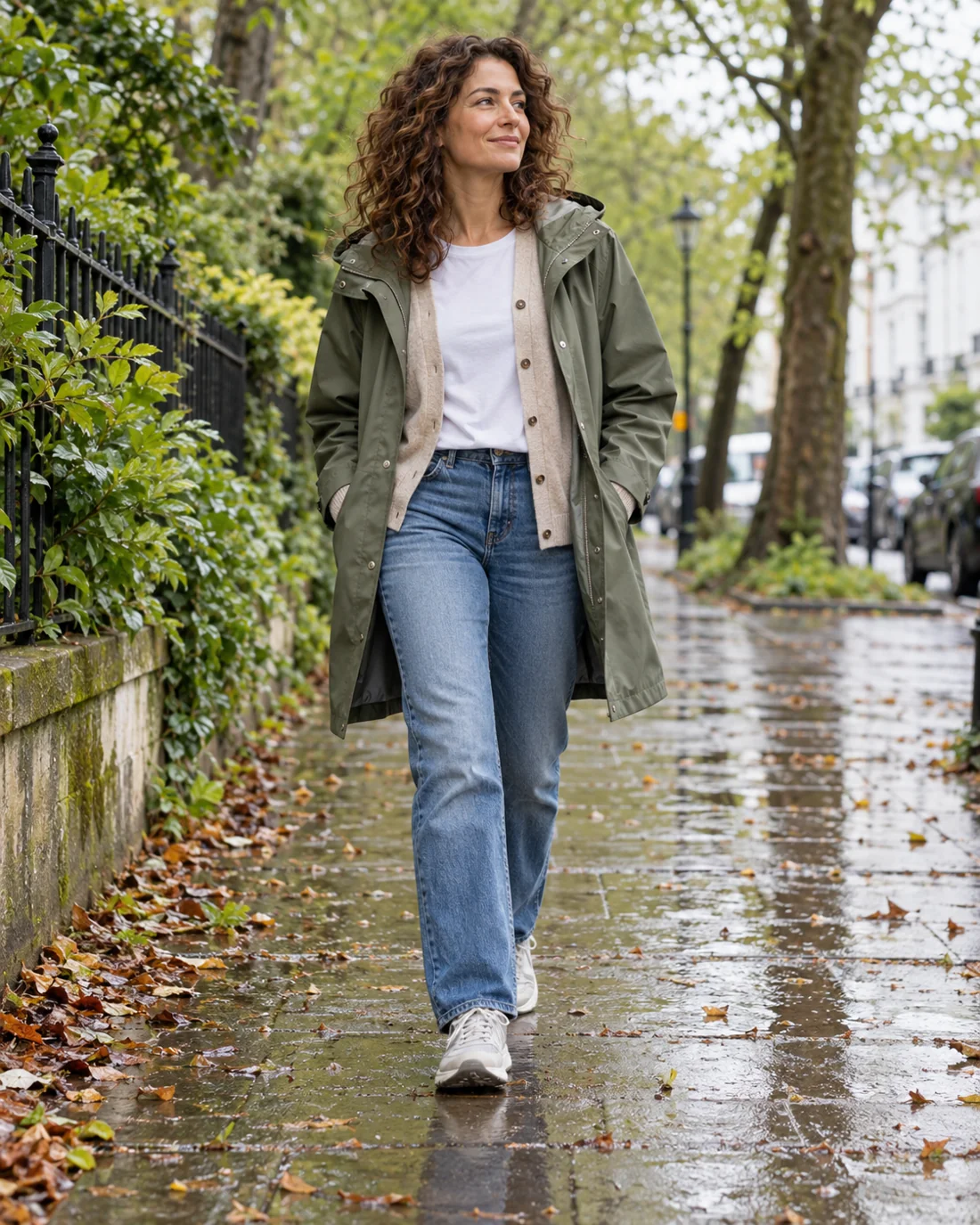
Pale trouser hems and coat edges meet different surfaces in wet weather from a jumper. Check length and ground clearance. If a particular route is regularly dirty, a light piece may work better higher in the outfit that day instead of brushing the ground.
Stain treatment depends on material and care instructions, not colour alone. Do not plan aggressive products in advance. The combination should work in ordinary use as well. First wear the pale pieces on a day with familiar journeys, then assess whether their length, the bag and the outer layer suit your habits.