Test the height completely
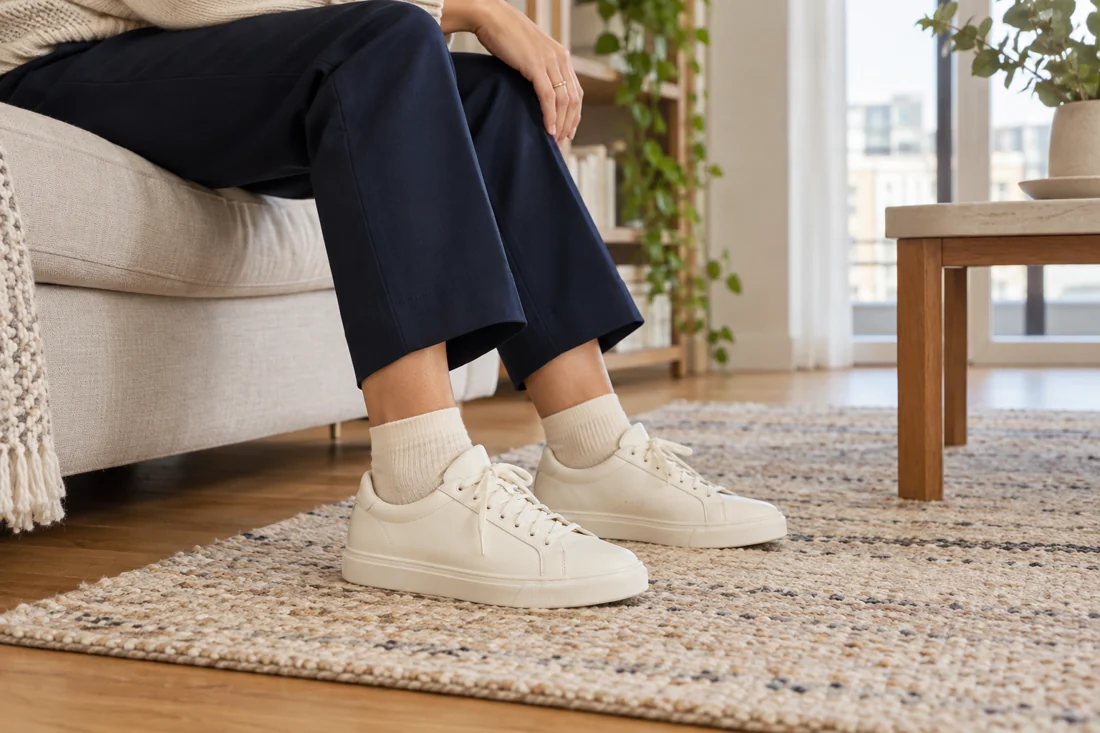
Put on the trousers and intended trainers, then sit down. A sock hidden while standing may now appear clearly. Decide whether you enjoy that change or prefer a height visible in both positions. Either is possible as long as the cuff does not need constant pulling.
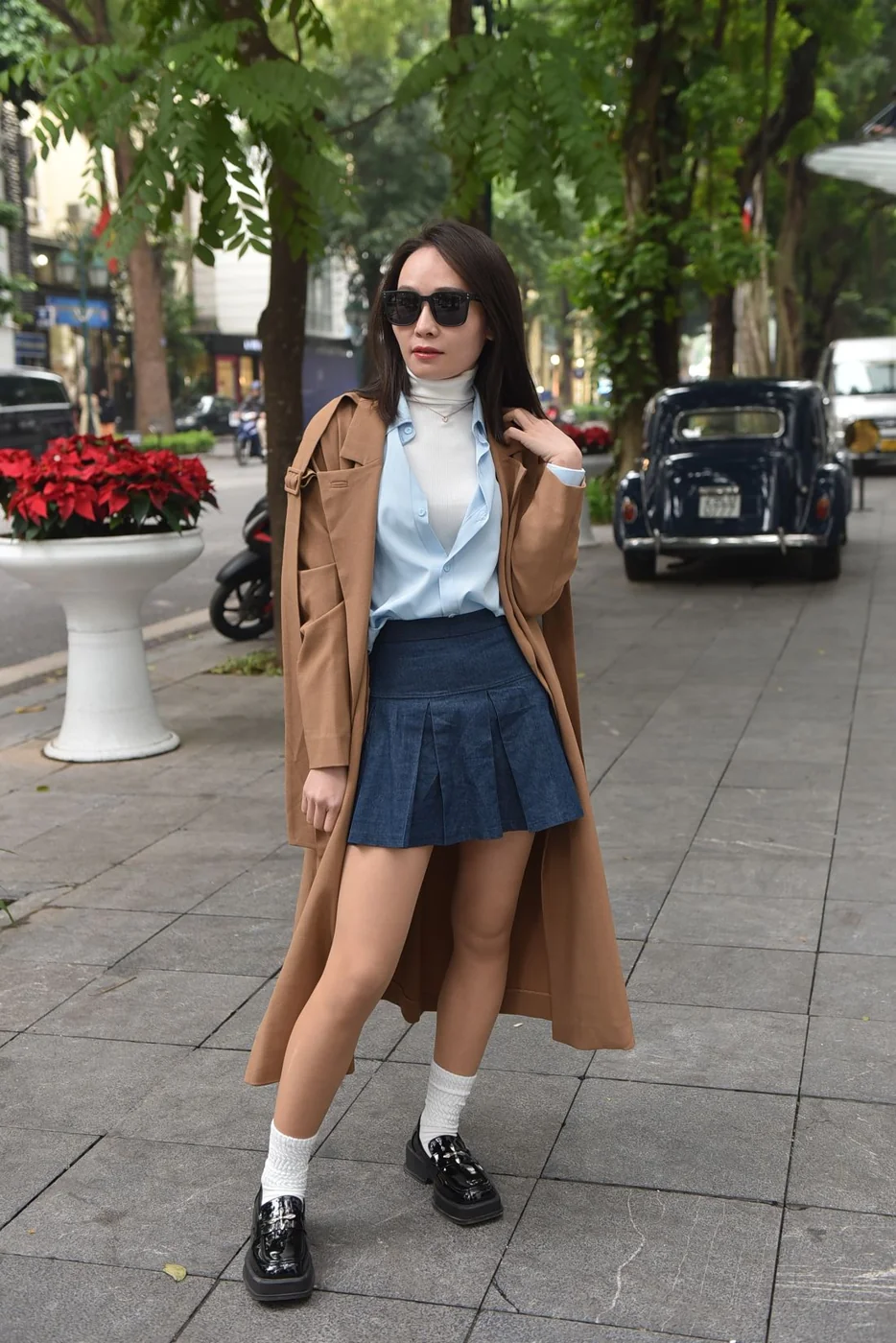
Walk a few steps afterwards. If a short sock slips into the shoe, try another model or size. A longer visible cuff may be simpler. It does not need hiding just because the trousers are cropped.
Choose one colour deliberately
Similar sock and shoe colours connect the lower area; a colour close to the trousers extends their effect. Strong contrast creates a separate strip between them. Compare two versions with the top unchanged so you judge only that difference.
With multicoloured trainers, you can echo one smaller shade. This is an option, not a requirement. A plain sock can also leave the footwear visible without repeating every accent. If both trousers and shoes already contain patterns, begin with a quiet sock and decide on further details afterwards.
Check fabric volume and hem together
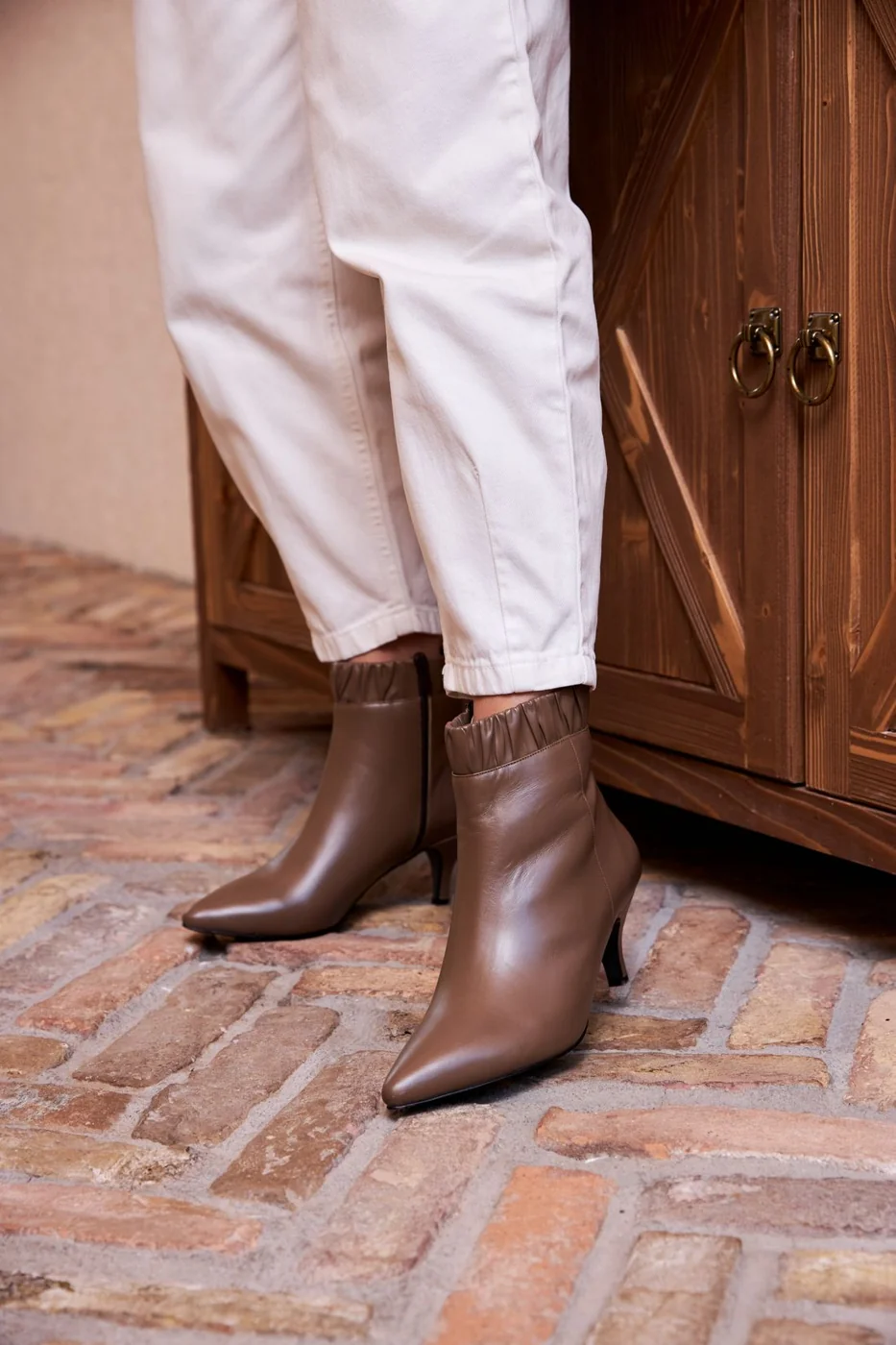
A thick ribbed cuff can add bulk beneath a close trouser hem. Check whether the hem catches there or moves freely. A thinner model or different height can simplify the pairing. The shoe must still leave enough room for the actual sock used.
Photograph the finished combination while standing and sitting. You will later know which version you selected instead of judging socks only as individual items. For a long day, what matters most is that shoe, sock and trousers work together without frequent rearranging. Keep that successful pairing in mind when choosing a similar pair with a different cuff or fabric thickness.