Put on the actual combination first
Try the loafers with the exact socks you intend to wear. Walk for a few minutes and sit down. Check whether the heel remains in place and whether fabric folds around the toes. Another sock model may feel very different in the same shoe even when both look similar.
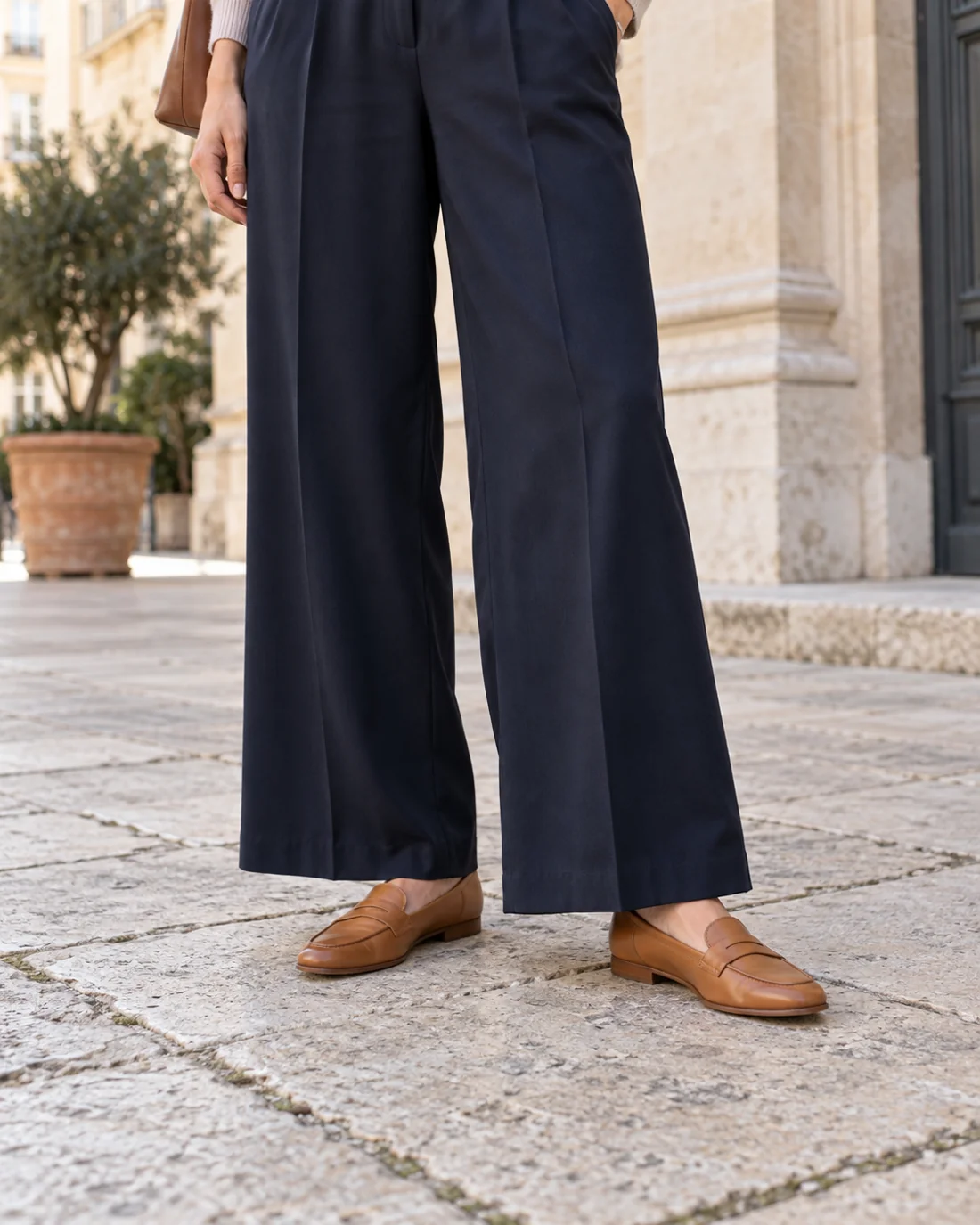
With long trousers, socks may mainly appear while seated. With cropped trousers, they remain part of the outfit throughout. Decide the strength of colour contrast by that actual visibility. A standing photograph does not show every version.
Choose colour and surface
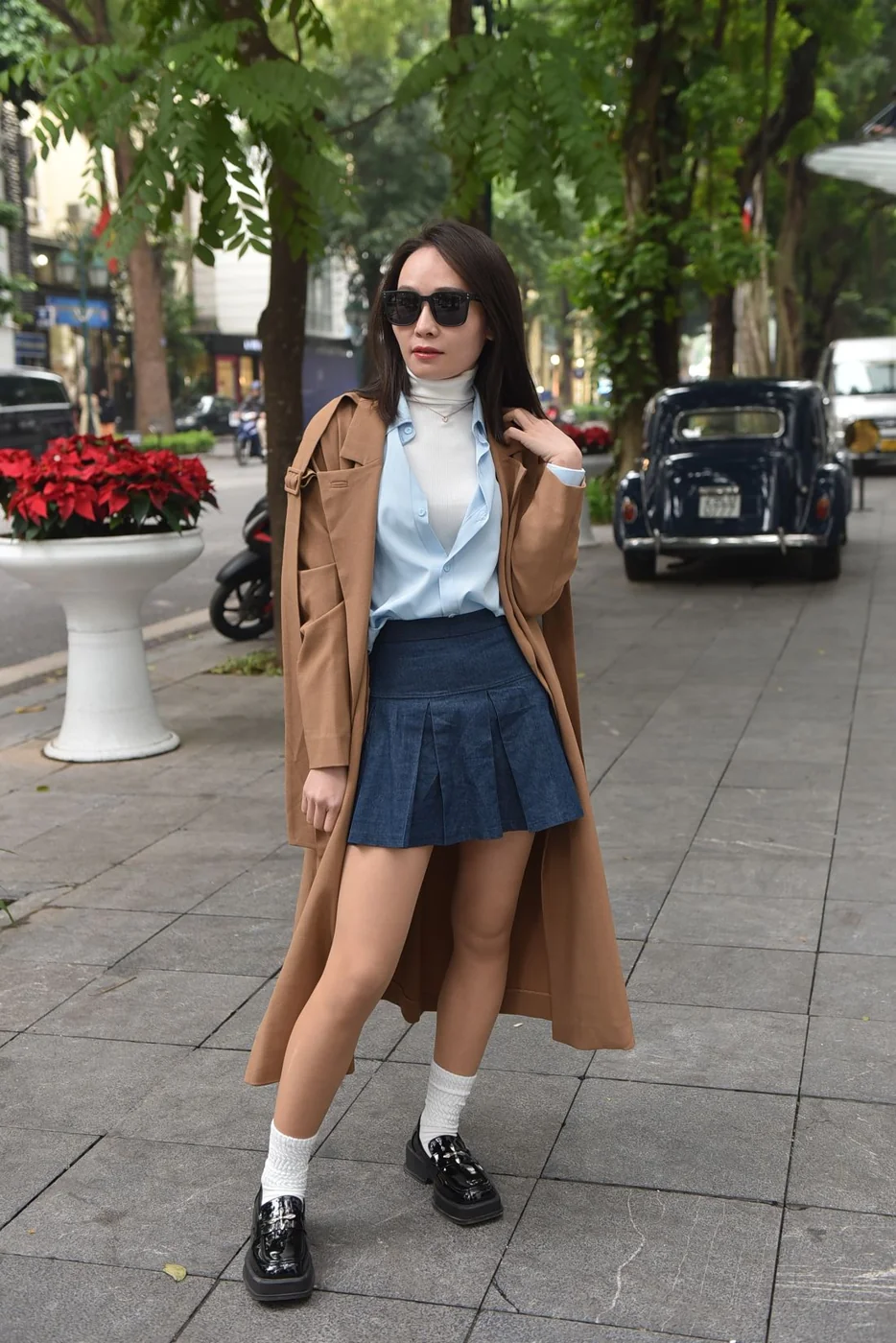
A sock close to the shoe colour connects the two more strongly. A pale sock inside a dark loafer creates a clear edge. You do not need to repeat that contrast elsewhere, although you can echo an existing colour from the top if you like it.
Ribbed socks provide a different texture from smooth ones. Beside a strongly patterned skirt, a simple surface may look quieter. With plain trousers, the rib itself can become visible. Compare only two options initially rather than changing several patterns and colours together.
Check the height on the leg
A cuff directly at the trouser hem may alternate between hidden and visible while walking. If that bothers you, try another height or longer trousers. The sock need not be pulled as high as possible; it should sit comfortably in its intended shape.
With a skirt, it creates a more distinct line on the leg. Inspect the complete outfit with jacket or jumper rather than looking only at the feet. What matters is enjoying the combination and moving comfortably in it. Visible socks are an option, not a required addition to every pair of loafers.