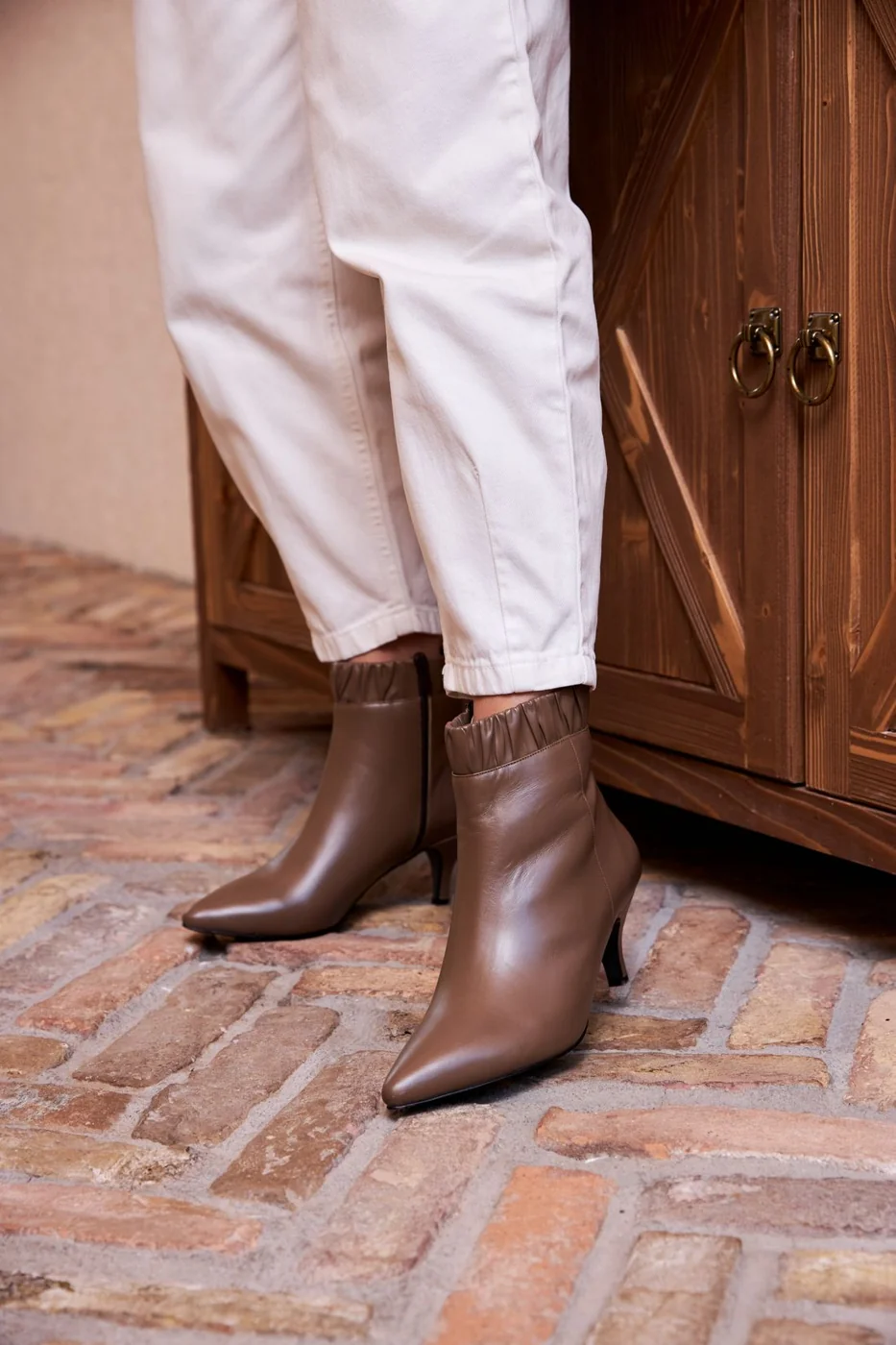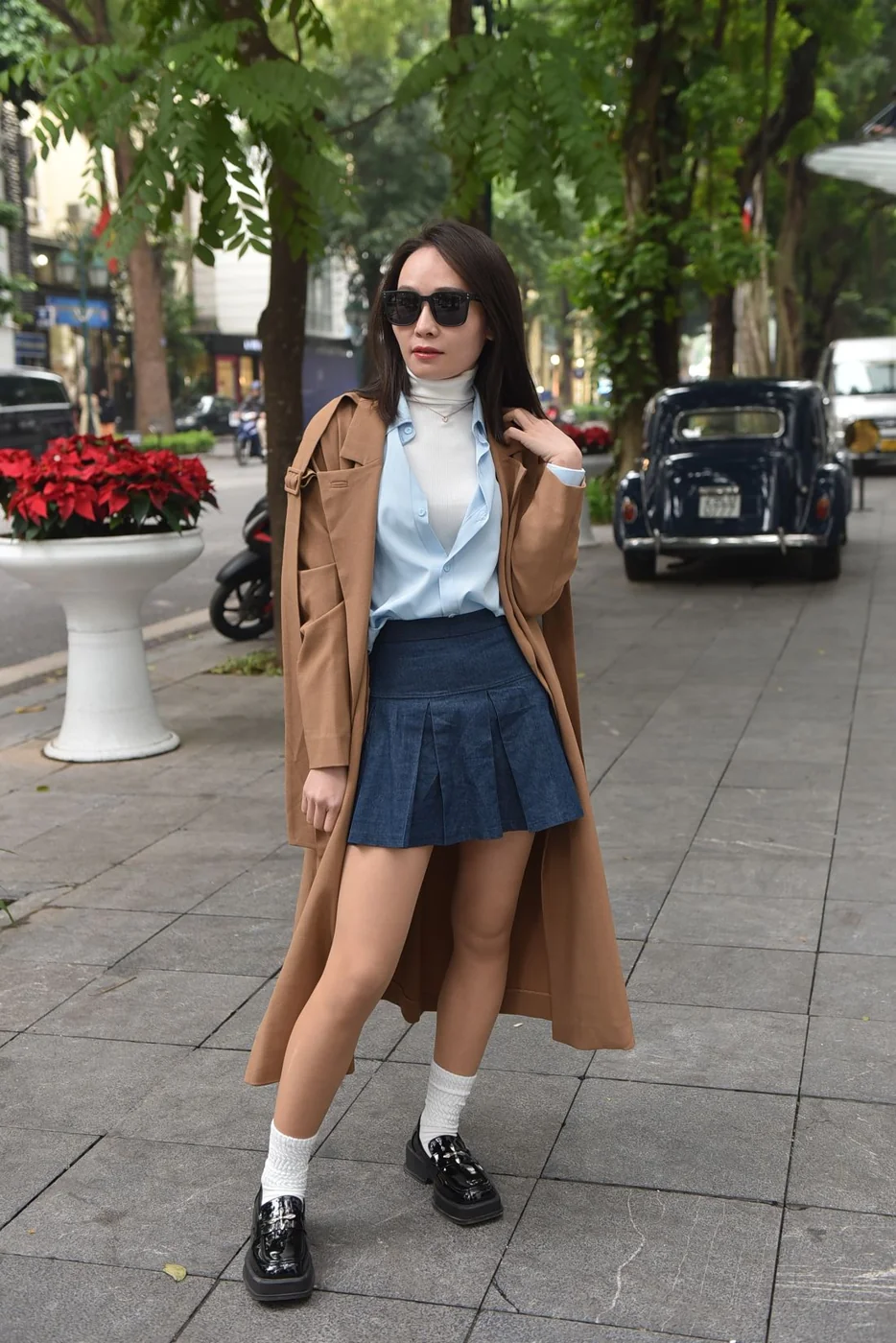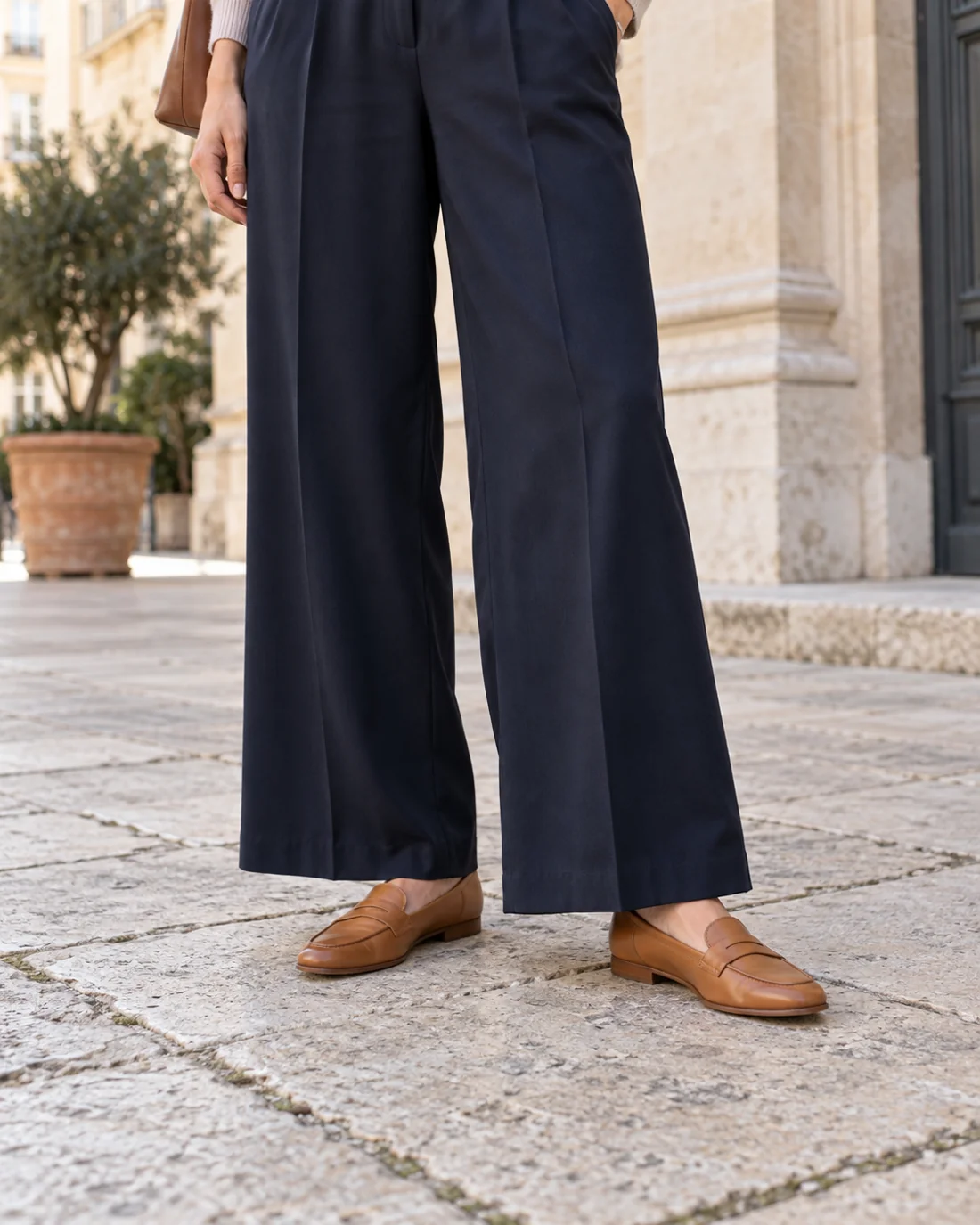
Check ground clearance
Stand normally without pulling the waistband upwards. Inspect the back edge and walk a few steps. Fabric slipping beneath the heel can interfere with movement. If considering shortening, try a secured temporary hem and mark it with the shoes you expect to wear often.
A flat shoe with a thicker sole gives a different height from a very thin ballet-flat sole. Both count as flat but do not create the same usable trouser length. If you regularly alternate them, check the trousers with both before a permanent alteration.
Notice how much shoe appears
Long wide trousers may reveal mainly the toe. A shorter pair exposes the instep, lacing or straps. You can choose a narrow toe or let a rounder shape stand out clearly. Decide from the whole outfit rather than a prescribed ideal shape.
Very soft fabric may catch on laces or tabs. Walk and sit to notice this. A smoother shoe or another hem may make handling easier. Repeated adjustment suggests that the particular pieces are not working comfortably together.
Coordinate the upper half afterwards
Once length and shoes work, choose the top. A shorter hem reveals more waistband; a longer shirt overlaps it. Either is possible with flats. Keep footwear unchanged during comparison so that you can identify the top's effect.
A bag does not need to compensate for missing height or repeat the shoe exactly. It should suit what the day requires. Save a photograph of the successful outfit and note which pair belongs with the hem length if necessary. That specific connection is more helpful than a general rule against wide trousers with flat soles.