Start with the dress shape
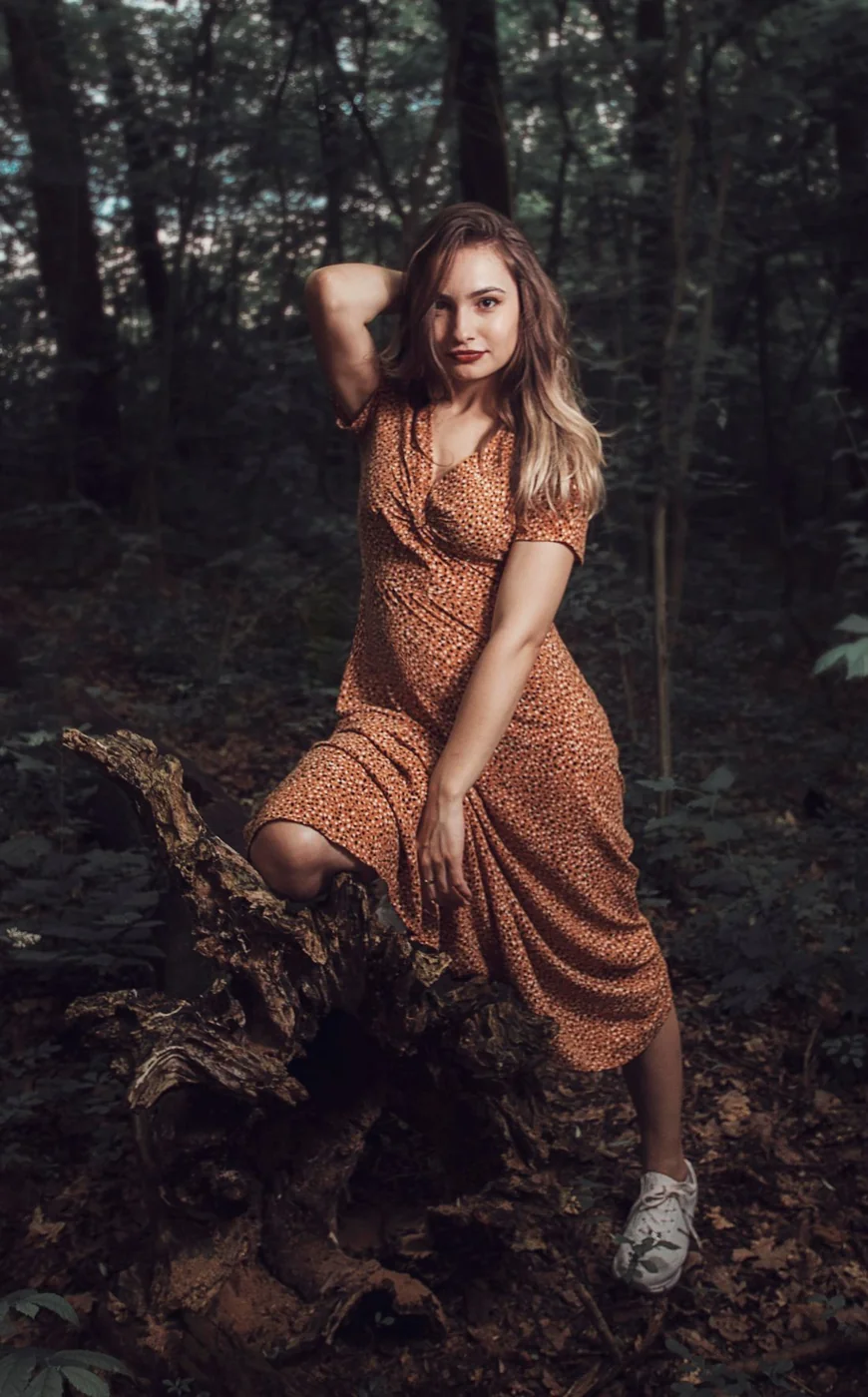
A straight dress reveals the shoe shape fairly clearly, while a full hem introduces more area above it during movement. Try the trainers with the whole outfit. A shoe that looks large alone may appear quite different beside a long, full dress. Conversely, a very fine shoe may become less noticeable beneath a strongly textured dress.
There is no requirement to balance opposites. If you enjoy a broad sole with a narrow dress, simply check whether you want to wear the combination in daily life. The effect comes from the specific garments rather than a general rule for particular body shapes.
View socks and hem together
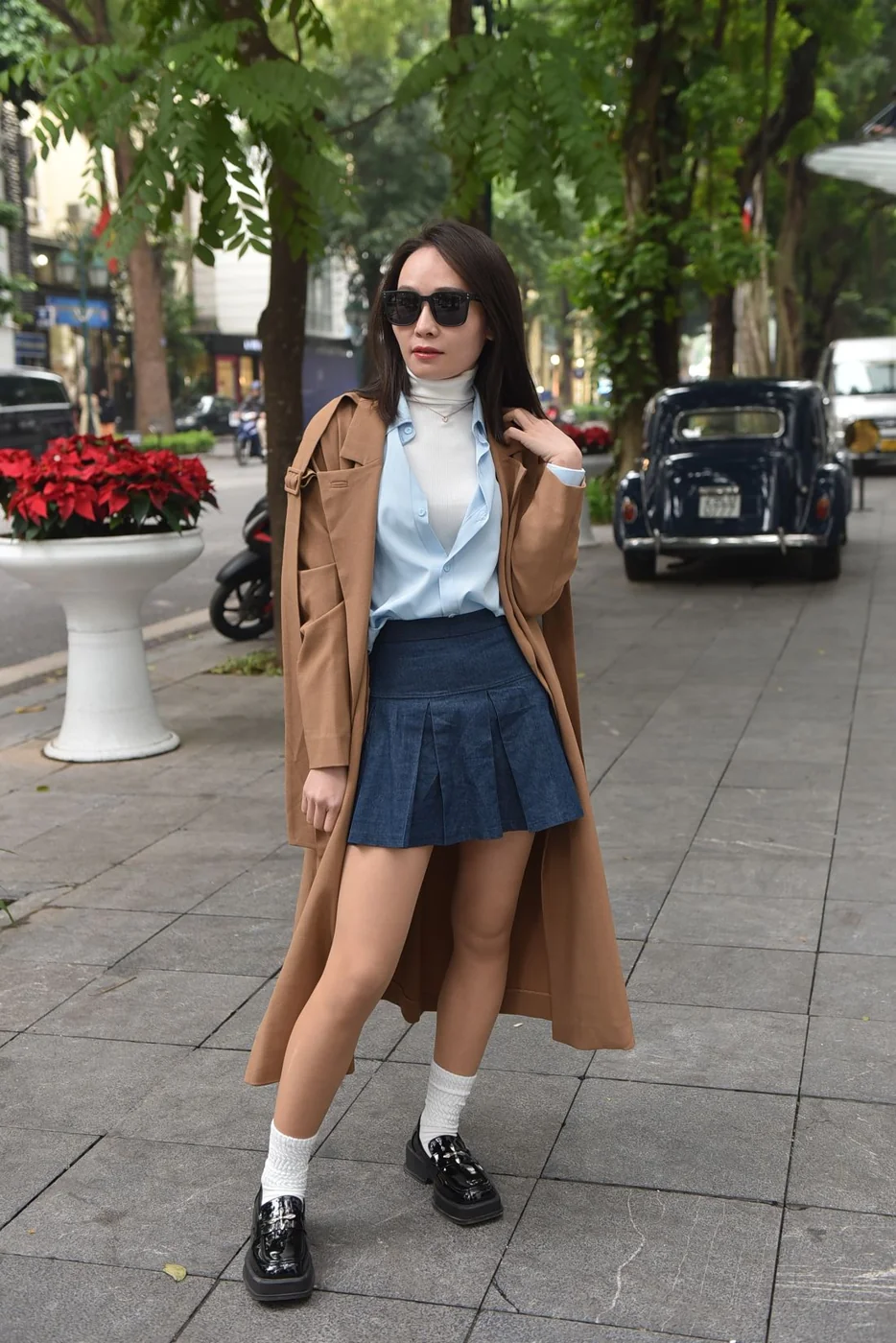
Decide whether socks should show. A low edge and a higher cuff create different lines. Try the exact sock planned, because thickness and fit also affect the shoe. A sock that continually slips inside the footwear is not a useful basis for a long walk.
With a long dress, check ground clearance. A higher trainer sole may help but does not replace testing while walking and climbing stairs. The hem should not slide beneath the heel. If you want to alternate two shoe pairs, the length needs to work with both or you can choose different dresses for them.
Keep the remaining pieces deliberate
A plain dress makes a colourful trainer clearly visible. With a print, you can repeat one colour in the shoe without seeking an exact match. A bag in an existing shade may be enough; additional sporty details are unnecessary.
Finally add the jacket you plan to take. Denim jackets, blazers and rain jackets change the context differently. Choose for the day's activities and check whether you also like the outfit without the jacket. Photograph the finished version with the actual socks so you can repeat it later without another fitting session.