Divide the contents into three groups
The first group contains daily essentials, such as keys, phone, wallet and perhaps a work device. The second consists of occasional additions, such as a small umbrella, document or scarf. The third holds things that could normally stay at work. This prevents a rare exceptional day from determining the size of your everyday bag.
Measure a laptop or folder inside the sleeve you intend to use. A bag can look wide enough externally but have an opening that is too narrow. Compare the usable opening and internal compartments as well as exterior dimensions. A soft bag changes shape under load; a rigid one offers less flexibility than its outside appearance may suggest.
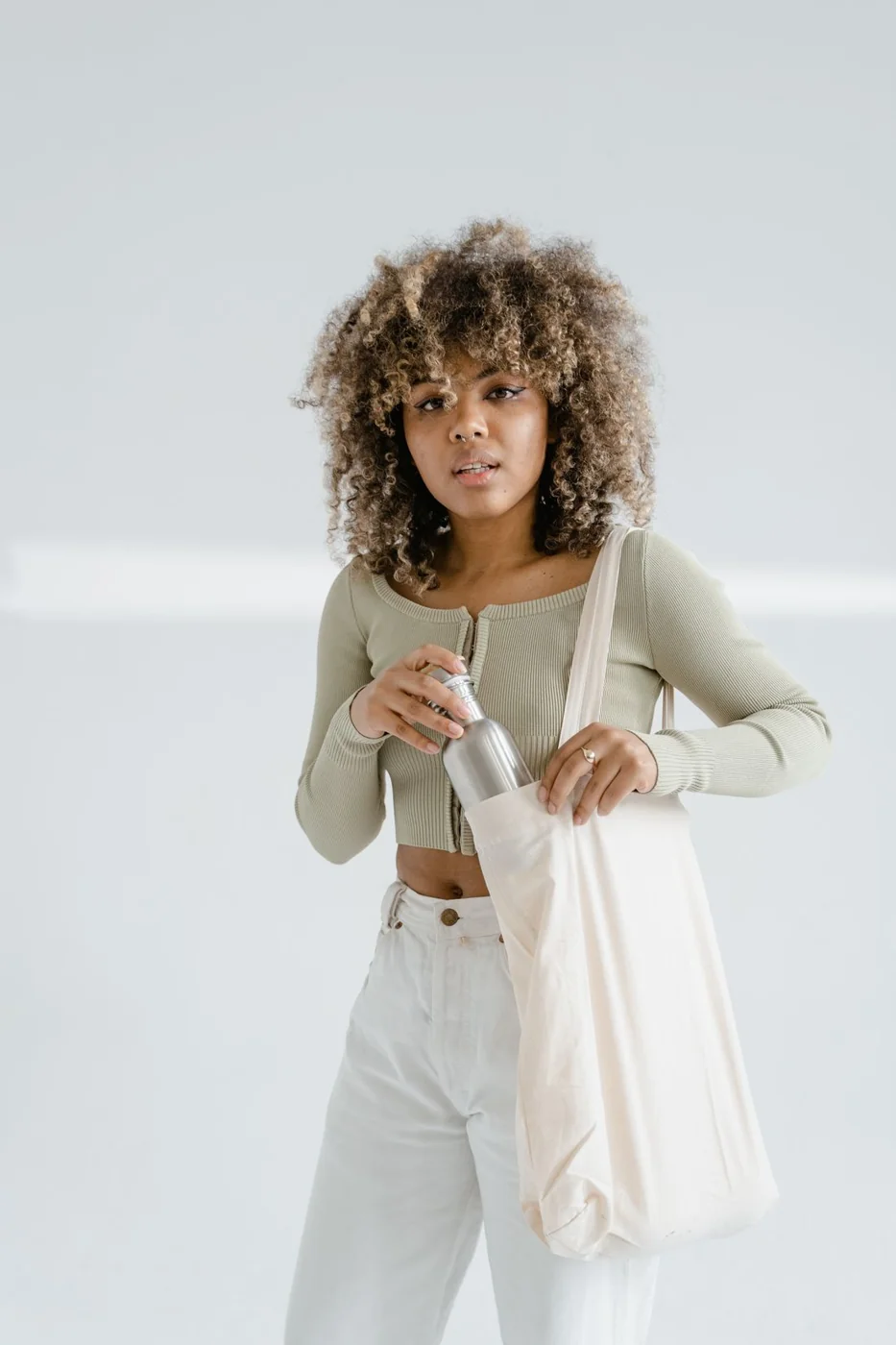
If you carry lunch and a drink bottle, consider how they will remain separate from papers and electronics. A compartment does not replace a leakproof container. Also check whether the bottle can tip when the bag is put down and whether you can reach the contents without emptying everything onto the floor.
Try a realistic load
Where possible, try the bag with a load similar to your daily contents. An empty bag tells you little about how its handles will feel over a longer walk. Wear the jacket or coat you regularly use. A handle that fits over a thin T-shirt may be too short over a thick sleeve.
Walk a few steps, sit down and pick the bag up again. Notice whether it repeatedly bumps your hip or slides off your arm. These are observations that a product photograph cannot provide. If the bag offers several carrying methods, test each with the same contents rather than considering only the strap's maximum length.
Plan access during the journey
Think about what you need quickly while travelling: a ticket, keys or phone. An accessible pocket only helps if you can use it while wearing your jacket. The closure should also suit how you carry the bag in a crowd or set it down. Check that it closes fully around the normal contents.
A large open compartment is flexible but requires different organisation from several small pockets. Start by testing with pouches or cases you already own. Extra organisers take up space themselves and should solve a particular searching problem. An empty organiser shown in a product photograph does not establish that it will make your bag easier to use.
Compare it with the outfits you wear most
Place the bag beside two or three frequently worn combinations. Its colour does not need to match your shoes exactly. What matters is whether you like using it with those outfits and whether its size and carrying height work with your jacket lengths. A decorative fastening may affect the overall style more than a small difference in shade.
Consider where the bag goes when you are not carrying it. Will it stand beside your desk or hang from a hook? Can you still reach the handles? Does it fit where you put it during the journey? These questions connect an appealing appearance with the way the bag will actually be used.
Reduce the contents once more before deciding
Finally, remove anything added solely for the try-on. If the bag now seems much too large, look at a smaller option with a similar opening and handle arrangement. If extra capacity is needed only on occasional days, a separate solution for those days may make more sense than an oversized everyday bag.
Write down the few features that worked during the test: room for the specific device, an accessible key pocket, suitable handles or a closure that works when loaded. That list lets you compare different models without letting each new colour restart the decision from the beginning.