Inspect the loops first
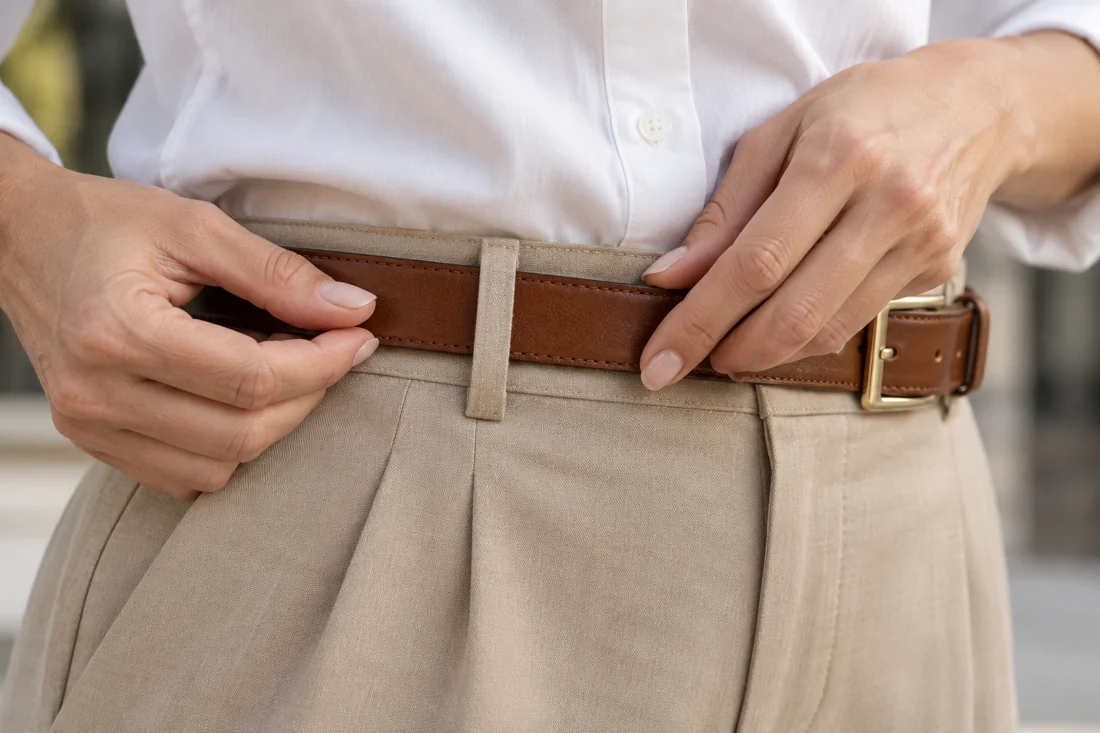
Lay the garment flat and check the narrowest loop. A front loop may be constructed differently from those at the sides. The belt should slide through without force. If it needs heavy bending or pulling, a narrower or thinner version may be more suitable.
Consider seams, studs and a widened tip too. A belt that fits through the middle may be too broad at its end. Do not force it onwards when a section catches. The actual shape matters more than an idea that one width always belongs with jeans or tailored trousers.
Check the buckle in the outfit
Fasten the belt comfortably and sit down. A large buckle may show beneath a short top or press against tucked fabric. Check whether it lands over the trouser button and creates a hard point there.
The loose end should store neatly through the intended keepers. If very long, or barely able to reach the next loop, another length may fit better. Do not casually punch extra holes without considering material and construction; professional adjustment may be more suitable for some designs.
Choose the visible width
A narrow belt reveals more waistband, while a broad one covers a larger area. If both fit through the loops, compare them with the same top. A tucked tee makes the difference clearer than a long jumper over it.
Colour can relate to trousers, shoes or an existing detail without matching any exactly. Decide that connection only after the belt feels comfortable and performs its job. Trousers that slip heavily or gather excessive fabric at the waist do not automatically fit better when a belt is pulled very tight. Check the trousers themselves rather than resolving the problem solely through the buckle.