Test both under the same conditions
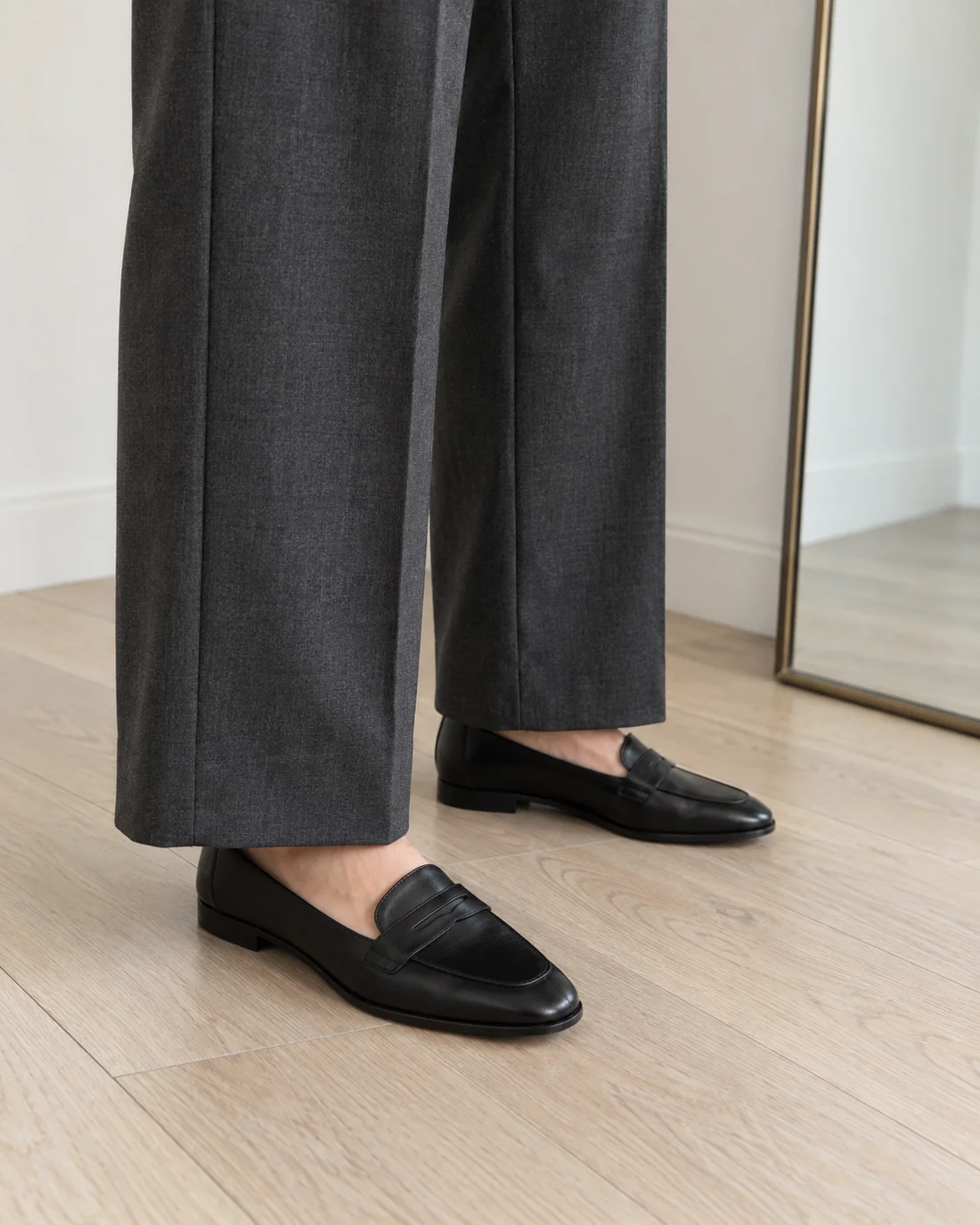
Wear the same layer underneath and the same shoes. Close any buttons or zip normally. Comparing one size open with the other fastened does not test the same use. Arrange each once, then avoid continually pulling it into a preferred position for the mirror.
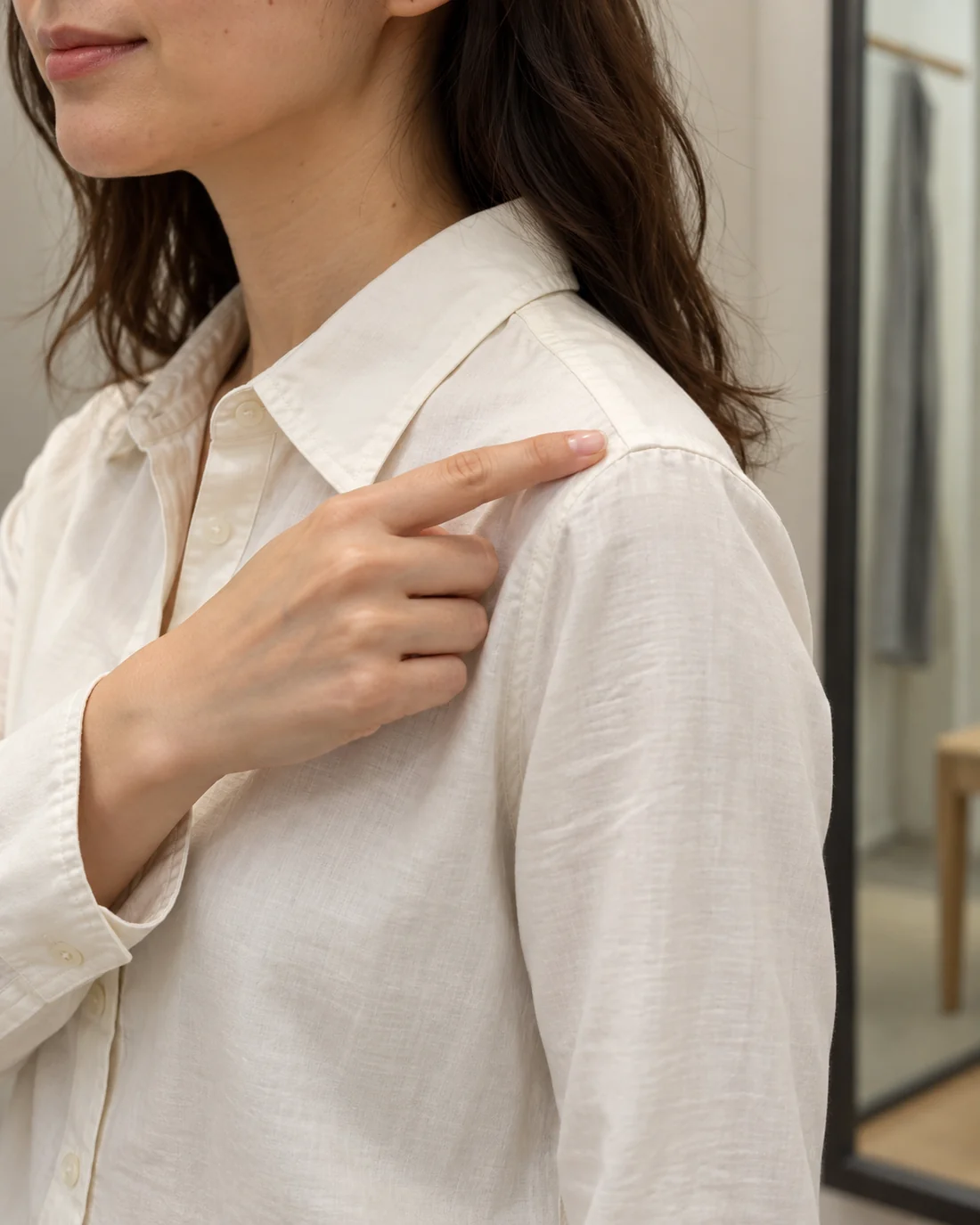
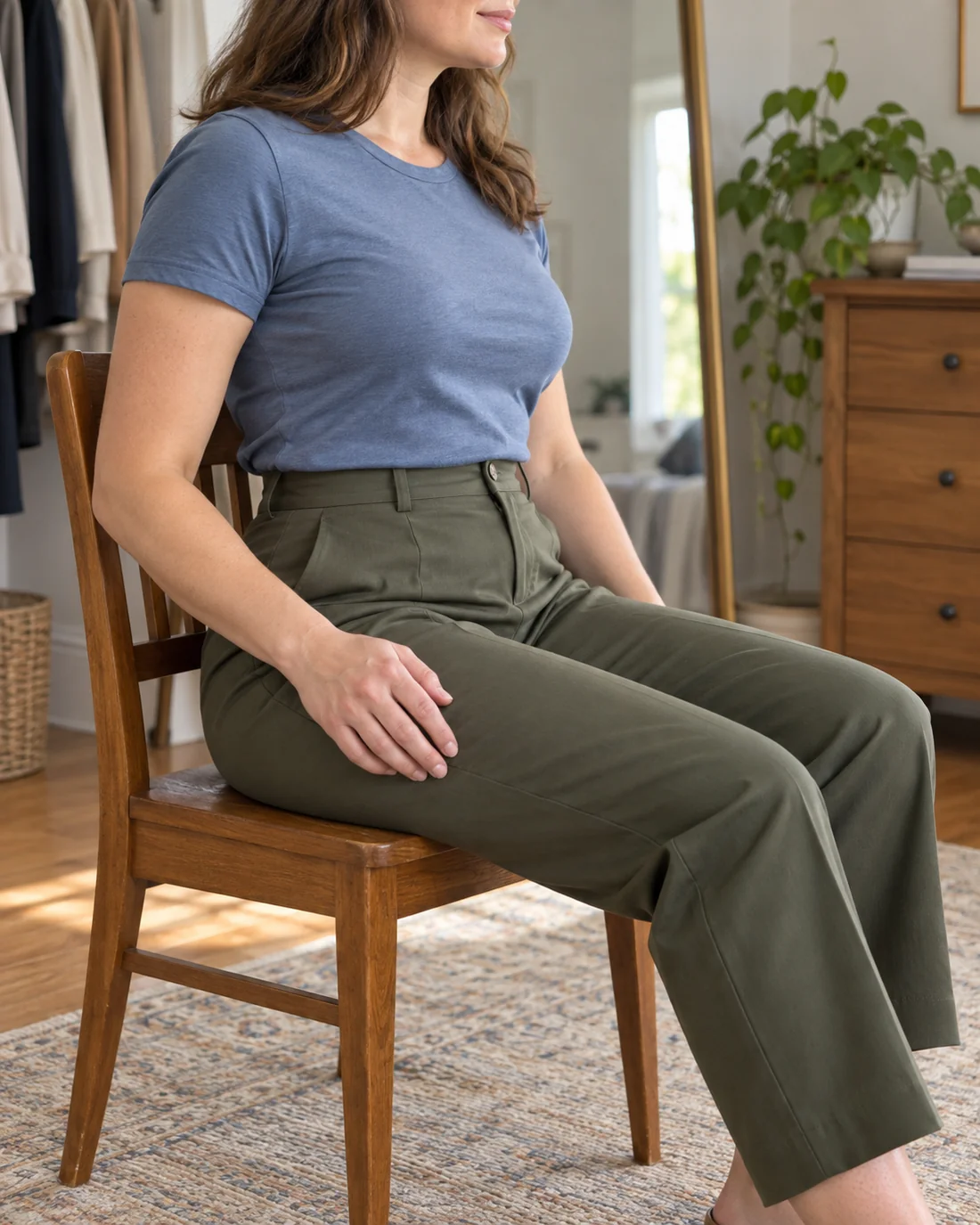
Sit, reach forwards and walk a few steps. Pay attention to the area that seems close in the smaller size. If it becomes uncomfortable during movement, that is more than a visual concern. With the larger size, see whether the extra room falls comfortably or introduces new problems at the neckline, waistband or sleeves.
Do not depend on uncertain stretching
Avoid buying an uncomfortable garment solely because you hope it will loosen enough. Material changes depend on the specific product and are not a reliable solution to every tight fit. Excess fabric cannot always be reduced predictably through washing either. Care is not a substitute for a suitable starting shape.
If considering an alteration, establish the work involved before deciding. A loose waistband may be adjustable differently in different designs. Pockets, lining and fastenings can affect the work. An assumed minor correction should not be the only argument for an otherwise unsuitable size.
Leave room for a third option
Sometimes neither size fits as you want. Another cut can provide room in one area without becoming larger everywhere. This is particularly useful when one version works at the front but not the back, or when sleeves and body need different things.
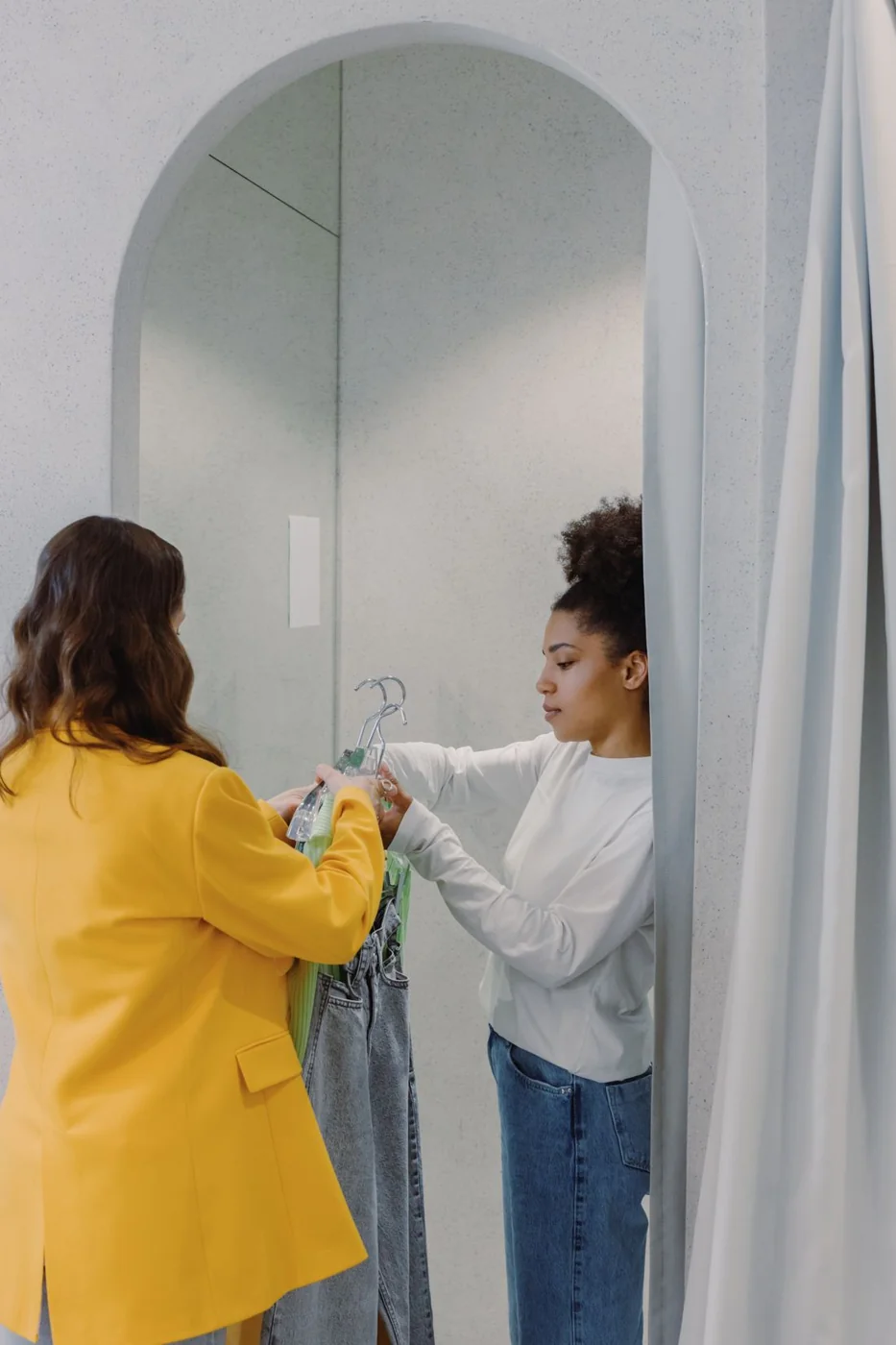
Choose the size whose compromises you can consciously accept. If both interfere with the intended day, compare the design itself with another option. A fitting does not have to end with a choice between exactly those two labels simply because they were the first two brought into the changing room.