Keep a simple calculation transparent
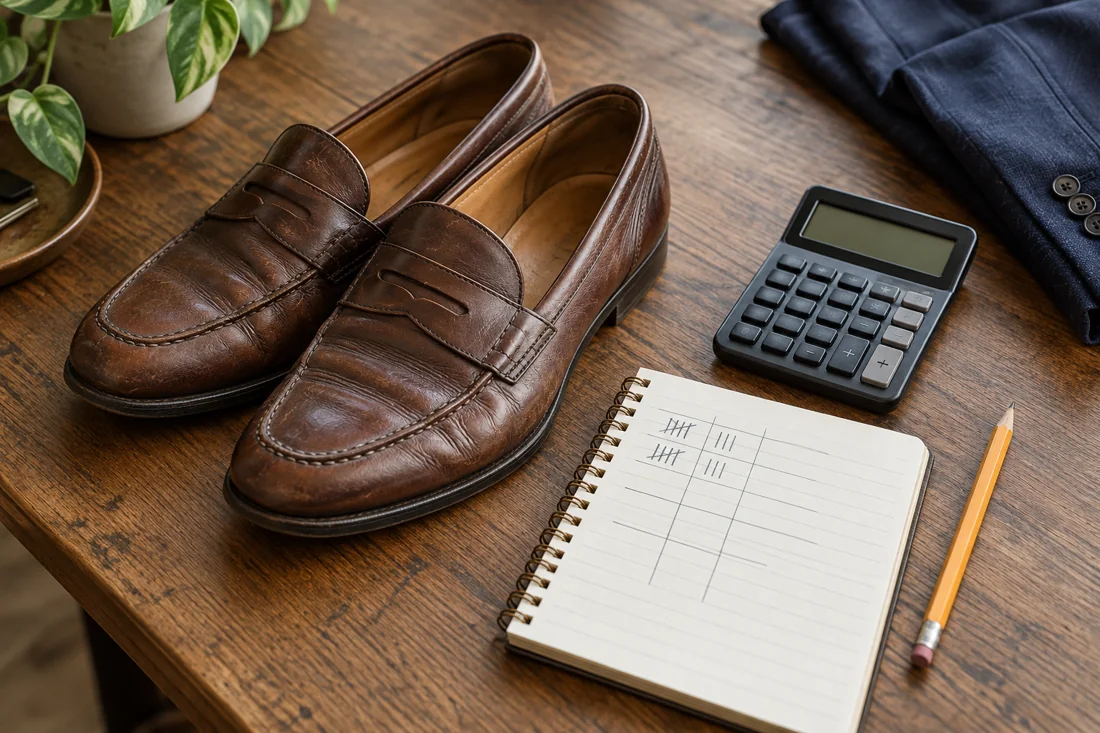
If a garment costs 120 euros and has actually been worn 40 times, the purchase price gives 3 euros per wear. At ten uses, it would be 12 euros. This example illustrates division only; it does not establish a correct number of uses for a particular garment.
You can include specific additional costs such as a paid alteration, but use the same method for the items compared. Counting alterations for one pair of trousers and ignoring them for another makes the comparison inconsistent. Briefly state which amounts are included.
Treat the future as a range
For a planned purchase, you do not know the eventual wear count. Calculate several plausible cases instead, such as ten, thirty and sixty uses if those fit your life. A jacket for an occasional event requires different assumptions from trousers for a regular commute.
Ground estimates in existing habits. How often did you wear something similar last month? Which seasons, care intervals and alternatives limit use? A high figure should not be chosen merely to make a larger price look small on paper.
Recognise the limits
Two items may perform different jobs. Judging an evening bag and an everyday work bag by the same wear count hides that difference. Compare alternatives for the same concrete situation instead, while also checking fit, handling and existing outfit possibilities.
A low amount per wear helps little if you dislike the garment or find it uncomfortable. Equally, something rarely needed may serve a real purpose without ever reaching a low figure. The calculation is one perspective, not a verdict on taste.
Review actual information
For existing clothes, roughly record uses without tracking every hour. Use a consistent meaning for one wear, such as a day of use. Consistency within your own notes matters more than a supposedly official measurement method.
Over time, the list may reveal that an unassuming item gets frequent use or that a planned combination never happened. Use that observation for the next decision. Money already spent does not oblige you to keep wearing an unsuitable piece uncomfortably; a favourable forecast likewise does not justify another purchase without an identifiable use.