Read the label before choosing the space
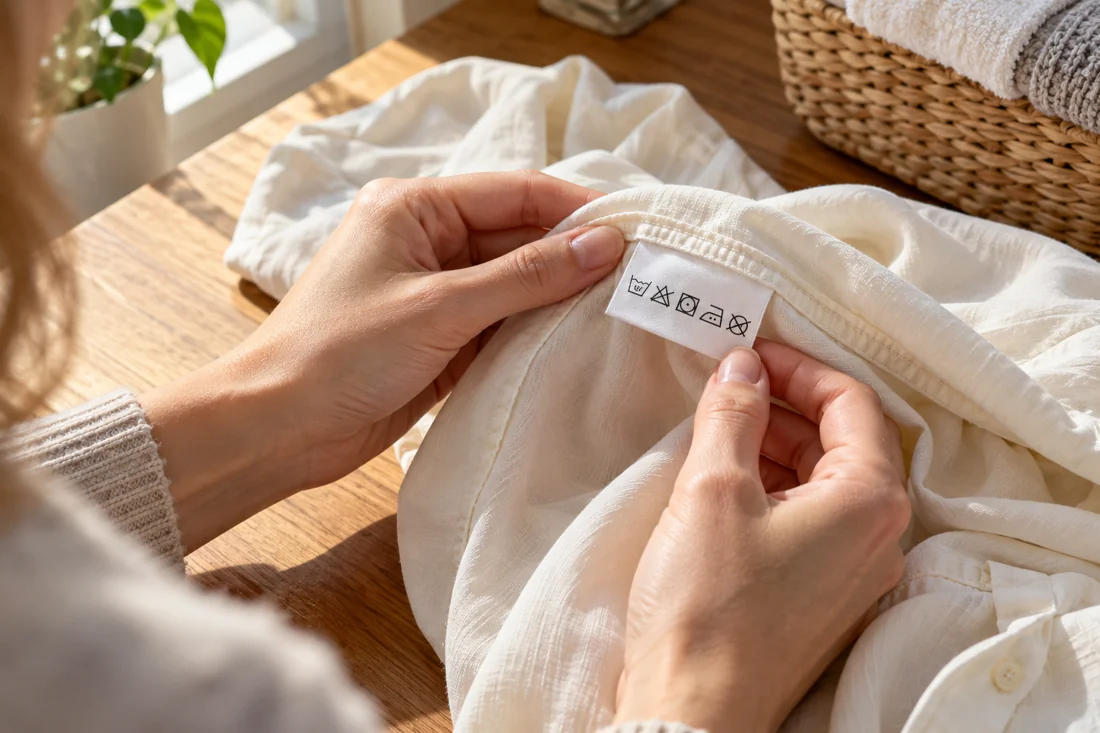
Check the drying instructions for this particular jumper. Flat drying, drying in shade and permission to tumble dry are different instructions. If the label is missing, ask the manufacturer using the model and material details rather than relying on how soft the fabric feels. Decorative trims may introduce requirements of their own.
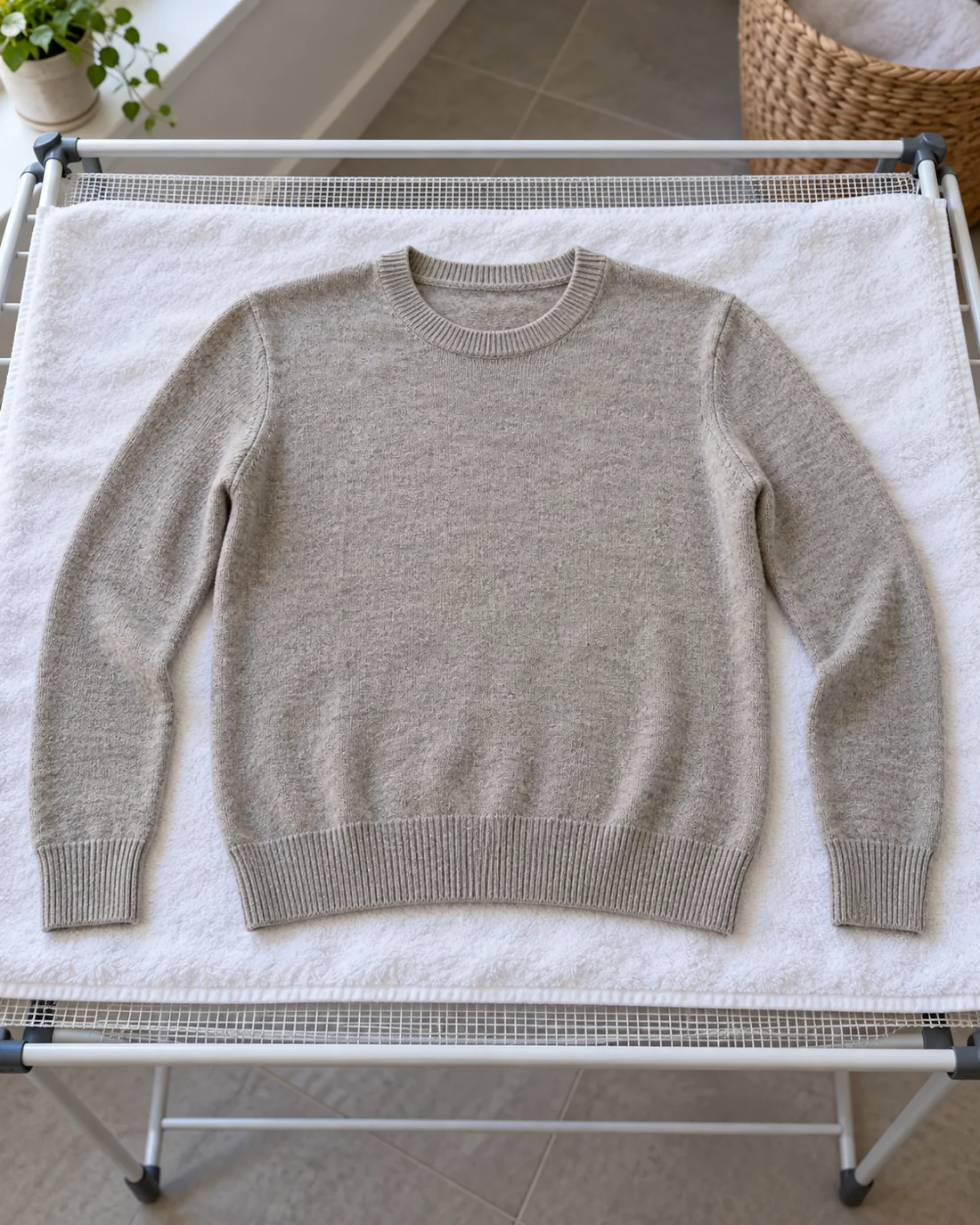
Choose a clean surface large enough for the body and sleeves. A pale, lint-free towel is a suitable support for many wool jumpers. The surface underneath must tolerate moisture or be protected from it. An untreated wooden table is therefore not automatically a suitable place beneath a damp towel. Keep the area available for the whole process so that the garment does not need to be moved repeatedly.
Support the garment as you lay it down
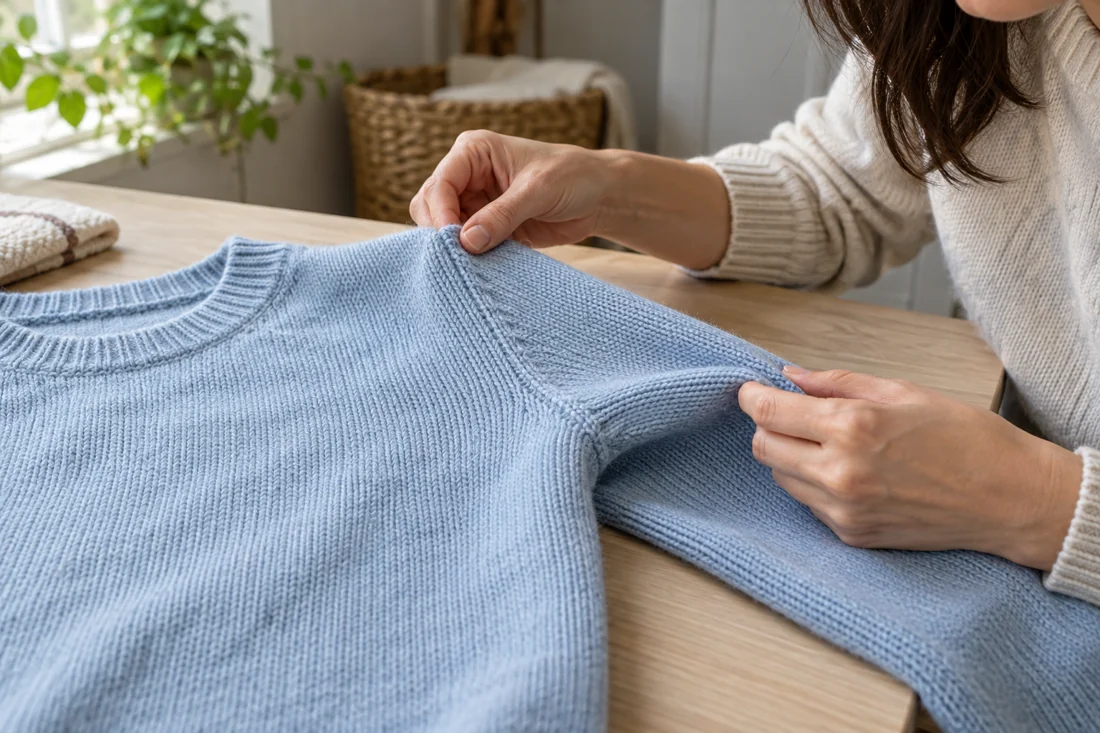
Lift the wet jumper with both hands, supporting the body rather than letting its weight hang from a shoulder or sleeve. Spread it out without forceful pulling and gently arrange the sides and sleeves. Use its previous shape as your reference; stretching a cropped design does not reliably turn it into a longer garment.
Look at the cuffs, neckline and hem. They should not be trapped underneath the body. Arrange the sleeves so that they do not form a thick overlapping bundle. If there is insufficient room, find a larger surface. Letting half the jumper hang over the edge of a table does not solve the lack of space and leaves part of the garment unsupported.
Allow time instead of adding heat
Do not place the jumper directly on a radiator to hurry the process. Strong sunlight is not a substitute for sufficient drying time either; follow any instruction to dry in shade. Provide air circulation around the chosen space without switching to a washing line when the garment needs to remain flat.
Check the towel after a while. If it is very damp, replacing it with a dry one may help. Support the whole jumper during the change and gently restore its arrangement afterwards. There is no single reliable number of hours for every garment: thickness, remaining moisture and room conditions vary. Avoid planning to wear a freshly washed heavy knit that same evening when you cannot be certain it will be ready.
Wait until thicker areas are dry too
Feel the cuffs and seams as well as the exposed surface. A jumper that seems dry on top may retain moisture in thicker areas. Put it back in the wardrobe only once it is fully dry, folding it without unnecessary pressure on delicate decoration.
If useful, keep a brief note about this particular garment: which drying space was large enough and whether the towel needed changing. That makes the next wash easier to organise without turning one experience into a rule for every jumper you own. The purpose is to preserve the garment's intended shape while following its own instructions, not to force all knitwear through an identical routine.