Match the instructions to the actual garment
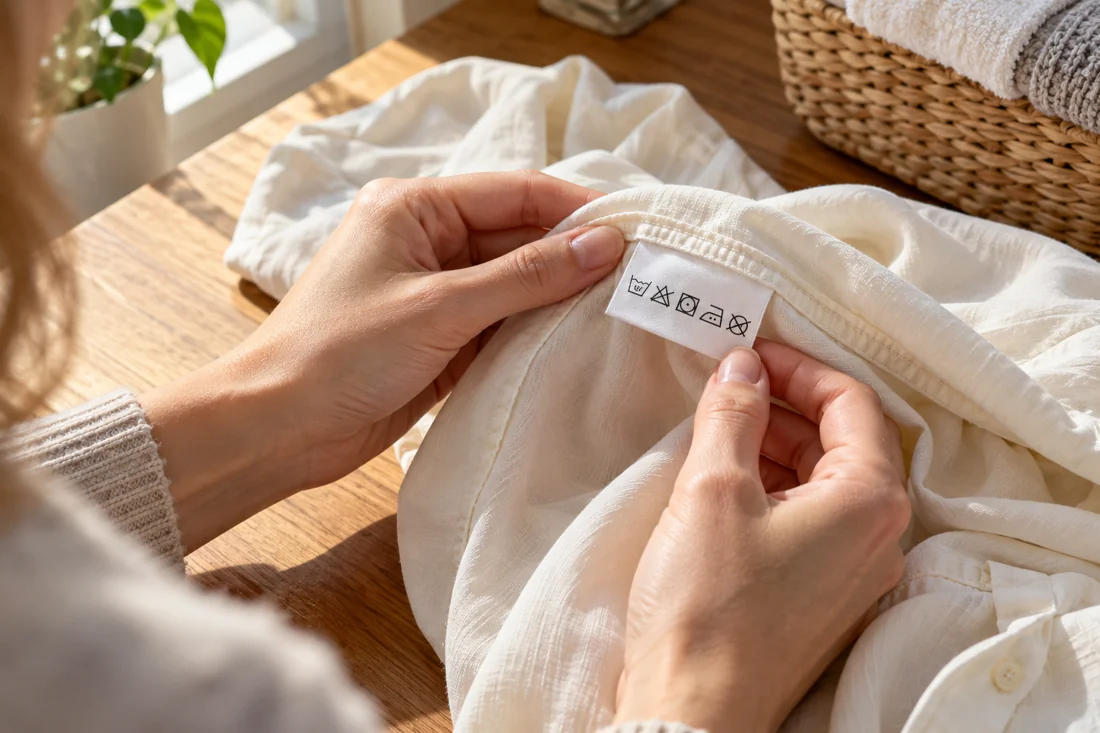
Read the washing and drying information completely. If machine washing is permitted, select the appropriate process using the label and appliance instructions. A programme name alone is not a guarantee for every knit. Hand washing also needs to follow the garment's directions; it is not automatically suitable for an item marked as non-washable.
Check whether a belt, collar or decoration is detachable and should be treated separately. With a difficult-to-read label, record which garment it belongs to before several similar jumpers are laid together. A blend should not be judged solely by its most familiar fibre component.
Find damage before washing
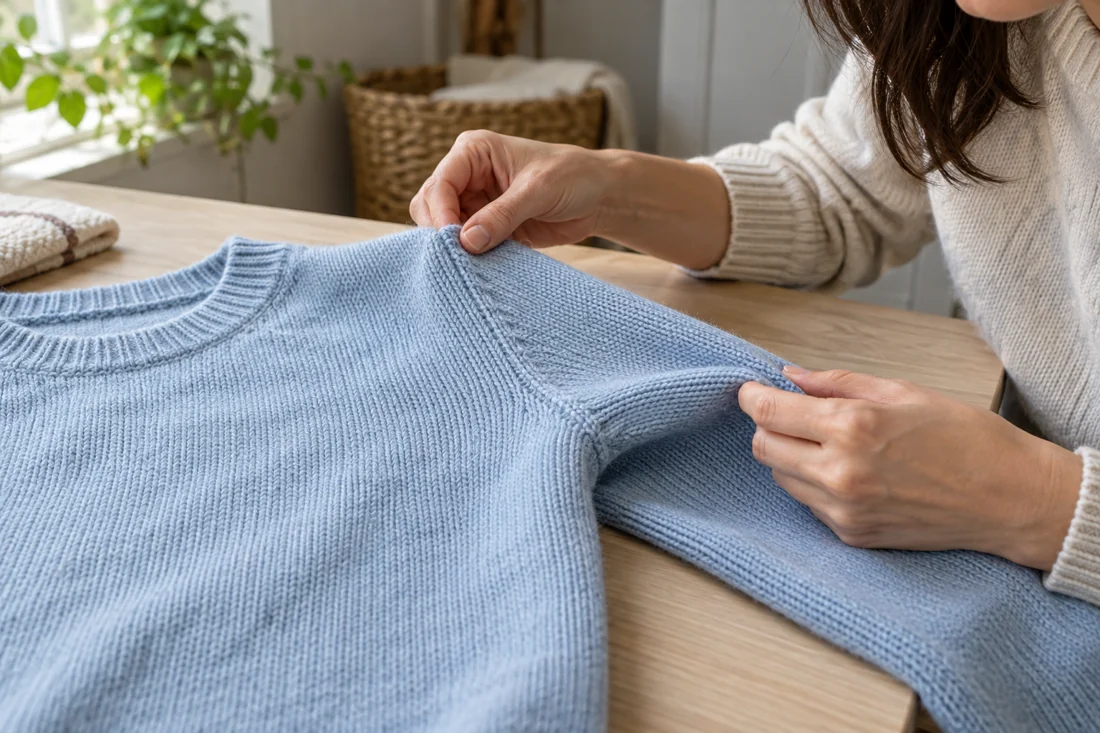
Look at cuffs, side seams and underarm areas for loose threads or open sections. Do not simply pull a thread out to make the surface smoother. Visible damage should be assessed first rather than carried unnoticed into the next care step.
Suitable stain treatment depends on the material, colour and stain itself. Avoid using a strong product or vigorous rubbing without checking suitability. If the cause is unknown or the garment seems delicate, professional advice may be useful. A general washing tip does not replace information about the particular problem.
Plan through to the drying stage
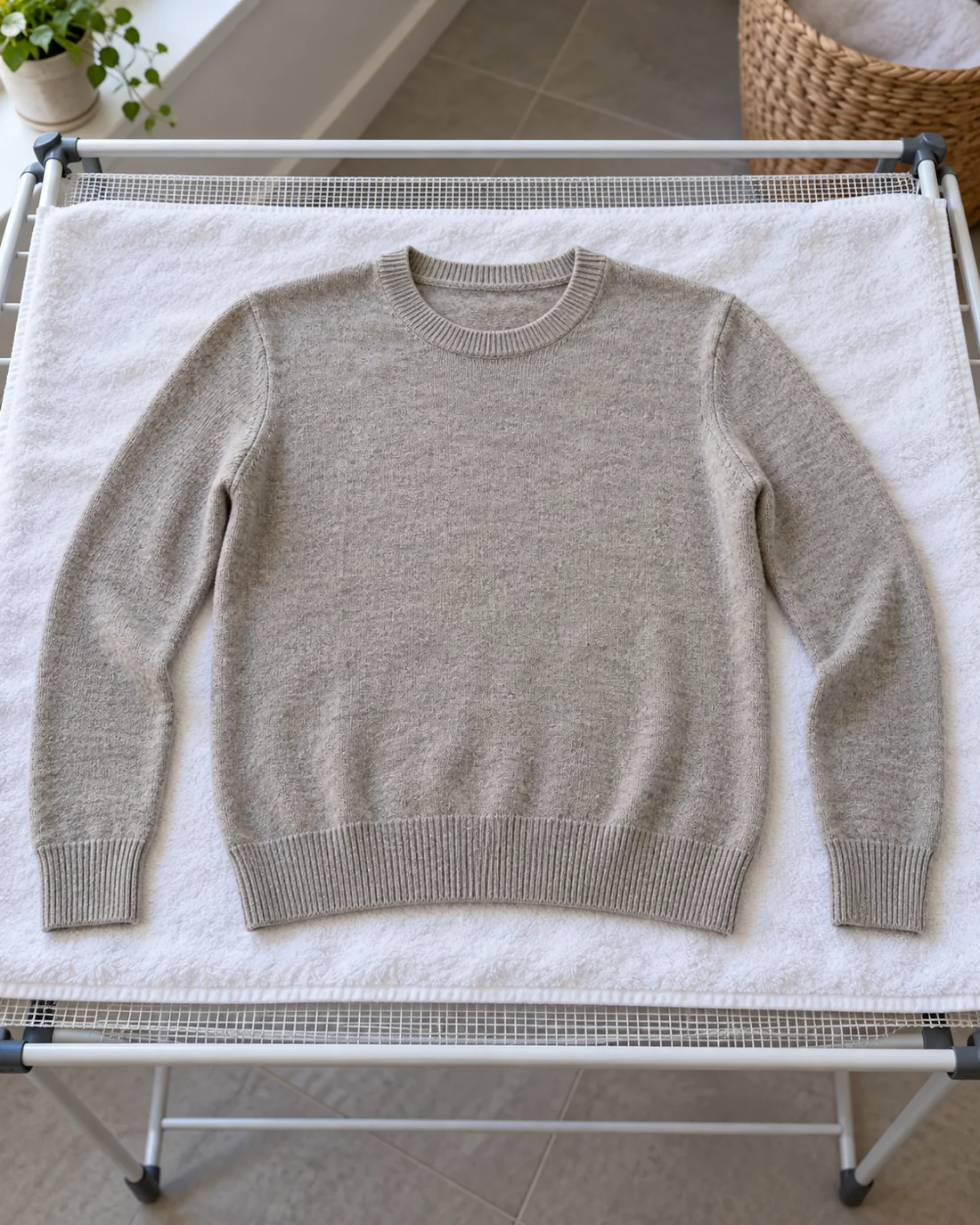
Prepare a detergent suitable for the material and follow its dosing instructions. Also establish whether there is enough room for the required drying method. A wet jumper should not be the reason to improvise with a hook or hot surface at the last moment.
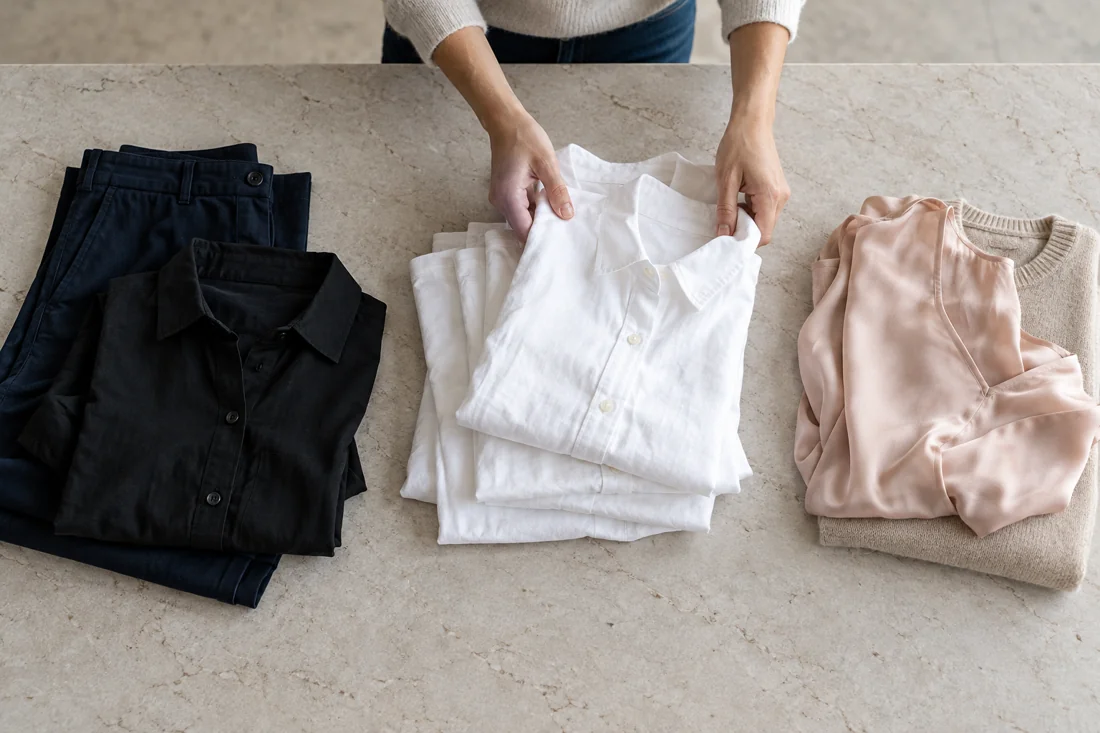
Choose a time when you can care for the knit as instructed after the wash. Treat pieces separately where their requirements differ. A short note about a successful process can help later, but keep it associated with that particular model. One successful wash does not establish permission to treat every similar-looking jumper in the same way, especially when their labels or construction differ.