Begin with the labels
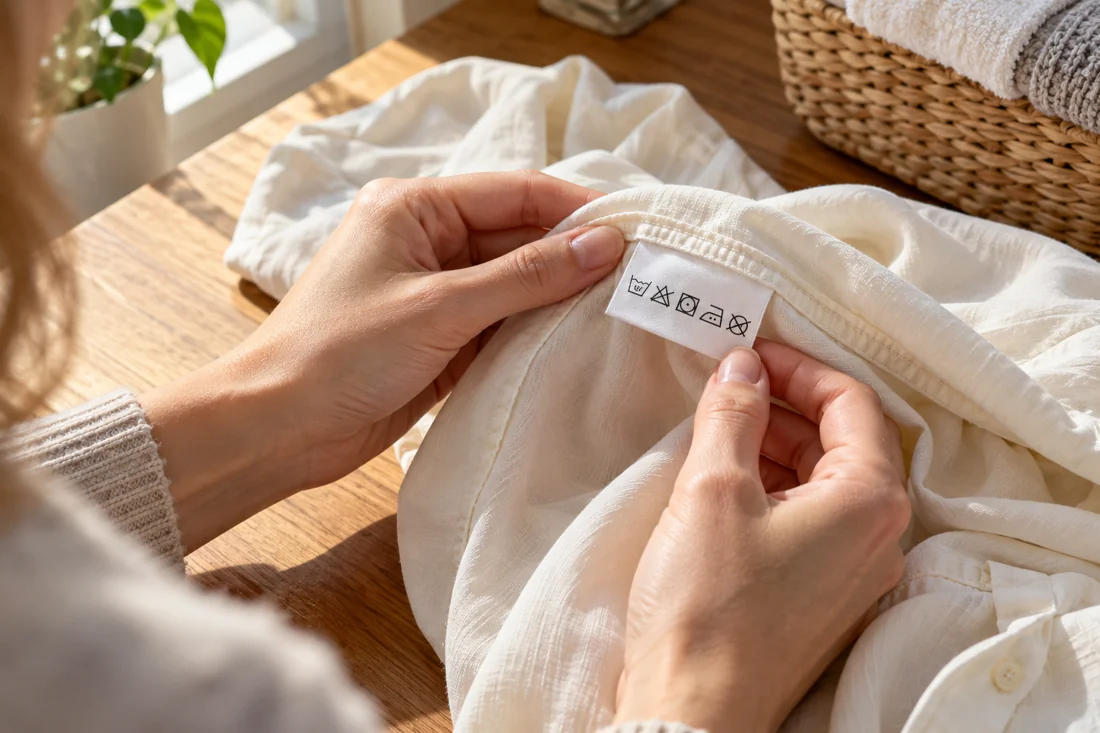
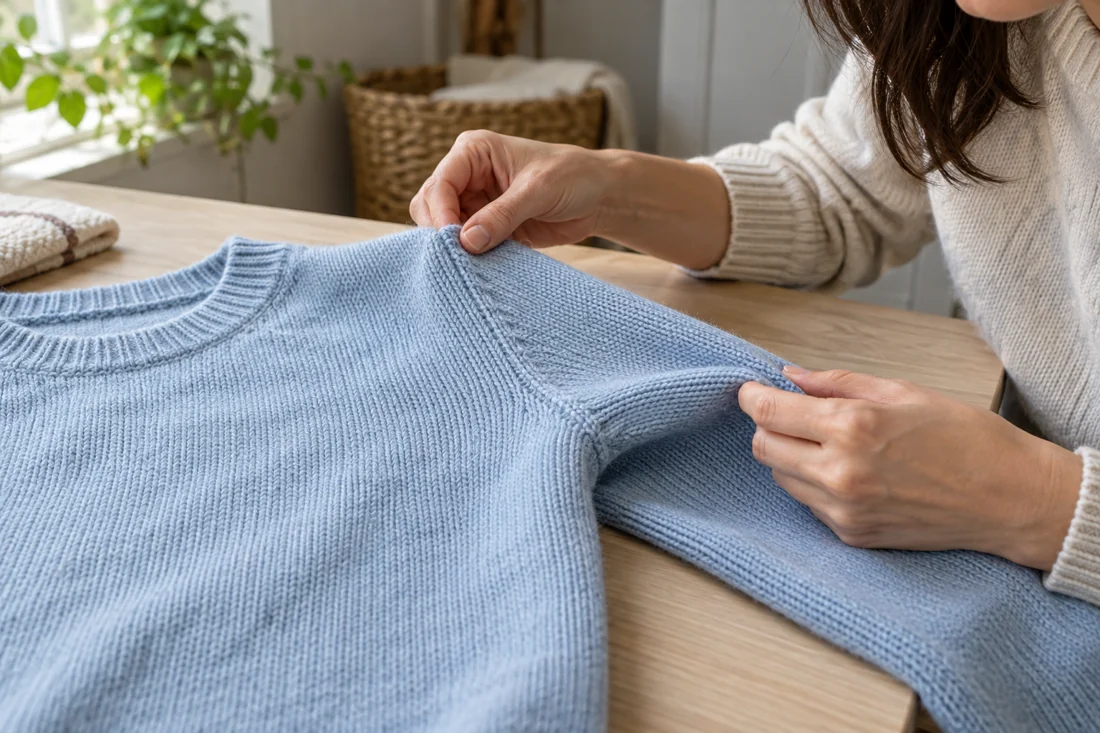
First remove items whose care differs from the ordinary wash. These might include delicate knits, heavily decorated tops or pieces explicitly requiring professional care. The particular label matters more than the fibre name alone. A similar surface does not automatically make two garments suitable wash partners.
Next, compare the permitted temperature and treatment of the remaining items. Create groups that can actually be cared for together. A small separate load may be more suitable than a full drum containing conflicting requirements. Also follow the machine's load guidance for the selected programme.
Consider colours and surfaces
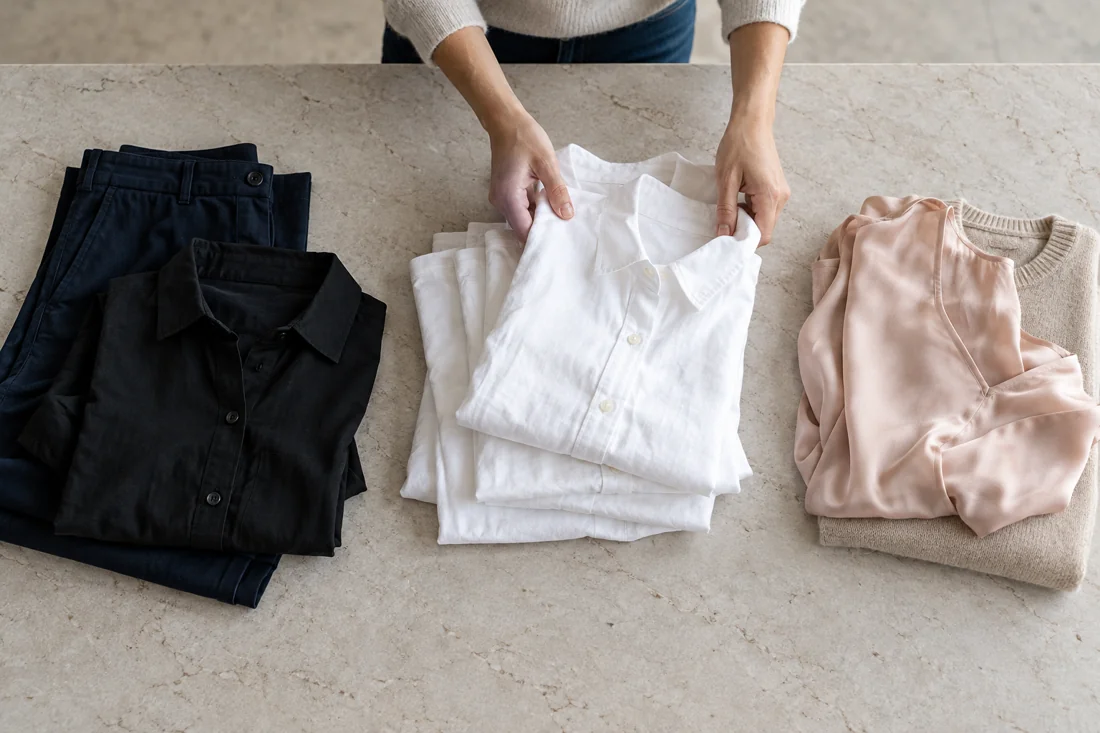
Separate light, dark and potentially colour-releasing items according to their instructions. With a newly purchased strongly coloured garment, look carefully for a separate-washing instruction. Colour that looks stable when dry does not establish how it will behave during washing.
Think about surfaces too. An item that sheds considerable lint may be a poor companion for a smooth dark blouse. Hard or rough details should not rub unnoticed against delicate fabrics. Prepare closures and detachable components as the manufacturer instructs rather than moving every item unchanged from the laundry basket into the machine.
Take one final look before starting
Empty pockets and check whether anything has accidentally entered the wrong group. Check the detergent's suitability and dosing instructions. More product is not automatically more effective or appropriate. Where a particular treatment is required, an arbitrary everyday product is not necessarily a substitute.
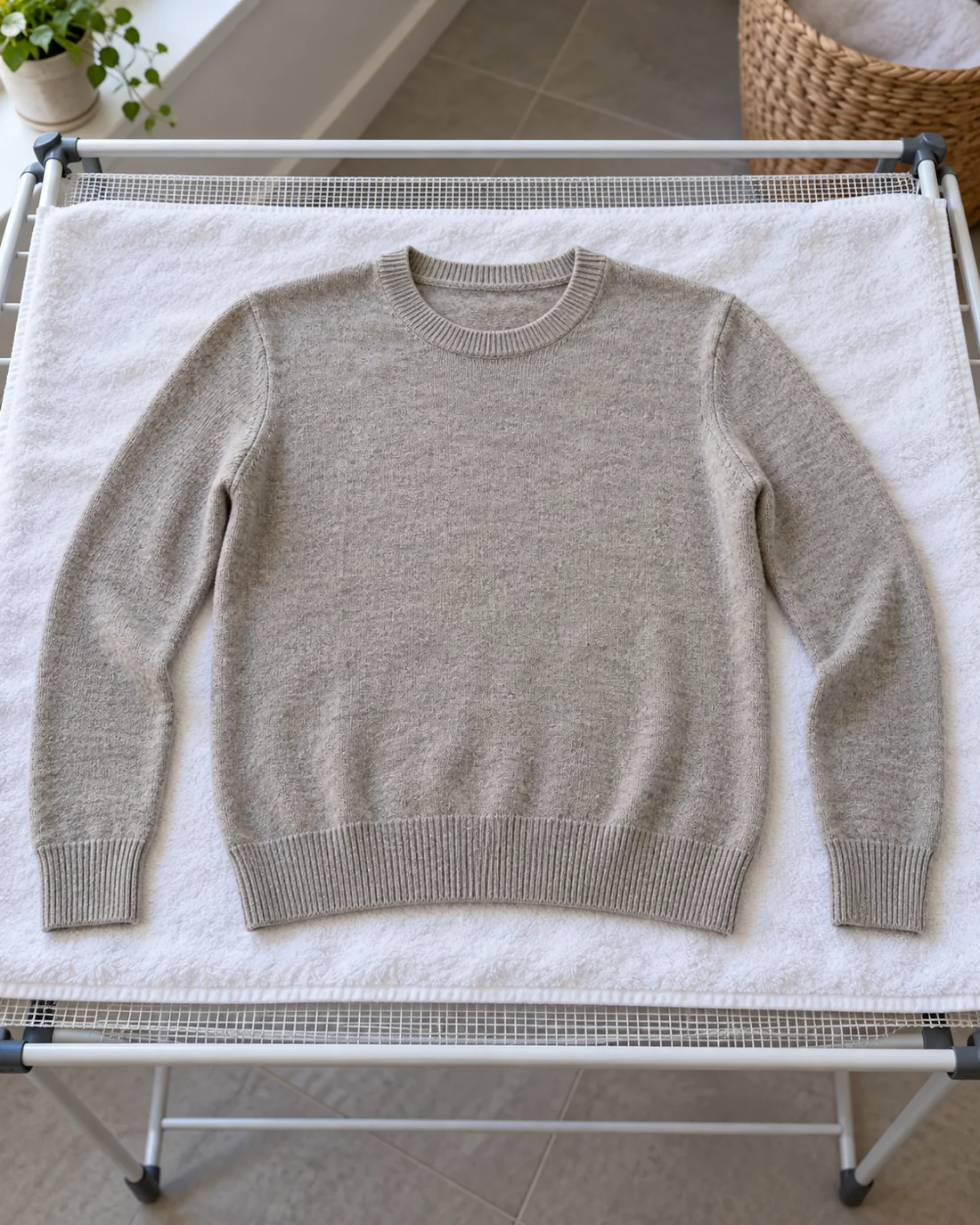
Finally, consider how each item will dry. Pieces with different drying requirements can be separated again after washing. Prepare the space and supports beforehand. Sorting does not necessarily end when the machine door closes; its purpose includes avoiding a rushed next step in which every garment receives the same unsuitable treatment because nothing else has been prepared.