Use the fabric edge as a reference
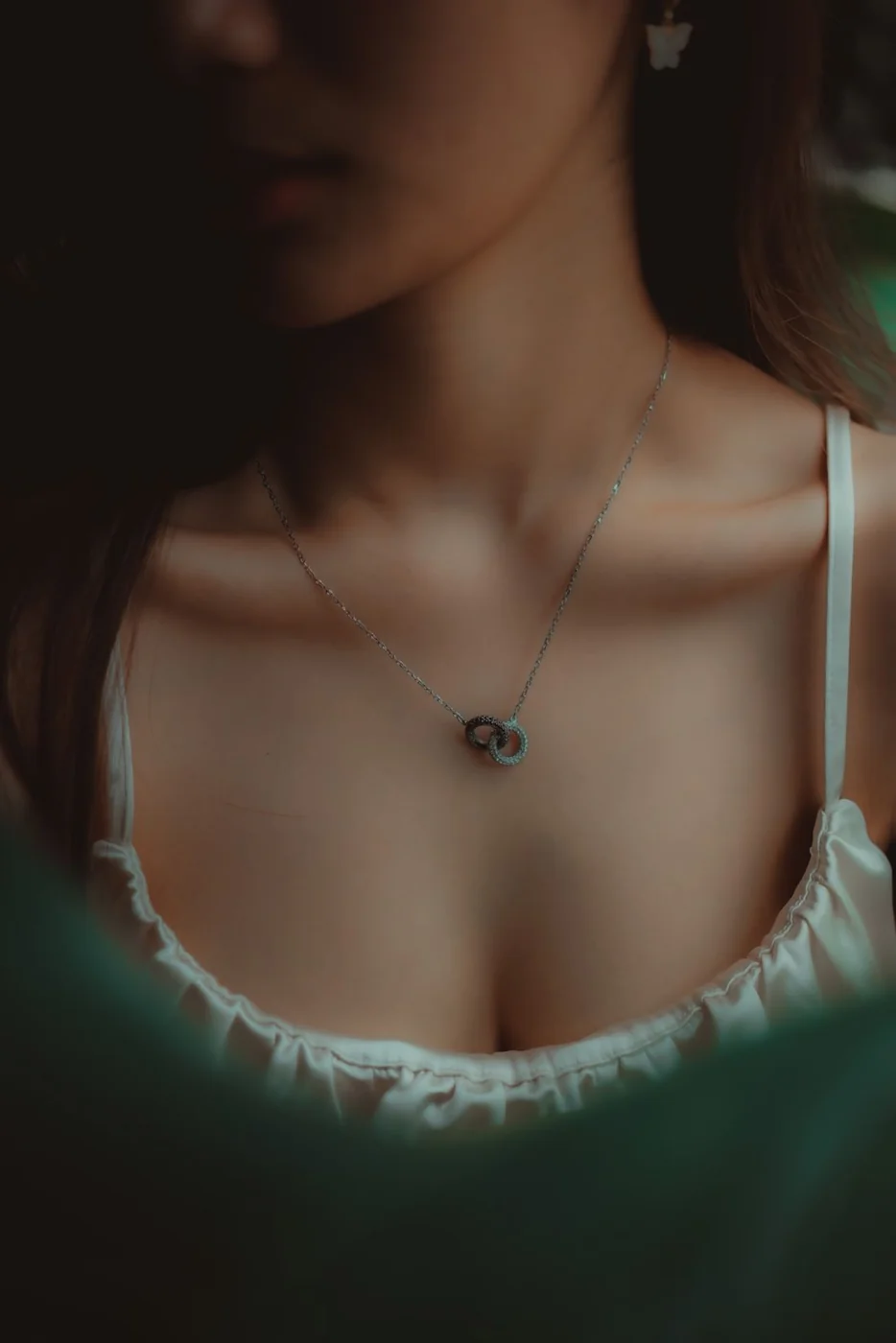
With a round neckline, you might place the necklace entirely above the edge or clearly below it. If a pendant sits exactly on that edge, it may tip alternately inside and outside the top. If that bothers you, try a small length adjustment where the fastening permits it. Even fabric thickness can change the result compared with another top.
A V-neck allows several lengths. A pendant can sit within the opening without meeting its lowest point exactly. Check while sitting whether it remains visible or slips into the neckline. Over a closed shirt, the necklace can rest on the fabric; buttons and collar points then add further lines to the arrangement.
Include movement and fabric in the test
Move your shoulders, pick up your bag and briefly put the intended jacket on. A necklace caught between a collar and a bag strap is easy to miss in a still mirror view. Against knitwear, check that the pendant and fastening have no rough edges that might catch loops of yarn.
When wearing two necklaces, compare more than the difference in their lengths. Pendant size and chain construction also affect how much the pieces move. Two chains of nearly the same length may cross more often than you want. Wear the combination for a few minutes instead of judging it only immediately after carefully arranging it.
Choose which detail you want to notice
A neckline with ruffles or a decorative fastening does not automatically need more jewellery. If you add a necklace, decide whether both details should remain prominent or whether you prefer one to receive more attention. Keep other accessories unchanged while making the comparison.
A photograph from ordinary conversation distance can be more revealing than a close-up of the pendant. It shows the necklace and neckline as part of the complete top. Note a useful fastening position if you intend to repeat the combination; you do not need a universal rule measured in centimetres to remember what works with that garment.