Create a place for the interim stage
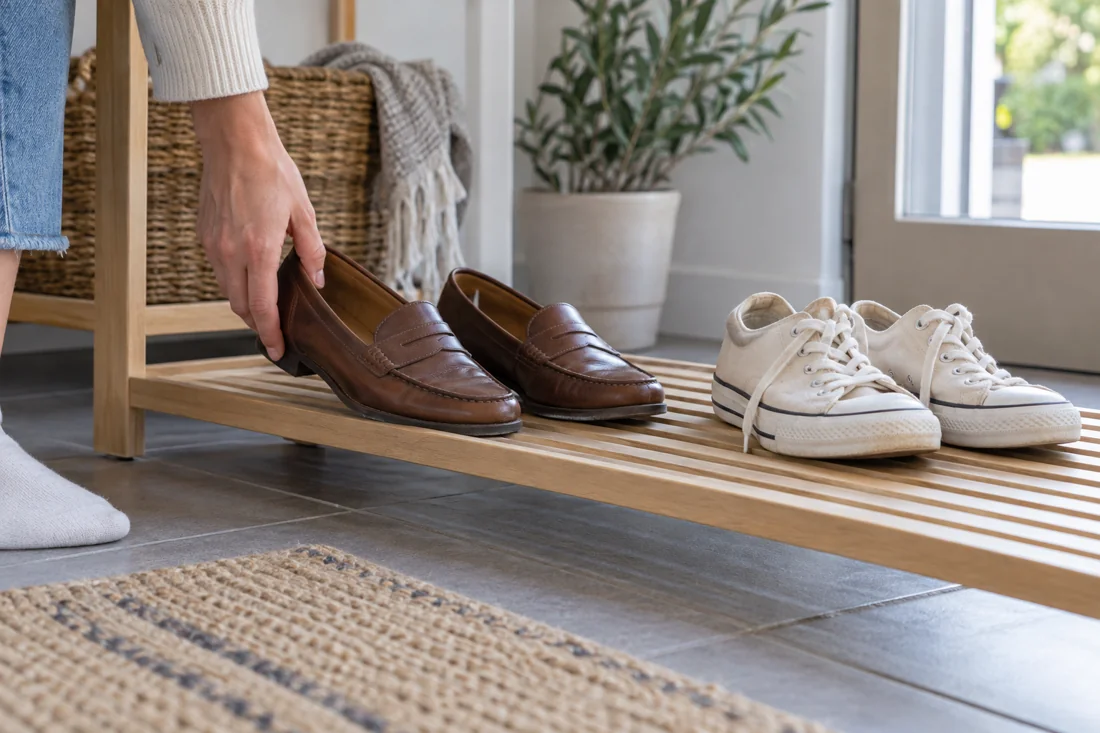
Set aside an area where shoes can stand outside walking routes. A mat can protect the floor from dirt, but should not leave footwear standing in pooled water. After a wet journey, inspect both soles and uppers before placing the pair beside others.
Direct heat is not a shortcut to use without checking. Clarks recommends allowing leather footwear to dry naturally away from radiators and other direct heat sources. Also follow the specific shoe's instructions, particularly with mixed materials or special insoles.
Open the intended fastenings without pulling the material unnecessarily. Treat removable components only as their instructions allow. Fixed insoles do not need to be forcibly removed merely because a general storage tip suggests it.
Check briefly before putting away
Make sure the pair is actually dry, including less visible areas. One fixed number of hours does not suit every shoe and environment. If uncertain, allow more time instead of packing it tightly too soon.
Inspect soles, seams, laces and fastenings. You can note a small defect now. Do not silently return shoes needing repair to the everyday selection, where the problem may only reappear immediately before the next journey.
Organise storage by use
Frequently worn pairs need accessible space; occasional pairs can sit further back. Do not stack heavy shoes on delicate surfaces of other pairs. With tall shafts, choose storage suited to their construction; an unsuitable tight fold is not an unavoidable consequence of limited space.
Label closed containers so that you can find the pair without opening everything. Keep care instructions or a brief note about material when that information may be hard to identify later. The arrangement should simplify the next use rather than create an elaborate routine you cannot realistically follow after ordinary wear.