Begin with an ordinary week
Think about a typical week with your real journeys and appointments. What did you wear, and what was set out but put back? Record the combinations briefly. An unusual holiday or one celebration should not determine the whole wardrobe's requirements.
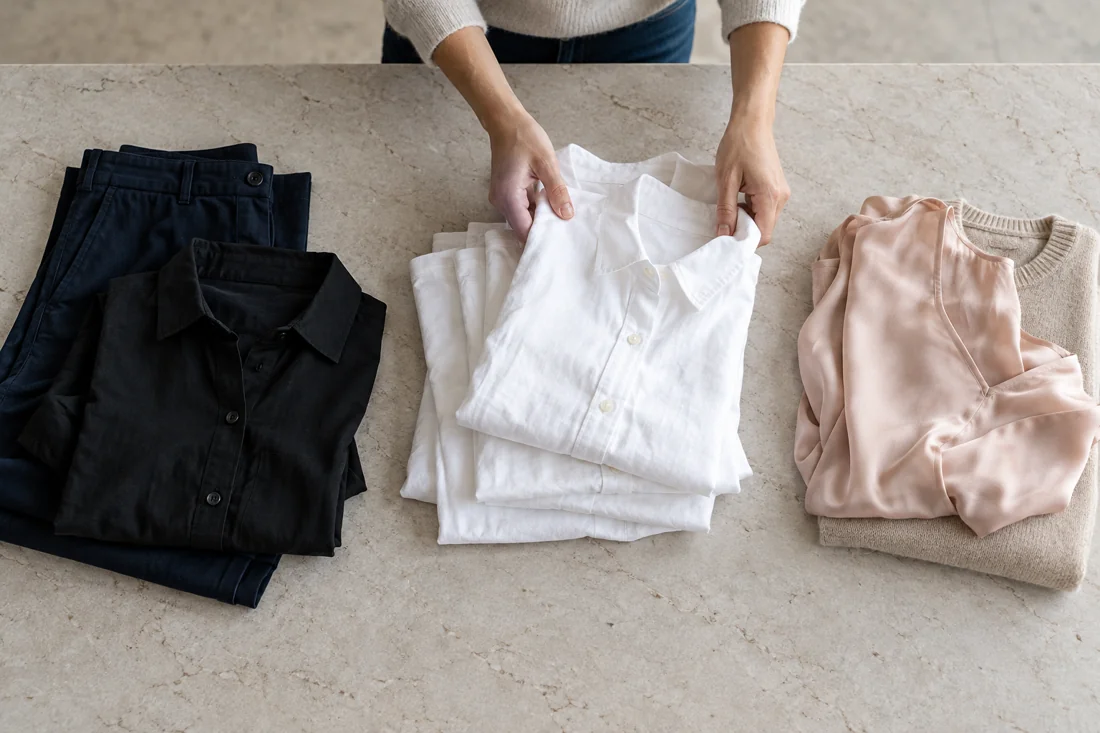
Lay out a few frequently worn outfits. Include shoes and outer layers where they are essential to use. A top that works only with a particular underlayer should be considered with that requirement. This reveals dependencies that remain hidden in a list organised only by individual garments.
Do not empty everything at once
Choose one area, such as everyday trousers or work tops, and finish it before starting another. With the whole wardrobe on the bed, time pressure can send unresolved pieces straight back inside. A smaller section allows closer attention and can be put away that same day.
Check condition and fit where you are uncertain. Separate a missing outfit from a repair requirement. A skirt with a loose hem needs a different next step from a blouse that simply lacks a combination. Neither should disappear into one undefined “maybe” pile.
Ask a specific question about unworn pieces
For each rarely used item, ask why it stays unused. Is care more demanding than you want? Does it fail to work with your shoes? Is a fastening distracting? Or is there simply no suitable occasion in your current routine? Those reasons lead to different decisions.
For a combination problem, try two options already in the wardrobe. You do not need to preserve the original buying idea if another use works better. A dressy blouse might work with plain trousers, but it does not have to be made into everyday clothing if you dislike wearing it that way.
If fit prevents use, consider a realistic alteration or another use. You do not need to retain something solely for a hypothetical future body if doing so creates pressure now. Keepsakes can be kept deliberately, but distinguish them from the clothes available for daily wear.
Identify gaps after trying combinations
A shopping gap is more useful when it describes a particular connection: a top that works with two existing trousers and fits under the work jacket, for example. “More basics” is too vague to support a later decision. Check whether something you already own can perform that role.
Separate a genuine gap from another version of an already solved need. Three similar black tops may make sense if regularly worn. They may also conceal the absence of a suitable light jacket for your actual journeys. Use determines the answer, not a fixed permitted number in each category.
Put things away for easy access
Keep frequent combinations, or the pieces they require, within easy reach. You do not have to bundle complete outfits onto one hanger; finding the relevant items without a long search is enough. Separate occasional clothing if it improves clarity, and keep repairs visibly outside the ready-to-wear selection.
A small outfit photograph or note can preserve a new combination. Avoid an elaborate system requiring extensive updates after every wash. The arrangement should make daily access easier rather than create another administrative task.
Revisit the decisions after a few days
Check whether the newly assembled outfits were actually worn. If not, identify the obstacle. Perhaps the combination worked only while standing in the mirror, or its necessary underlayer was still in the wash. That feedback makes the next review more precise.
Success is not a particular number of discarded items. Less searching, one completed repair or two usable combinations can be meaningful results too. Keep a selection that suits your current life and leave room for that life to change later. The review is a way to make clothes easier to use, not a test of how little you can own.